You’ve Run Your SEO Audit. What Does It All Mean?
Your SEO audit gives you a quick view of how your website is performing in four important areas:
- Keywords
- Onsite
- Speed
- Backlinks
It also gives you an overall score out of 100. That's an average of the four areas evaluated in the report.
That score is not a school report, and it is not a final judgement on your business. It is a guide to where attention may be needed first.
This page will help you understand what the audit is showing, why those areas matter, and what the next sensible steps usually look like.
First, A Bit Of Perspective
An SEO audit is useful, but it is not the full story.
It gives a bird’s-eye view of key SEO areas. It is not meant to uncover every possible challenge, opportunity, or business-specific issue on your website.
Some problems may need a deeper look. Some warnings may matter more than others. Some may be tidy-up tasks rather than urgent fixes.
So the aim is not to panic, chase every score, or fix everything at once.
The aim is to understand what matters most.
Usually, that starts with two things:
- Your keyword strategy
- Your onsite optimisation
Those two are closely connected.
If your keyword strategy is wrong, your onsite SEO may be pointing your pages in the wrong direction.
If your onsite SEO is weak, even good keywords may not be properly supported.
That is why these two areas normally come first.
Once those foundations are clearer, the focus can shift towards building useful content, earning better backlinks, and improving page speed where needed.
What About AI Search?
Good question.
Search is changing. People are using Google, Bing, ChatGPT, Perplexity, Gemini, and whatever new thing gets launched next week with a name that sounds like a kitchen appliance.
But the foundations have not disappeared.
AI search still needs clear, useful information to work with. Your website still needs to explain who you help, what you do, where you do it, and why your content deserves attention.
That starts with good onsite SEO.
If your website is unclear, poorly structured, weak on content, or not being found in Google and Bing today, it is unlikely to magically become visible in AI search tomorrow.
AI search does not remove the need for strong SEO basics.
It makes them more important.
So when we talk about keywords, onsite optimisation, content, backlinks, and speed, we are not just talking about old-school Google SEO.
We are talking about making your website easier to understand, easier to trust, and easier to recommend across search as it changes.
Related Blog
Throughout this page, we will share related blogs that go into more depth around each section of your report.
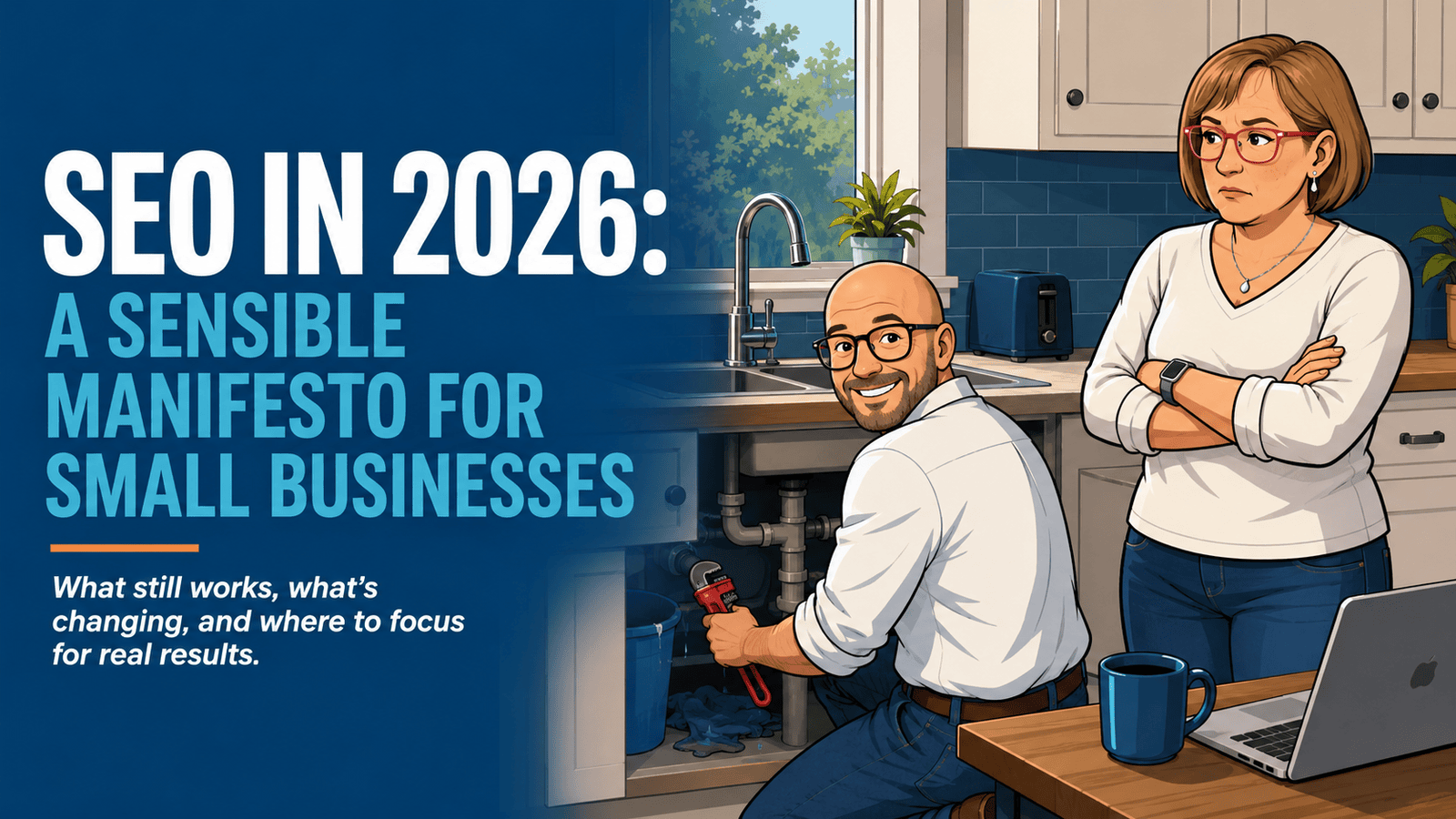
SEO In 2026: A Sensible Manifesto For Small Businesses
A grounded explanation of why SEO still matters as AI search grows, and why strong website foundations come first.
Keywords: Are You Targeting The Right Searches?
Keywords are the words and phrases people use when they search online.
That might be in Google, Bing, ChatGPT, Perplexity, Gemini, or whatever comes along next.
A keyword could be:
- a service someone needs
- a product they want to buy
- a local business they are trying to find
- a question they need answered
- a price they want to understand
- a comparison they are making
- a problem they want solved
For example, someone might search for:
- emergency plumber near me
- accountant in Bedford
- dog groomer Milton Keynes
- how much does SEO cost
- website audit for small business
A good keyword strategy connects what your business offers with what your customers actually search for.
That sounds simple.
It is also where many websites quietly go wrong.
Ranking Is Not Always The Same As Being Found Properly
Some businesses choose keywords because they sound good.
Some use internal industry language that customers rarely type.
Others rank well for phrases that look impressive in a report, but have little or no search volume.
That last point matters.
A keyword only helps your business if it can bring the right kind of visitor.
Ranking highly for a phrase with almost no search volume may not do much for you.
It is a bit like having the best shop sign on a road nobody uses. Technically impressive. Commercially underwhelming.
Your audit helps highlight how visible your website appears to be for selected keywords.
If you provided a competitor, it may also show how your visibility compares with theirs.
Why Competitor Analysis Helps
Competitor analysis is useful, but not because you should copy another business.
Copying competitors is usually lazy, risky, and occasionally a bit embarrassing.
The value is in understanding where they may be outperforming you.
A competitor comparison can help show:
- which keywords they may be visible for
- where their service pages may be stronger
- what content gaps you may have
- whether their website is clearer than yours
- where you could create something more useful
The goal is not to copy their content.
The goal is to understand their strategy, then improve on it.
Why Keywords Come First
Keywords come first because they shape the rest of the SEO work.
Your page titles, headings, content, internal links, and future blog topics should all be guided by the right search terms.
If the keyword strategy is wrong, the rest of the work can head in the wrong direction.
That means you could spend time improving pages that are aimed at searches your customers are not making.
Neat work. Wrong target.
This is why keywords and onsite optimisation are closely connected.
Keywords help decide what a page should focus on.
Onsite optimisation helps make that focus clear.
Related Blogs
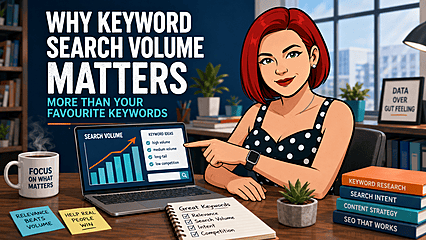
Why Keyword Search Volume Matters More Than Your Favourite Keywords
Explains why ranking for the wrong keyword can look good in a report but do very little for your business.
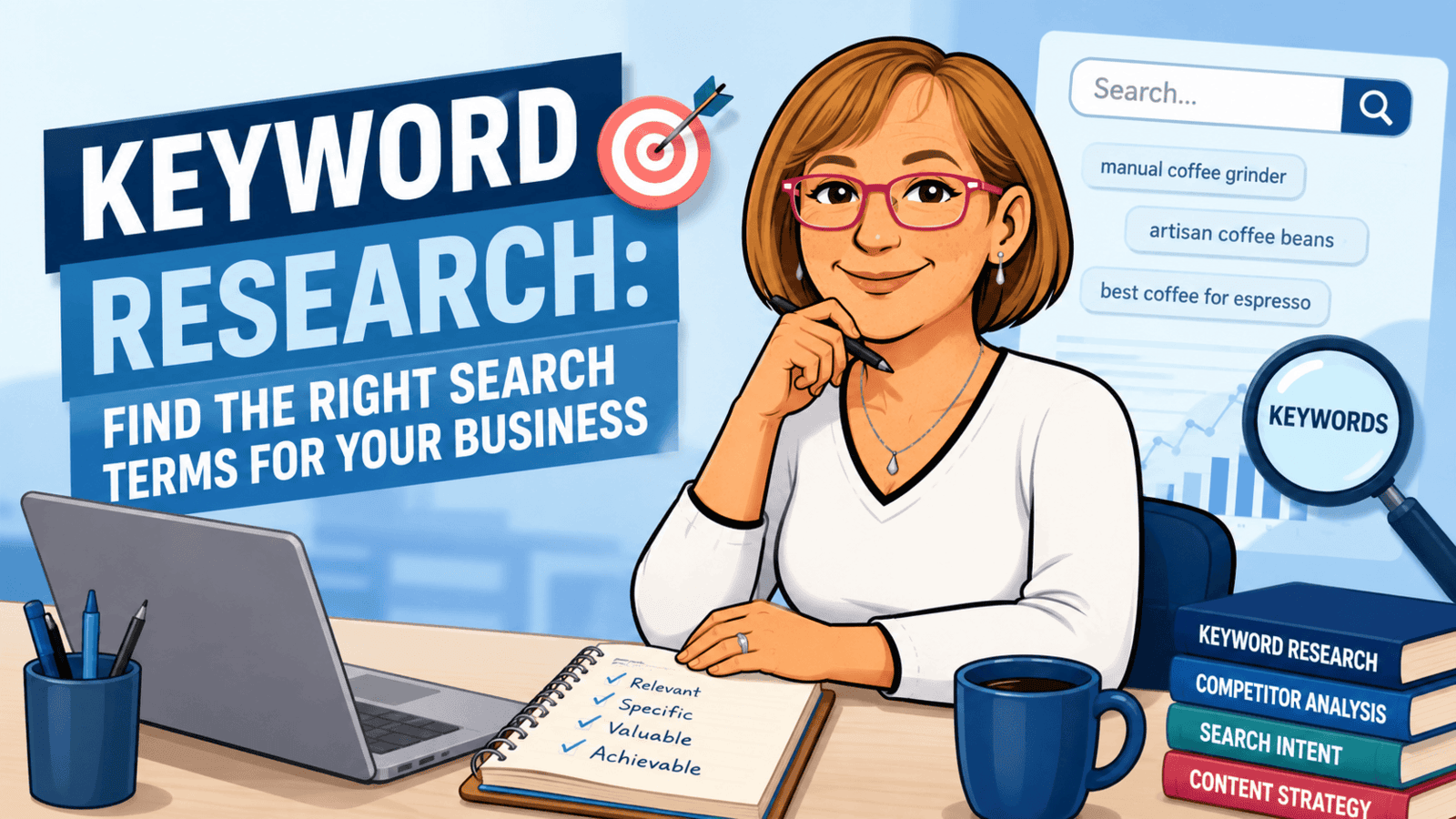
Keyword Research: Find The Right Search Terms For Your Business
Shows how better keyword choices help your website attract people who are actually looking for what you offer.
Onsite: Are Your Pages Clear Enough?
Onsite optimisation is about making your website pages clearer for both search engines and people.
It helps search engines understand what each page is about, and it helps real visitors decide whether your page is worth clicking, reading, and trusting.
This is where your keyword strategy starts turning into practical page improvements.
If the keyword strategy tells us what each page should focus on, onsite optimisation helps make that focus clear.
Quick On-Page SEO Guide
Page Title
The page title tells search engines what the page is about.
It may also appear as the clickable headline in search results, so it needs to be clear and useful.
A good page title should usually include the main topic of the page, the location if relevant, and your business name if there is room.
It has two jobs:
- Help the page get found
- Help the right person choose your result
It should not be stuffed with keywords or written like a robot trying to win a raffle.
Meta Description
The meta description is the short summary that may appear under your page title in search results.
It does not guarantee higher rankings, but it can help people decide whether to click your result.
Think of it as a small advert for the page.
It should explain what the page offers, who it helps, and why someone should visit.
H1 Heading
The H1 is the main heading on the page.
It should clearly tell visitors what the page is about.
Most pages should have one clear H1.
If your H1 is vague, missing, duplicated, or trying to say too much, search engines and visitors may struggle to understand the page properly.
H2 And H3 Headings
H2 and H3 headings help structure the rest of the page.
They make content easier to scan and help explain how the page is organised.
That matters because people do not read websites from top to bottom like a Victorian novel.
They skim. They scan. They jump around. They look for the bit that answers their question.
Clear headings help them find it.
Image Alt Text
Alt text describes an image for accessibility tools and search engines.
Good alt text should explain what the image shows in plain English.
It should be accurate, useful, and natural.
It should not be a dumping ground for keywords.
Bad alt text:
SEO SEO audit website ranking Google business growth
Better alt text:
Michael reviewing an SEO audit on a laptop
Internal Links
Internal links are links from one page of your website to another.
They help visitors move through your site and help search engines understand which pages are connected.
Good internal links use natural wording.
For example, linking the words “SEO support options” to a page about SEO services is useful.
Linking “click here” is less helpful because it gives no context.
Page Content
Your page content should clearly explain what the page is about, who it helps, and what someone should do next.
Good content answers real customer questions.
Weak content often talks around the subject, uses vague claims, or says very little that helps someone make a decision.
Search engines need clear content.
So do humans.
Funny how often that gets forgotten.
How To Use The Onsite Actions In Your Audit
Your audit may show a list of onsite actions.
Do not just look at the action title and assume you know what it means.
Click the arrow on the right-hand side of each action.
That opens more detail, including:
- what the action means
- why it matters
- how to fix it
This is where the report becomes more useful.
Instead of staring at a list of warnings, you can see the reasoning behind each action and what improvement is being suggested.
The audit may only show a selection of actions, not every possible issue across the whole website. Again, bird’s-eye view, not a full engineering report with biscuits.
Related Blog
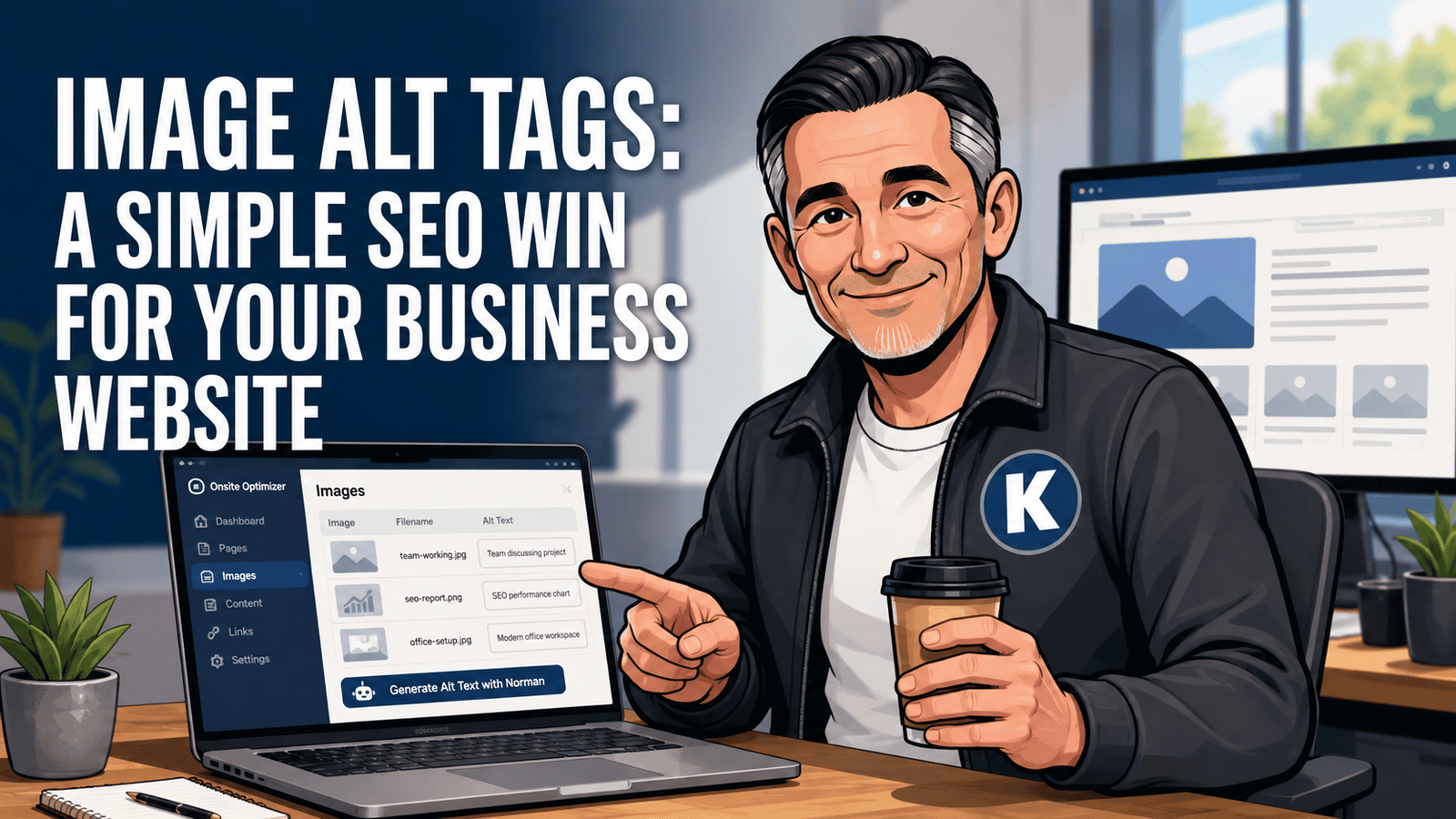
Image Alt Tags: A Simple SEO Win For Your Business Website In 2026
Explains how alt text helps search engines, accessibility tools, and users understand your images.
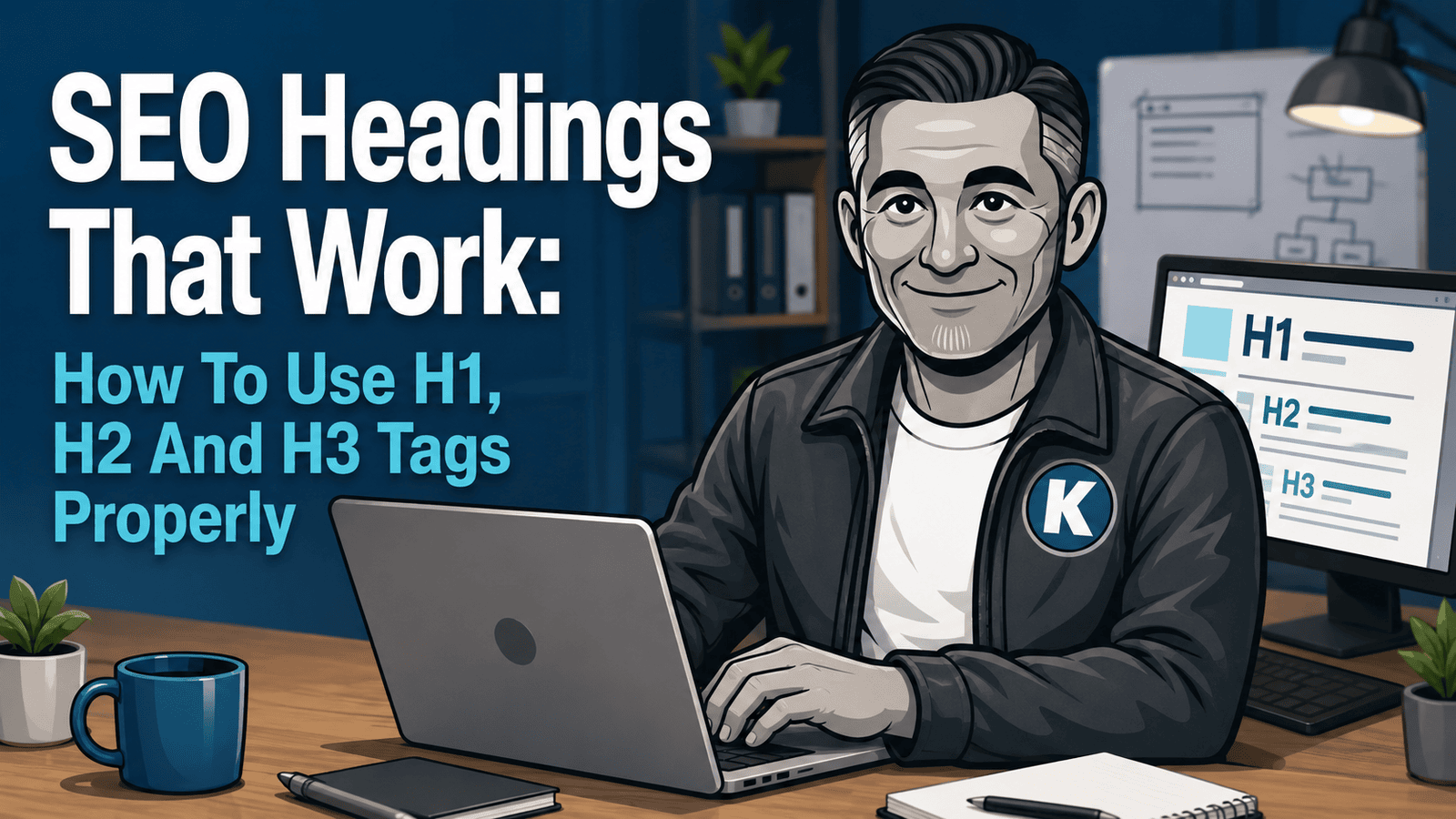
SEO Headings That Work: How To Use H1, H2 And H3 Tags Properly
Speed: Is Your Website Slow Enough To Cause Problems?
Site speed matters.
A slow website can frustrate visitors, reduce enquiries, and make it harder for people to use your website properly.
It can also affect SEO, especially when slow loading creates a poor experience or gets in the way of search engines understanding your pages efficiently.
But speed is not usually the first place to start.
In most cases, the priority should be:
- Sort the keyword strategy
- Improve the onsite optimisation
- Then look at speed, content, and backlinks as part of the wider plan
Why?
Because there is not much point in making a poorly focused page load beautifully quickly.
Fast confusion is still confusion. It just arrives sooner.
Why Speed Is Different From Keywords And Onsite SEO
Keyword strategy and onsite optimisation are usually SEO-led.
Speed improvements often sit closer to web design or web development.
A simple quick win is image compression.
Large images are one of the most common causes of slow pages, and this is often something a website owner can improve without touching code. If your website lets you replace oversized images with properly compressed versions, that is usually worth doing.
Other speed fixes may be better left to your website designer or developer, unless you are comfortable working with web development.
That includes:
- reducing unnecessary scripts
- improving hosting
- changing plugins
- adjusting templates
- improving caching
- fixing platform or theme issues
Those changes can help, but they can also break things if handled badly.
And fixing one problem by creating three new ones is not progress. It is just DIY with consequences.
What To Focus On First
Do not chase a perfect speed score just because a tool waves a number at you.
Start with the basics.
Ask:
- do important pages feel slow when you open them?
- do large images take too long to load?
- does the site work properly on mobile?
- do pages jump around as they load?
- are visitors likely to give up before the page finishes loading?
If users are waiting, bouncing, or getting frustrated, speed needs attention.
If the score is imperfect but the website loads well for real people, it may not be the first priority.
The aim is not to win a speed test.
The aim is to remove anything that is clearly hurting the user experience or holding the website back.
Related Blog
Page Speed And SEO: How Loading Time Impacts Your Rankings
Explains why slow websites can hurt visibility, user experience, and enquiries.
Backlinks: Who Is Pointing Trust Towards Your Website?
A backlink is a link from another website to yours.
Search engines can use backlinks as trust signals.
In simple terms, when a relevant and credible website links to you, it can help support your authority.
That does not mean backlinks are just a numbers game.
More is not always better.
Better is better.
Quality Matters More Than Quantity
Backlinks are not about buying thousands of cheap links.
Buying 5,000 backlinks is not a shortcut to SEO success. It is more like inviting a clown car of problems into your website and hoping Google does not notice the shoes.
Good backlinks usually come from relevance, trust, and real-world relationships.
They might come from:
- local business directories
- trade associations
- supplier websites
- partner businesses
- local press
- community involvement
- useful resources people choose to reference
- genuine industry mentions
The best backlinks make sense.
They are relevant to your business, your location, your industry, or your expertise.
Where Backlinks Fit In The Bigger Picture
Backlinks matter, but they usually work best after your keyword strategy and onsite optimisation are in better shape.
If your website pages are unclear, weak, or focused on the wrong searches, backlinks may point attention towards pages that are not doing their job properly.
That is not ideal.
It is like sending guests to a shop before anyone has put the lights on, labelled the shelves, or worked out what is actually for sale.
So the usual order is:
- Make sure your keyword strategy is sensible
- Improve the onsite optimisation
- Strengthen the content
- Earn relevant backlinks that support trust
Backlinks can help build authority, but they are not a substitute for clear, useful pages.
What To Watch Out For
Be careful with backlink offers that promise quick results.
Especially anything that sounds like:
- 500 backlinks this week
- instant authority
- guaranteed rankings
- cheap guest posts at scale
- links from “high DA” websites with no real relevance
- packages where nobody can explain where the links come from
If a backlink exists only to manipulate search rankings, it may carry risk.
A good link should have a reason to exist beyond SEO.
That reason might be business relevance, local connection, professional credibility, useful content, or genuine referral value.
The goal is to earn trust from backlinks that add value to your SEO, not collect random links for the sake of a bigger number.
Related Blog
Bad Backlinks In 2026: How To Spot Risk Without Damaging Your SEO
Explains why backlink quality matters and why buying piles of cheap links is usually a terrible plan in a cheap suit.
From Audit To Action
Your audit has already done the first job.
It has shown where your website may need clearer keywords, stronger onsite optimisation, better content, improved speed, or more trust through backlinks.
Now the question changes.
It is no longer just:
“What does the audit say?”
It becomes:
“What is the right way to fix the problem?”
That depends on your website, your goals, your budget, and how much time you want to spend dealing with SEO yourself.
Some business owners want guidance and a clear structure.
Some want recommended SEO actions prepared for approval.
Some want the work handled properly while they get on with running the business.
All three are valid.
The trick is choosing the right fit, not being pushed into the biggest option because someone got excited near a pricing table.
Your Three SEO Support Options
KickstartSEO has three SEO programmes, built around different levels of support.
Optimiser Essentials
£69 + VAT / Month
True DIY SEO
You're Comfortable Working on Your Website
Best for: You are comfortable making changes on your site and want a clear plan to follow.
- Clear priorities, no random tasks
- Built for steady progress
- Ideal if you have more time than budget
For those with some SEO knowledge who can carry out the work Norman identifies.
Optimiser AI
£149 + VAT / Month
Client-Led & Norman Powered
Our Most Popular Programme
Best for: You want Norman to take on more of the load while you guide and approve the work.
- Momentum without taking on another job
- You guide and approve the work
- Built for consistent progress
Norman analyses, fixes issues with your approval, and writes content for you to implement.
Optimiser Premium
£349 + VAT / Month
Fully Managed SEO
For Busy Business Owners
Best for: You want the strongest level of support while you focus on running your business.
- Consistent delivery without the admin
- Built for owners who value time
- Focused on steady, measurable progress
Optimiser Premium is led by Michael, founder of KickstartSEO and lead SEO strategist.
Not Sure Which Route Fits?
That is normal.
An audit can show there is work to do, but it cannot know your time, budget, confidence, or business priorities.
That is where a conversation helps.
We can help you understand what matters most, what can wait, and which SEO programme fits your situation best.
No pressure to choose the biggest programme.
No jargon.
No scare tactics.
Just a clear conversation about how to solve the problem your audit has highlighted.
The audit has shown where attention may be needed.
Now we can help you decide what action makes sense.