If a tree falls in the forest and no one is there to hear it, does it make a sound?
Yes. Probably. We can leave that one to philosophers and people with too much time near trees.
Keywords work differently. If nobody is searching for your chosen phrase, ranking first for it will not bring you visitors. There is one important exception, though: your brand name.
What's inside? (TL;DR)
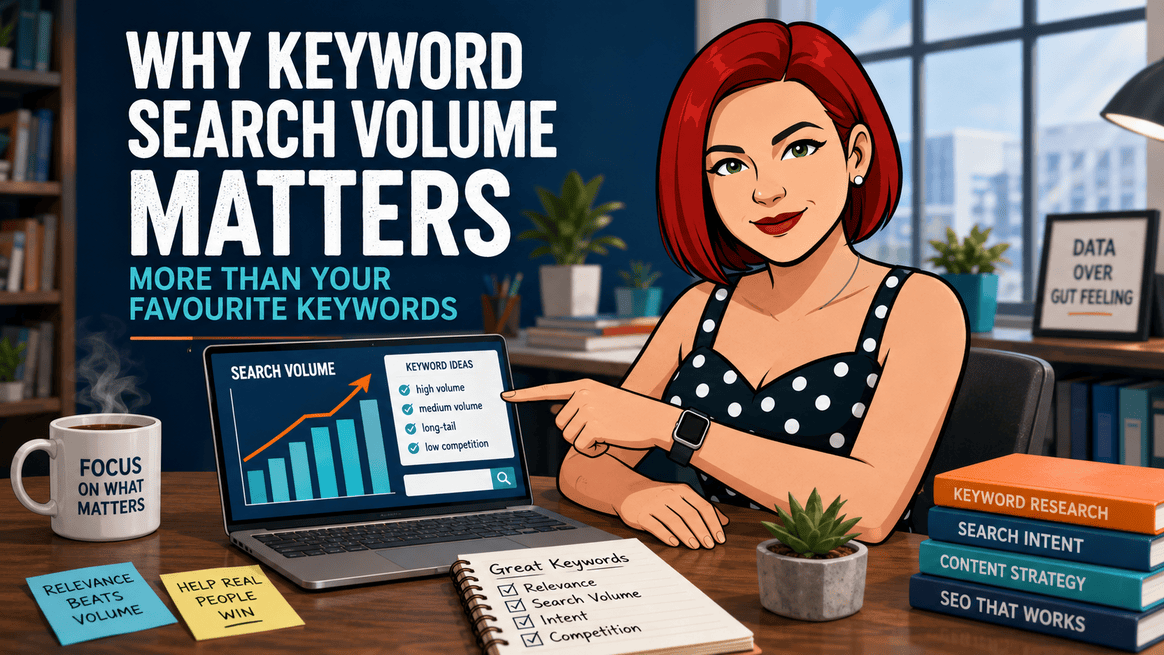
This article explains why keyword research should be based on real search behaviour, not the words business owners personally prefer.
It shows how search volume reveals what customers actually type, how brand searches are different, and how better keyword choices can shape more useful content.
Useful Sections
Estimated reading time: 3 minutes
The Keyword Reality Check
Many business owners have strong opinions about which keywords they should rank for.
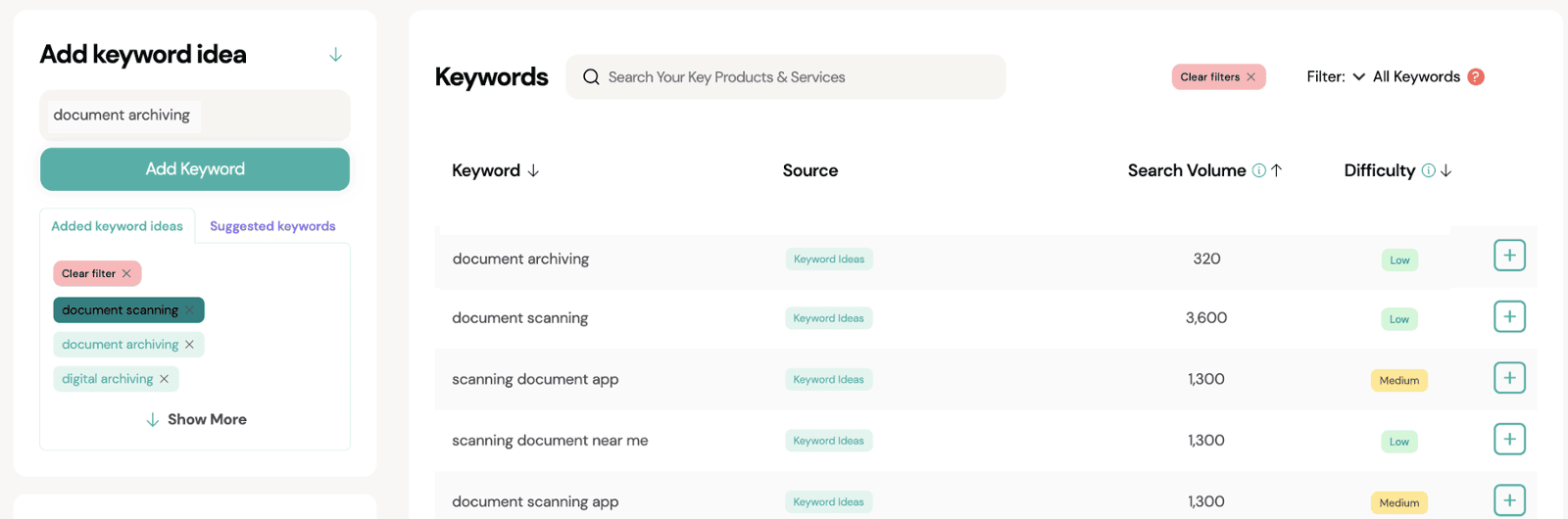
One digital services company recently insisted they needed to rank for “document archiving” because it sounded more professional. But the keyword research told a different story: “document scanning” gets 3,600 monthly searches, compared to just 320 for “document archiving”.
That gap between industry terminology and actual search behaviour appears across most sectors. Business owners often prefer formal or technical terms. Their potential customers usually use simpler, more familiar language when searching online.
Brand Searches: The Exception To The Rule
When someone searches for “KickstartSEO”, they already know us. They might want our phone number, pricing, or service details.
Even with low search volume, optimising for your brand name helps these potential clients find exactly what they need. Your About Us and Contact pages should consistently rank well for your company name.
Finding What People Search For
The words we use within our industries often differ from the language our customers use.
Marketing teams might talk about “social media engagement metrics”, but their clients search for “how many Instagram likes are good”. Web designers discuss “responsive layouts”, while clients look up “website works on mobile”.
The KickstartSEO Portal’s keyword research tool exposes these differences by showing exact monthly search volumes. Beyond raw numbers, it reveals patterns in how people search.
Looking at our document services example, we found variations like:
“scanning document app” with 1,300 searches
“scanning document near me” with 1,300 searches
“document scanning service” with 890 searches
“scan documents to PDF” with 720 searches
Each variation shows how real people think about and search for these services.
Search Volumes Tell Customer Stories
Search volumes do more than count searches. They reveal customer thinking patterns.
When someone types “document scanning near me”, they are likely ready to hire a service. However, someone searching for a “document scanning app” might want a DIY solution.
Understanding these patterns helps shape your content strategy.
The KickstartSEO Portal analyses these patterns by showing:
monthly search volumes for specific phrases
related terms you might have missed
local search variations
competition levels for each term
total traffic potential across all variations
Making Smart Keyword Choices
Choosing keywords is not about personal preference. It is about matching how your customers search.
Before optimising for any keyword:
Check its actual search volume in your target area
Look for alternative phrases people use more often
Consider the competition level in your market
Compare traffic potential between different options
Review the intent behind different search variations
Our difficulty ratings help you choose winnable battles.
Low difficulty means fewer competing pages and a better chance of ranking quickly. Medium difficulty needs more effort but could bring good returns. High difficulty signals tough competition and is usually worth targeting only if you have the resources for a longer-term campaign.
When Zero Means Something
Finding low search volume for your preferred keyword is not a failure. It is useful market intelligence.
In our document example, optimising for “scanning” instead of “archiving” could mean reaching ten times more potential customers.
Those numbers tell a straightforward story about which words connect with your audience.
Bridging The Knowledge Gap
This gap between customer searches and industry terminology allows us to create better content.
While we use popular search terms like “document scanning” to help people find us, we can introduce them to newer concepts like digital archiving once they are on the page.
Explaining industry terms and building on what visitors already know makes your content more helpful while improving your chances of being found in search.
Google’s Experience, Expertise, Authoritativeness, and Trust standards recognise this kind of helpful content. Clear explanations that connect familiar terms to industry concepts help establish your expertise and improve your visibility in search results.
Turn Research Into Results
The KickstartSEO Portal helps identify these opportunities by showing popular search terms and related industry concepts.
Can We Help?
Many people end up on our blog because their SEO is not working the way they hoped, and they are trying to work out what to do next.
Sound familiar?
Keyword research is one of those areas where opinion can quietly mug common sense in a dark alley.
If your site is targeting phrases your customers are not using, we can help you spot the gap, choose better opportunities, and build content around the searches that actually matter.