

Most business blogs do not fail because the owner cannot write.
They fail because nobody has worked out why the blog should exist in the first place.
I read a lot of blogs. It is part of the job. At KickstartSEO, we write blog posts for clients as part of their SEO strategy, but we also work with many clients who write their own content. Some of them are really good. Some, well, let’s just say the keyboard was involved.
The difference is rarely just writing ability.

What's inside? (TL;DR)
This article explains how to build a blog strategy around real reader questions, useful search opportunities, and content that has a proper job to do.
It also covers why one strong blog a month can be far more useful than publishing random content for the sake of it.
Useful Sections
Estimated reading time:
8 minutes
The stronger blogs usually have a purpose. They answer a real question. They help the reader understand something. They support a service, explain a decision, build trust, or help the business get found by the right people.
The weaker ones often feel like they were written because someone decided, “We need a blog this month,” and then went hunting for a topic five minutes before lunch.
That is not a strategy. That is content panic with a publishing date.
Writing for the Sake of It is Not a Strategy
There is still a lot of advice floating around that tells businesses to blog regularly.
That advice is not wrong, but it is incomplete.
Regular content can help. Consistency matters. A website that never changes can start to feel stale, both to visitors and to search engines. But publishing more content does not automatically mean building more visibility.
If the topics are random, thin, repeated, or disconnected from what your customers actually care about, you are not building a useful blog. You are just adding pages.
That might make the website bigger. It does not necessarily make it stronger.
A blog strategy should answer a few simple questions before anyone starts writing. Who is this for? What problem does it help them solve? Why should this article exist? How does it support the wider website? What should the reader understand or do next?
If you cannot answer those questions, the blog probably needs more thinking before it needs more words.
Not Every Blog Has to Be an SEO Blog
There is nothing wrong with writing opinion pieces, reflective life updates, behind-the-scenes posts, or even a blog about the new puppy you adopted.
Those posts can help people understand who you are. They can show personality. They can build trust. They can make your business feel more human.
And frankly, some of them are more enjoyable to read than another 900 words called “Our Commitment to Excellence”.
But there is a difference between blogging for connection and blogging for search visibility.
If getting found is part of the goal, you also need content that answers the questions people are actually searching for. That might mean writing about problems, services, comparisons, costs, risks, processes, or decisions your customers are trying to understand.
That does not mean writing for search engines instead of people. It means writing useful content around topics people are already looking for.
Because if someone finds your blog through search, the job is not done. They still need to read it, trust it, and feel that it helped. A keyword may help them arrive. Value gives them a reason to stay.
Start With the Reader’s Problem
A useful blog starts with the reader, not the business.
That sounds obvious, but many business blogs do the opposite. They start with what the business wants to say, then try to dress it up as useful content.
A better starting point is the question your customer is already carrying.
They might be asking whether they should do something themselves or pay someone else to handle it. They might want to know how much something should cost, why something is not working, what their options are, what happens if they ignore the issue, or how to choose the right provider.
Those are real questions. They are also search opportunities.
The best blog topics often come from sales calls, client conversations, support questions, objections, and moments where someone says, “I’m probably being thick, but…”
They usually are not being thick. They are giving you the next useful article.
Build Around Search Intent, Not Just Keywords
Keyword strategy still matters.
Anyone telling you keywords are dead is probably trying to sell you a new acronym. Possibly three.
But keywords are not magic sprinkles. You cannot throw them over a weak article and expect it to become useful.
A sensible keyword strategy looks at what people search for, but it also looks at search intent. That “why” matters.
Someone searching “SEO tips” may want a quick list. Someone searching “why is my business not showing on Google” probably has a more urgent problem. Someone searching “how much does SEO cost for a small business” may be much closer to making a decision.
Those searches need different articles.
A blog about a broad topic may attract attention, but a blog answering a specific customer question may attract the right attention. That is the difference between traffic and useful traffic.
Search Volume is Useful, but It is Not the Boss
Search volume can help you understand demand.
It tells you, roughly, how often people search for a phrase. That can be useful when you are deciding whether a topic has enough interest to justify an article.
But search volume should not be treated like your managing director.
A keyword with high search volume may be too broad, too competitive, or too vague to support a useful article for your business. A lower-volume topic may be much more valuable if it matches a real customer question and gives you a chance to show useful experience.
Some of the best business blogs will never attract thousands of visitors. That does not make them failures.
If a blog answers a specific, high-intent question for the right person, it can still be extremely valuable. A post that helps five serious potential customers understand a problem may be worth far more than a generic article that attracts 500 bored visitors and one enquiry from a crypto casino.
Use search volume to understand opportunity, but do not let it flatten your judgement.
Your own experience with customers matters too. If people ask you the same question again and again, that is a signal. If prospects keep misunderstanding the same issue, that is a signal. If a topic helps explain your service, your process, your pricing, or your values, that may be worth writing even if the search volume looks modest.
Good strategy uses data and judgement. One without the other gets messy.
Show Experience, Not Just Information
This matters even more now.
AI can produce surface-level information very quickly. So can half the internet. That means a blog built only from generic explanation is going to struggle to stand out.
Experience is different.
Experience says, “Here is what we usually see.” It says, “This is where people get caught out.” It says, “This looks important, but it usually matters less than this other thing.” It says, “Here is the order I would tackle this in.”
That kind of judgement is valuable.
In SEO terms, this connects to E-E-A-T: experience, expertise, authoritativeness and trust. In plain English, it means the article should show that you know what you are talking about and that the advice is grounded in real understanding, not copied surface-level waffle.
For small business owners writing their own content, this can be a real advantage.
You know the questions customers ask. You know where they hesitate. You know what they misunderstand. You know what causes problems later.
Use that.
A good blog does not need to pretend the business is perfect. It needs to be useful, honest, and written for people.
That is how you build trust.
Timeliness Matters More Than Trend-Chasing
Timely content can work very well, but that does not mean chasing every trend like a spaniel after a tennis ball.
Timeliness means understanding what matters now for your customers, your industry, and your market.
For an accountant, that might mean writing around tax deadlines or budget changes. For a landscaper, it might mean planning content before spring demand kicks in. For a retailer, it might mean seasonal buying patterns. For a local service business, it might mean answering questions that come up at certain points in the year.
In SEO, it might mean explaining AI search, Google changes, or the latest panic being sold on LinkedIn as if the world ends at 4pm on Friday unless you buy someone’s framework.
The trick is to be current without becoming frantic.
Good timely content helps people understand what has changed, what has not changed, and what they should do next. That is far more useful than shouting “everything has changed” every six weeks.
One Good Blog a Month Beats Three Half-Good Ones
Many new clients come to us with no blog at all.
That is not unusual. Plenty of small business websites were built as static brochure sites, then left to sit there quietly hoping Google would develop psychic powers.
When that happens, our advice is usually simple: start somewhere.
For some clients, that might mean writing their own content with a clear plan. For others, it might start with the one blog a month Norman writes for them as part of their SEO strategy.
One blog a month can feel like a slow start. But slow is not the same as weak.
After 12 months, you have 12 useful articles. Twelve pages that can answer real questions, support service pages, feed social posts, strengthen internal linking, and give you somewhere meaningful to drive traffic.
That is very different from having no blog, no useful resources, and nowhere for interested visitors to go beyond the usual homepage, services page, and contact form.
The point is not to publish for the sake of it. The point is to build a content base deliberately, one useful article at a time.
Three half-good blogs a month may look busier. One strong blog a month usually works harder.
A Simple Test Before You Write
Before writing your next blog, pause and ask a few questions:
Who is this article for?
What question does it answer?
What search opportunity does it support?
Why are we qualified to write it?
Why does it matter now?
What should the reader understand by the end?
What should they do next?
Does this really need to be a blog, or would it work better as a service page, guide, email, video, or social post?
That last question matters.
Not every idea belongs on the blog. Some topics deserve a permanent page. Some are better as short social posts. Some are useful internally but not strong enough for search. Some should quietly go in the bin, where they can enjoy a peaceful retirement.
A good content strategy is not just about deciding what to write. It is also about deciding what not to write.
An Intentional Blog Supports the Whole Website
A strong blog should not sit in isolation. It should support the wider website.
That might mean explaining a service in more depth. It might mean answering a question that comes up before someone enquires. It might mean supporting a location page, strengthening an internal link path, or helping visitors understand why a problem matters.
It can also give you useful content to share elsewhere.
A good blog can feed your social media, support your email marketing, help sales conversations, and give people a reason to return to your website. It can also help search engines and AI systems understand what your business knows, who you help, and what topics you are genuinely useful on.
That does not happen by accident.
It happens when each article has a job.
Write Less Random Content. Build More Useful Assets.
Blogging still matters. Random blogging does not.
The goal is not to publish more words. The goal is to build a useful content base that helps real people and supports the way your business wants to be found.
That means choosing better topics, answering better questions, showing real experience, and publishing at a pace you can maintain without dropping the quality.
If that means one good blog a month, start there.
A year from now, that gives you 12 useful assets instead of another 12 months of thinking, “We really should start blogging.”
And yes, you probably should.
But start with a strategy. The keyboard can wait for its turn.
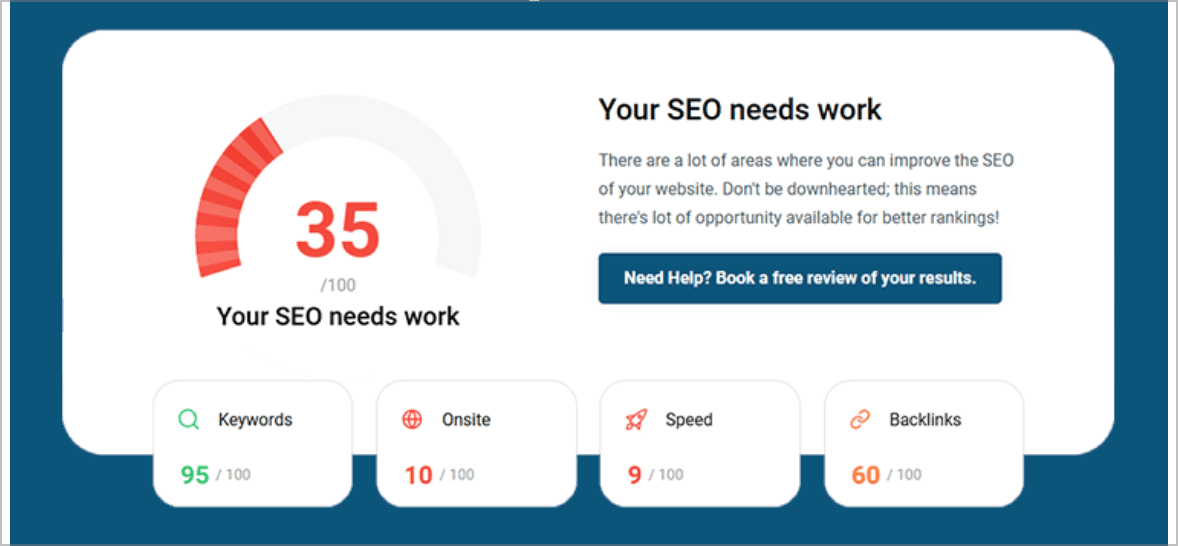
Can We Help?
Many people end up on our blog because their SEO is not working the way they hoped, and they are trying to work out what to do next.
Sound familiar?
If your blog has no clear strategy, the next step is not usually “write more”.
It is working out which topics are worth writing, what questions your customers are already asking, and where useful content could support your wider visibility. A good audit can help spot those gaps before you spend another month feeding the content machine with beige.