SEO has a habit of reinventing itself every few years. New acronyms appear, panic spreads, and someone declares that “SEO is dead” for the hundredth time.
I call this irrational exuberance.
It’s what happens when optimism runs ahead of reality. In SEO, that looks like breathless claims that AI has replaced search, that websites no longer matter, or that a clever prompt is all you need to win visibility. We’ve seen this cycle before with voice search, social signals, AMP, Web3, and just about every shiny object that promised to end SEO as we know it.
AI is a genuine shift. But the exuberance around it is often irrational. The fundamentals haven’t vanished. They’ve been reframed.
What's inside? (TL;DR)
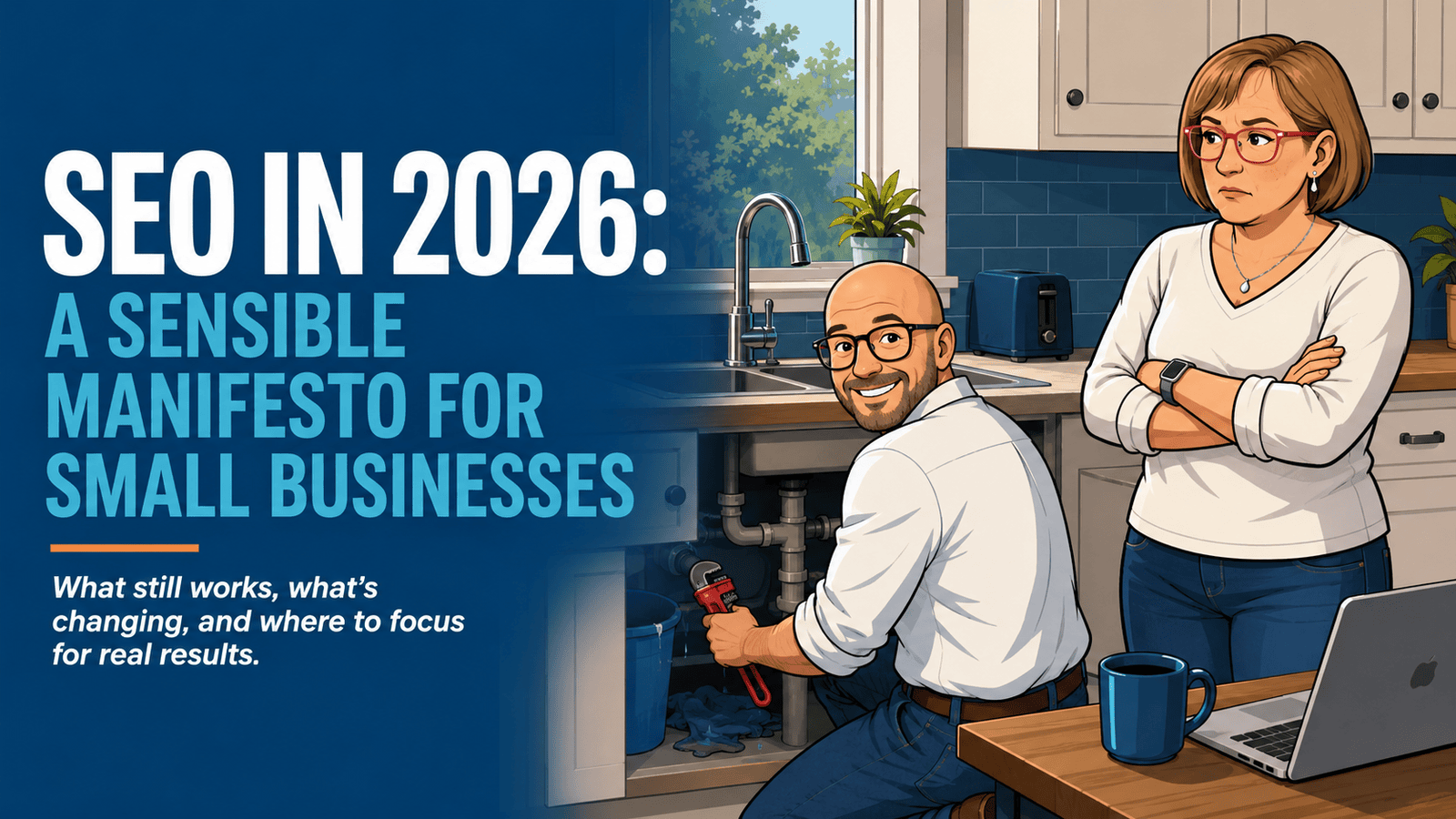
SEO in 2026 is not about abandoning the basics or chasing every new AI search trick.
This article explains what has changed, what still matters, and why small businesses need to understand the difference between search engines people use to act and AI answer engines people use to think.
Useful Sections
Estimated reading time:
7 minutes
From Blue Links To Search Everywhere Optimisation
Traditional SEO was built around one goal: ranking web pages in Google’s list of links.
That model no longer reflects reality.
Search has fragmented. Users now ask questions across Google’s AI Mode, ChatGPT, Gemini, Perplexity, YouTube, TikTok, Reddit, and LinkedIn. AI-generated summaries often answer the question before a click ever happens.
In 2026, SEO is no longer just “search engine optimisation”. It’s Search Everywhere Optimisation.
The objective has shifted from “How do we rank number one?” to “How do we become the trusted source AI systems choose to reference?”
Visibility now includes being quoted, summarised, cited, and recommended, even when no click occurs.
Traditional Search Engines Vs AI Answer Engines
One of the biggest mistakes I see in 2026 is assuming Google, Bing, and AI answer engines all do the same job.
They don’t.
Traditional search engines are action engines. They shine when someone wants to do something: hire a service, buy a product, compare providers, check reviews, or make contact.
If you’ve got a busted pipe and you want a plumber to come round and fix it, you start with Google. You care about location, availability, trust, and proof. That’s where decisions get made and money changes hands.
AI answer engines are different.
They’re thinking engines. They help people understand problems, explore options, and decide what to do next. If you want to know why the pipe burst, whether it’s a DIY fix, or what questions to ask before calling someone, AI is brilliant.
Fix the pipe yourself? Ask an AI.
Get a plumber round today? Start with Google.
Think. Decide. Act.
This is how search works now.
AI answer engines are where people think.
Traditional search engines are where people decide.
Action still happens in the real world.
Trades win on Google. Thought leaders win in AI answers.
The mistake in 2026 is assuming you only need one.
If you’re a trade or service provider, your centre of gravity still sits firmly in traditional search engines. That’s where intent turns into action. AI might influence the decision, but Google is still where it gets finalised.
If you’re a consultant, strategist, or thought leader, the centre of gravity shifts. Your value lives in your thinking. Your opinions, frameworks, and experience need to be discoverable and trusted inside AI answer engines, because that’s where people now go to form their first impressions.
Strong brands understand both. They don’t chase everything, but they know where the weight really sits.
Take Us As A Case Study
We’ll use ourselves as a practical example.
KickstartSEO is both a service provider and a thought leader, and we’re deliberate about how we show up in each role.
Our commercial centre of gravity still sits with traditional search. When UK businesses need SEO help, they don’t ask an AI to hire an agency for them. They search, compare, check reviews, and get in touch. If we weren’t visible and credible on Google, nothing else we do would matter.
But authority doesn’t start at the point of contact anymore.
Our thinking needs to exist beyond our website. Our opinions and frameworks need to be visible where people now go to make sense of search. That means showing up in AI answers, not through tricks or shortcuts, but by publishing clear, experience-led content that AI systems can recognise, trust, and reference.
Google brings people to us when they’re ready to act.
AI answer engines shape how they think before they arrive.
Why We Built Norman This Way
There’s another reason we sit comfortably on both sides of this divide.
We were forced to.
We took the position early on that AI works best when it’s powered by a human, and that belief shaped how Norman works from day one.
Some people want to fix the leak themselves.
The DIY crowd values guidance, not guesswork. Norman analyses the site, prescribes a solution, and sets out the order things should be tackled in, with the reasoning behind it. Once that prescription is approved, the client stays in control.
Think of it like this.
My wife is excellent at giving “helpful” driving advice. She doesn’t take the wheel, but she’s very clear about the route, the timing, and the turn I’m about to miss.
I’m still driving the car, but I’m no longer guessing where I’m going.
That’s how Norman works.
He does the heavy thinking up front. Once the plan is agreed, clients either carry out the work themselves through Optimiser AI, or hand execution over fully through Optimiser Premium. Either way, implementation stops being reactive and starts being intentional.
AI accelerates execution.
Human experience keeps it pointed in the right direction.
SEO Is More Like Golf Than People Admit
I’ve often used a golf analogy when talking about SEO, because it still fits better than most.
In golf, the game is simple.
You hit the ball.
You go and find the ball.
You hit the ball again.
The goal is to get the ball in the hole in as few strokes as possible.
SEO in 2026 works the same way.
You make a change.
You measure the change.
You make the next change.
When you reach the top of the search results and start converting the right visitors, you’ve succeeded.
But here’s the important part.
In golf, every shot is an attempt to hit the ball further and straighter. You adjust your grip, your stance, and your swing. You learn from the last shot.
And when you play that same hole next week, the goal is to sink the ball in fewer strokes than last time. Preferably with less time spent looking for your ball in the woods.
SEO strategy in 2026 needs to evolve in exactly the same way.
You don’t lock in a plan and hope it holds. You refine it. You adapt to conditions. You respond to how the course is actually playing, not how you wish it would.
That’s not uncertainty.
That’s competence.
What We Believe, And What We Don’t
I spent most of 2025 admitting I didn’t know what I didn’t know.
Anyone who claimed to have AI search completely figured out was guessing or selling something. I made a few predictions myself, and so far they’ve held up. But certainty has never been the job. Paying attention has.
That’s how we’re approaching 2026.
We don’t promise hacks.
We don’t sell shortcuts.
We don’t chase every new platform.
As search behaviour changes, we’ll adapt, inform, and respond. Calmly and deliberately. It’s how I’ve worked since I first got into this ever-changing industry over 30 years ago.
The platforms change.
Human behaviour doesn’t, at least not nearly as much.
So, Are The Fundamentals Still True?
Yes. Completely.
Getting found in AI answer engines still begins with good SEO. If your site can’t be discovered, understood, and trusted by Google or Bing, it will struggle to be surfaced reliably by ChatGPT, Gemini, Perplexity, or Claude.
AI doesn’t reward shortcuts.
It amplifies what already works.
The future of SEO isn’t about abandoning best practice. It’s about applying it with clarity, discipline, and a realistic understanding of how people actually search.
The more things change, the more they stay the same.
Real experience.
Trust earned, not claimed.
That’s the game for 2026.
Can We Help?
Many people end up on our blog because their SEO is not working the way they hoped, and they are trying to work out what to do next.
Sound familiar?
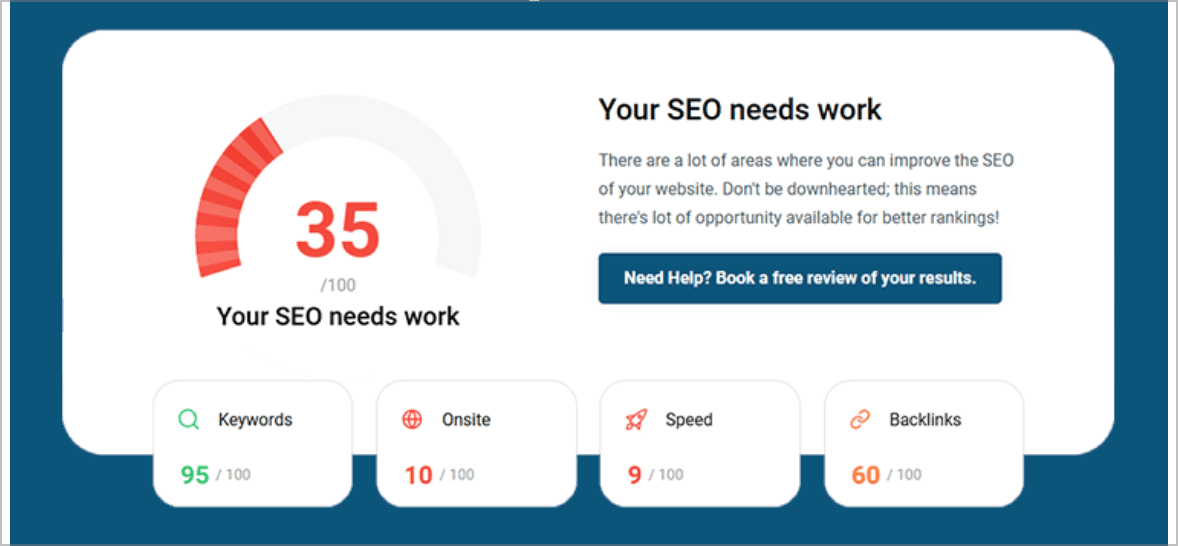
If you’re trying to work out what SEO should look like for your business in 2026, don’t start by chasing every shiny new AI trick.
Start by finding out where your website stands now, what search engines can trust, and what needs sorting before the next big thing becomes another expensive distraction.