

Picture this: you are sitting in heavy traffic, inching towards your exit. The minutes tick by, the frustration builds, and before long you are wondering whether there is a better route.
That is what a slow website feels like to your visitors.
If your pages take too long to load, people usually do not wait politely while your website loads. They leave, find a faster option, and your chance to win that enquiry disappears.
Page speed is not just a technical nice-to-have. It affects user experience, conversions, crawl efficiency, and how search engines assess your website's quality. Not exactly glamorous, but neither is watching potential customers bounce away because your homepage is having a lie down.
What's inside? (TL;DR)
This article explains why page speed matters for both visitors and search engines.
It covers how slow loading times affect rankings, user experience, and conversions, plus the practical checks worth prioritising first.
Useful Sections
Is Page Speed A Ranking Factor?
Yes, page speed is a ranking factor.
Google confirmed page speed as a ranking factor for desktop searches in 2010 and later expanded it to mobile searches in 2018. That does not mean speed is the only thing that matters, but it does mean slow loading times can make life harder for your website.
The Mobile-First Index
With Google’s shift to mobile-first indexing, the speed of your mobile site matters more than ever.
If your mobile pages load slowly, it can affect how users experience your website and how search engines assess its overall quality. In plain English: if your site is clunky on a phone, that is a problem worth fixing.
How Page Speed Affects SEO
Page speed can affect SEO in several practical ways:
Crawl Efficiency: Faster sites allow search engines to crawl more pages, which may help more of your content get discovered and indexed.
User Experience: Quick-loading pages keep visitors engaged, reduce frustration, and make it easier for people to explore your website.
Conversion Rates: Faster pages often support better enquiry rates, sales, bookings, or whatever action your site is meant to encourage.
Core Web Vitals: Google’s Core Web Vitals include loading performance and form part of the wider page experience picture.
Speed will not rescue weak content, poor structure, or a confused offer. But if your site is slow, you are asking visitors and search engines to work harder than they should.
Measuring Your Page Speed
To assess your website’s speed, use tools such as Google PageSpeed Insights or GTmetrix.
These tools provide scores, diagnostics, and specific recommendations for improvement. They are useful, but do not get obsessed with chasing a perfect score for the sake of it. The real question is whether your pages load quickly enough for real users and whether any issues are holding back performance.
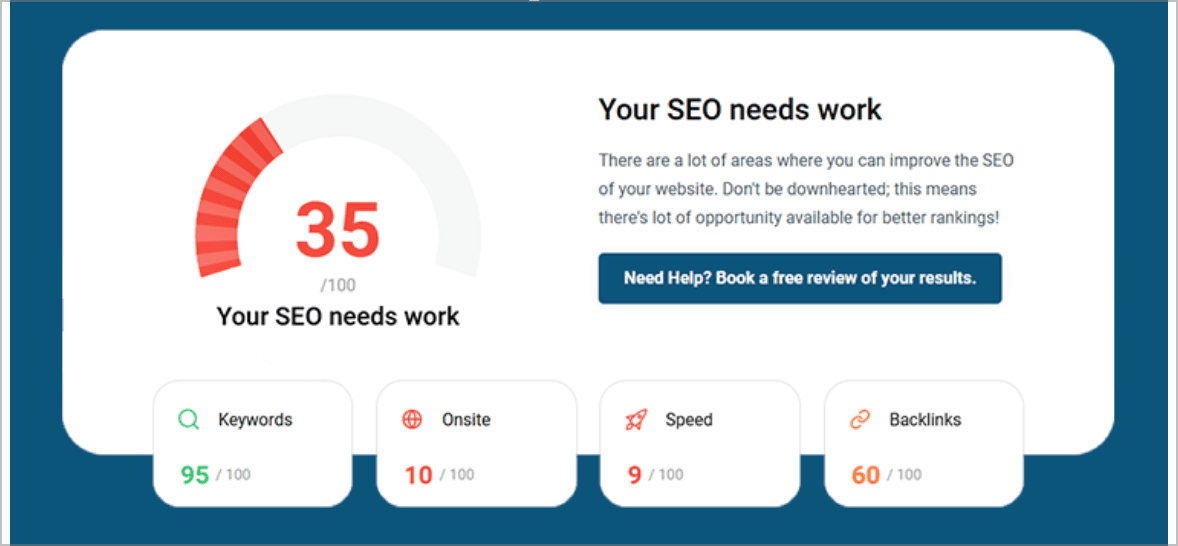
We also include page speed analysis in our free SEO audit, so you can see whether slow loading times are one of the things holding your website back. It gives you a clearer starting point before you start tweaking settings, compressing images, or blaming the poor web developer.
Tips For Improving Page Speed
Improving your website’s speed does not have to mean ripping the whole thing apart and starting again. Often, the biggest gains come from sorting the basics properly.
Optimise Images: Large image files are often the main culprit behind slow pages. Use suitable file formats, compress images without ruining quality, and consider lazy loading so images only load as visitors scroll.
Enable Browser Caching: Caching stores parts of your website on a visitor’s device, so returning visitors do not have to reload everything from scratch.
Minify CSS, JavaScript, And HTML: Minification removes unnecessary characters from your code, such as spaces, comments, and formatting, without changing how the code works.
Use A Content Delivery Network: A CDN stores copies of your website on multiple servers, helping deliver content from a location closer to the visitor.
Reduce Server Response Time: Hosting matters. A slow server can drag everything else down, no matter how tidy the rest of your site is.
The impact of these changes will vary depending on your website setup. Make improvements one at a time where possible, then measure the results. Otherwise, you are just poking buttons and hoping for the best. A bold strategy, but not usually a great one.
Some of these fixes can be handled through plugins or hosting settings. Others may need support from an SEO specialist or web developer, especially if code, server performance, or theme bloat is involved.
The KickstartSEO Approach To Page Speed
At KickstartSEO, we understand the relationship between page speed, user experience, and SEO performance.
While our tools do not directly fix page speed issues, we help clients understand what is happening, what matters most, and what should be dealt with first. That includes:
Analysing current page speed using recognised tools
Identifying key areas for improvement
Providing practical recommendations tailored to the website
Helping clients work through changes with their web developer where needed
Monitoring how improvements affect wider SEO performance
The aim is not to chase technical perfection for the sake of a shiny score. The aim is to make the website faster, clearer, and easier for people and search engines to use.
Balancing Speed And Functionality
Speed matters, but it should not come at the cost of the features your website genuinely needs.
The key is finding the right balance for your website and audience. Some features add value. Others are dead weight wearing a fancy hat.
Improving page speed is also not a one-off job. Websites change, plugins update, images get added, scripts creep in, and before long your once-nippy site starts moving like it has packed for a long weekend.
Regular monitoring helps keep things under control and stops small technical issues becoming bigger SEO problems.
Can We Help?
Many people end up on our blog because their SEO is not working the way they hoped, and they are trying to work out what to do next. Sound familiar?
If your website feels slower than it should, guessing is not a strategy.
Page speed problems can sit quietly in the background, costing you visitors before they even see what you offer. We can help you understand whether speed is part of the problem, what matters most, and what needs fixing first.