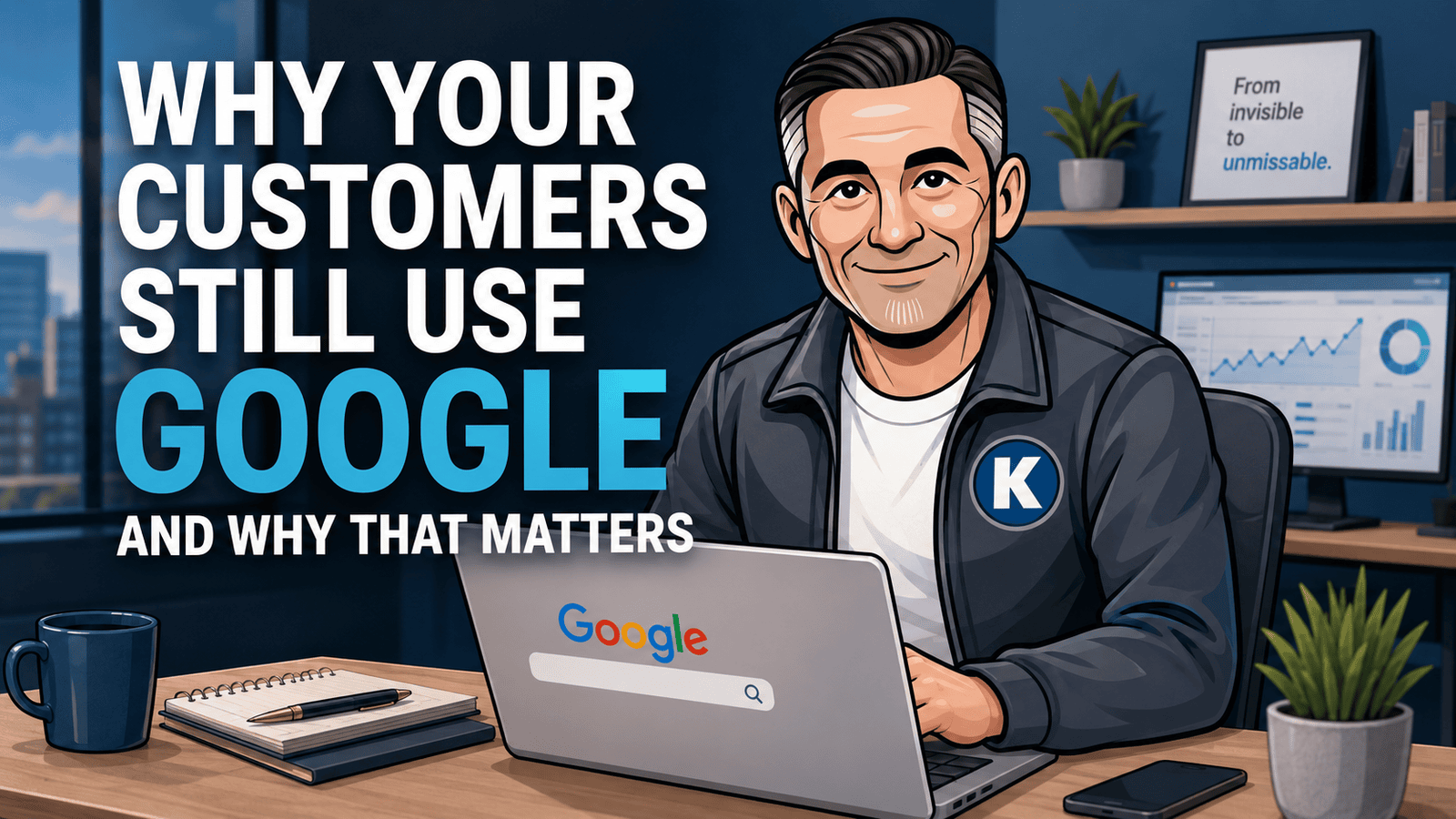
ChatGPT is killing Google search, right?
Wrong.
Your customers are still on Google. Almost all of them. That matters because while AI search is growing quickly, most people still reach for Google when they need a local business, a service provider, a review, a price, or a quick answer.
So, yes, we should absolutely prepare for AI search. But ignoring Google while your customers are still using it would be like closing the shop because someone invented online shopping.
Bold move. Usually not a clever one.
What's inside? (TL;DR)
This article explains why Google still matters, even while AI search is growing quickly.
It looks at the real difference between traditional search and AI-led discovery, then shows why businesses need to be visible today while preparing sensibly for what comes next.
Useful Sections
Estimated reading time:
The Numbers Don’t Lie
According to recent research from SparkToro, here’s what’s happening:
Google processes about 14 billion searches every single day
ChatGPT handles about 37.5 million search-like prompts daily
That means Google handles 373 times more searches than ChatGPT
Put another way: ChatGPT has roughly 0.25% of the search market. Google has a whopping 93.57%.
So when people tell you AI search is taking over, they’re about 99% wrong. Literally.
Let me put this in perspective. If all searches were people at a Premier League match, Google would be the 66,000 fans at Old Trafford. ChatGPT? About 170 people. That’s not even enough to fill the away supporters’ coach.
But Wait, There’s More
That tiny 0.25% still represents millions of potential customers. And it is growing. Fast.
ChatGPT, Claude, and Perplexity are all nibbling at Google’s massive pie. Today, it is crumbs. This time next year? It could be a decent slice.
Plus, Google itself is changing. AI Overviews are already causing quite the shake-up in the SEO world. So even traditional Google search is becoming more AI-driven.
Here’s what is really happening: we are watching search evolve in real time. It is like when smartphones first appeared. Remember when everyone said, “Who needs internet on their phone?” Now look at us.
But here’s the truth: when it comes to AI-generated search, we do not know what we do not know. It is all changing so rapidly that we have to hurry up and wait at the same time. Prepare for everything while committing to nothing. Build for a future we cannot quite see yet.
The Real Difference Between Google And AI Search
This is where it gets interesting. Google and ChatGPT users are not always looking for the same things.
Google searches are immediate and specific:
“Plumber near me”
“KickstartSEO reviews”
“Best fish and chips Bedford”
“iPhone 15 price UK”
AI searches are conversational and complex:
“Help me plan a marketing strategy for my bakery”
“What’s the best way to improve my website’s SEO if I only have £50 a month?”
“Explain why my website isn’t ranking well”
See the difference? Google is for finding. AI is for understanding.
However, here’s the kicker: AI platforms are also getting better at those immediate searches. Ask ChatGPT for a plumber near you today, and it might struggle. Ask it next year? Different story.
What This Means For Your Business
Today’s Reality
Your customers are on Google right now, looking for businesses like yours. If you are not showing up there, you are basically invisible to the vast majority of people searching online.
Last week, I spoke to a florist in Luton. She has a lovely shop and has been there for 20 years. Online? Invisible. She was losing customers to a competitor who had only been open for six months but dominated Google. That is the brutal reality of ignoring traditional search.
That is why SEO still needs to focus heavily on traditional search visibility. You need to be unmissable where it matters most today. And yes, that includes building the kind of trust Google’s E-E-A-T standards expect.
Tomorrow’s Opportunity
We also need to prepare your content for AI platforms. But what does that mean?
It means structuring your information so AI can understand and trust it. When someone asks ChatGPT, “What is the best bakery in Bedford?” it needs enough clear, reliable information to know whether you deserve to be mentioned.
It means building comprehensive answers that AI systems want to reference.
Here’s a practical example. Old-school SEO might have you write:
“Best bakery Bedford. Fresh bread Bedford. Wedding cakes Bedford.”
Awful, right?
AI-ready content looks more like this:
“We’ve been baking fresh bread daily in Bedford since 1995, specialising in traditional sourdough and custom wedding cakes. Open Monday to Saturday, 7am–6pm.”
See how the second version answers real questions? That is what AI looks for.
And do not get me started on structured data, that hot topic at dinner parties everywhere. We are already adding these elements to client websites, even though the full payoff is not here yet. It matters now for Google, and it will matter even more for AI search in the future.
But that is a blog for another day. If you are really keen, ask me about schema markup over a coffee. I promise to keep it under an hour.
The Mistakes Everyone Is Making
Mistake 1: Ignoring Google For AI
I have met business owners who have gone all-in on “getting ready for AI” while their Google rankings tank.
That is like training for the 2028 Olympics while missing the 2024 qualifiers. Daft.
Mistake 2: Ignoring AI Completely
The opposite problem is just as risky.
“AI is just a fad,” they say.
So was the internet, mate. So were mobile phones. How did that work out?
Mistake 3: Trying To Game Both Systems
You cannot trick Google anymore. Those days are long gone.
You definitely cannot trick AI.
The only strategy that works? Being genuinely helpful.
Mad concept, right?
Our Dual Approach At KickstartSEO
This is precisely why we take a dual approach. We are not daft enough to ignore where most searches happen. But we are also not short-sighted enough to miss what is coming.
Think of it this way: we are helping businesses win today’s marathon, Google, while preparing for the new events coming next, including AI search.
Part of this approach is our KickstartSEO Integrated Toolkit, also known as KIT. Our AI-powered technology helps make changes to client websites with their approval.
And here is the thing: even inside the castle, we are already building a better mousetrap. KIT has tools now that we expect to help prepare clients for the future. As we learn what works and what does not, KIT improves, and client websites improve with it.
That is evolution in action.
For Google Success Today
Rock-solid technical SEO that search engines can understand
Content that answers real questions real people ask
Local optimisation that puts you on the map, literally
Speed improvements, because nobody waits for slow websites
Mobile performance, because everyone is on their phone
For AI Success Tomorrow
Comprehensive, authoritative content that AI can trust
Clear, structured information that is easy to understand
Genuine expertise that stands out from generic content
Regular updates because AI needs fresh, accurate data
Real reviews and testimonials that can be verified
The beautiful thing? These strategies complement each other.
Good SEO today naturally prepares you for AI tomorrow.
Real Results From Our Dual Approach
Case Study 1: Divorce Without Lawyers
Talk about a specific search term.
Our client wanted to rank for exactly what they do: helping people get divorced without expensive lawyers.
Today, they are sitting pretty at number 2 for “divorce without lawyers” on Google. But here is the clever bit. They are also referenced in Google’s AI-generated answers when people ask questions like, “Can I get a divorce without using a solicitor?”
We structured their content to answer every possible DIY divorce question: costs, procedures, eligibility, the lot.
So when Google’s AI needs trusted information about self-representation divorce, guess whose content it pulls from?
That is the dual approach in action. Traditional SEO got them to number 2. Strategic content structure means AI systems see them as a trusted authority on DIY divorce.
They will not be scrambling to catch up when AI search grows from 0.25% to 5%. They are already positioned as the go-to resource.
Case Study 2: Maybrey Reliance
Maybrey needed to own “UK foundry”. Not the sexiest search term, but crucial for their business.
Industrial searches might seem straightforward, but here is the thing: B2B buyers are increasingly using AI tools to research suppliers.
We optimised their traditional SEO to improve visibility for foundry-related searches. But we also built comprehensive content about their capabilities, certifications, and processes.
When a procurement manager asks ChatGPT, “Find me a reliable UK foundry for specialist castings,” we want Maybrey to be the obvious answer.
Today, they are ranking well on Google. Tomorrow, they are positioned to be the foundry AI recommends.
That is playing the long game.
What You Can Do Right Now
Check your Google presence. Seriously, Google your business name right now. Are you happy with what you see?
Ask ChatGPT about your business. What does it know? What does it get wrong? That is your starting point for AI optimisation.
Update your basic information everywhere. Make opening hours, services, and contact details crystal clear on your website. Do not forget your Google Business Profile. Both Google and AI need this.
Start thinking comprehensively. Instead of creating thin separate pages for every service, create useful guides that answer multiple related questions. Google likes this, and AI loves it.
Get your technical house in order. Is your site slow? Broken on mobile? Hard to understand? Fixing these things helps with both traditional and AI search.
The Bottom Line
Since I started in digital marketing in 1995, yes, before Google existed, I have seen plenty of “next big things” come and go.
AltaVista was going to dethrone Yahoo. Google ate them both.
Facebook was going to replace Google. That did not happen.
Voice search was going to change everything. We are still waiting.
But this AI shift feels different. Not because it will replace Google soon, but because it is changing how we think about search entirely.
The Algorithm Rollercoaster I Have Survived
Speaking of changes, let me share what I have weathered over the years.
In the good old days, I remember keyword stuffing and putting white text on a white background to “trick” search engines.
What a time to be alive.
2011: Panda
Suddenly, thin content was out. Websites everywhere panicked.
2012: Penguin
Dodgy links? Say goodbye to your rankings.
The link farms died overnight. But like zombies in Shaun of the Dead, they still shamble around selling this rubbish to unsuspecting business owners.
Meanwhile, legitimate SEOs went to the Winchester, had a nice cold pint, and waited for all this to blow over.
2013: Hummingbird
Google got smarter about understanding questions, not just keywords.
2015: RankBrain
AI entered the chat. Machine learning started running the show.
2019: BERT
Google learned to understand context like a human. Sort of.
2022: Helpful Content Update
Google decided to reward actually helpful content. Revolutionary concept, right?
2024: AI Overviews
And now Google is adding AI-generated answers to search results. The game is changing again.
SEO “experts” ran around like headless chickens, declaring SEO dead each time.
Each time, we adapted.
“SEO Is Dead!” Sure, Friend
Just this week at the Your Business Expo in Milton Keynes, I had a bloke swagger up to my stand with a knowing grin.
“SEO is dead!” he announced. “AI killed it!”
I have heard this one before. I have listened to it about a hundred times since 1995.
“SEO was dead when Google killed Yahoo.”
“SEO was dead when social media arrived.”
“SEO was dead when mobile took over.”
“SEO was dead when voice search launched.”
And now we have people trying to rebrand SEO as “GEO”, Generative Engine Optimisation. Same tactics, new acronym.
It is like when dodgy SEOs rebranded link buying as “PBNs” and thought they had invented something new.
Mate, I was buying links before you were born. And I stopped when Google caught on, because I am not daft.
You know what?
SEO is still here.
Still getting businesses found.
Still paying my mortgage.
I told him straight:
“SEO is not dead, friend. It is evolving. Always has been.”
Here is what I explained over the next 15 minutes. And yes, he stuck around.
AI is not killing search. It is making it better, more intuitive, and more helpful.
When someone asks ChatGPT for a local plumber, it still needs to get that information from somewhere. When Google’s AI Overview answers complex questions, it pulls from websites that have done their SEO homework.
Better search is brilliant for consumers. They get answers faster and more accurately.
But yes, it creates new challenges for businesses. The bar is higher. You cannot just stuff keywords and hope for the best anymore.
But challenges? That is what we are here for.
We will rise to meet them, just like we have for decades.
By the end of our chat, his whole outlook had shifted. From “SEO is dead” to understanding how search is evolving.
Winning hearts and minds at trade shows.
That is how I roll.
The Real Bottom Line
The winners will be those who excel at today’s game while preparing for tomorrow’s.
That 0.25% will become 1%, then 5%, then who knows?
When it does, you want to be ready.
Until then? You still need to show up where your customers are today, on good old Google.
Because being prepared for the future is smart.
Being invisible today while you wait for tomorrow? That is just bad business.
I could waffle on about search algorithms and AI models all day. Occupational hazard after all these years in SEO.
But here is what matters: your customers need to find you, whether they are using Google, ChatGPT, or whatever comes next.
That is what we do at KickstartSEO. We make sure you are unmissable today while getting you ready for tomorrow.
No drama, just results.
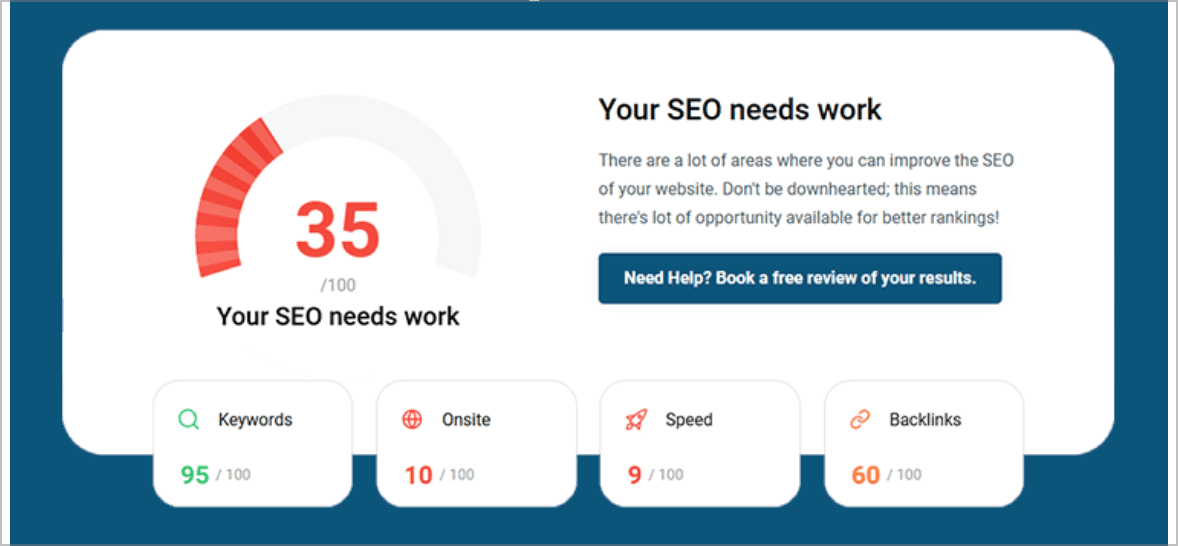
Can We Help?
Many people end up on our blog because their SEO is not working the way they hoped, and they are trying to work out what to do next. Sound familiar?
If your customers still use Google, you still need to show up there.
But if AI search is becoming part of how people find answers, your content also needs to be clear, useful, and structured enough to be understood by both humans and machines.
That is the balance: fix what matters today, prepare for what is coming next, and avoid chasing every shiny new acronym like a cat with a laser pointer.