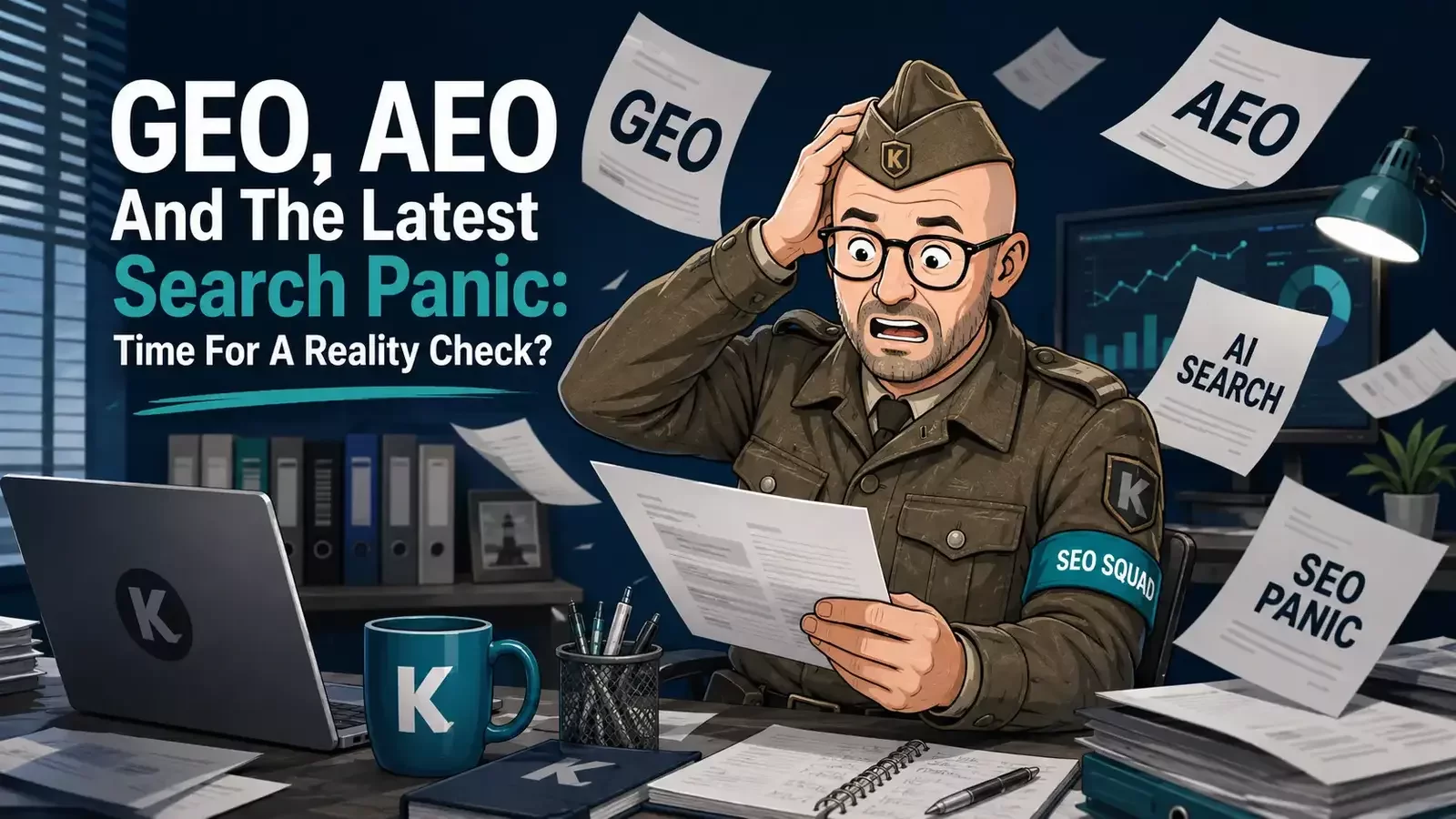
I’ve seen every episode of Dad’s Army at least seven times. My father-in-law loved the series, and we watched it together over and over, especially near the end of his journey.
If you remember Lance Corporal Jones, the butcher, you’ll remember his famous cry: “Don’t panic! Don’t panic!", usually while doing a fairly convincing impression of a man in full panic.
Corporal Jones would have been a busy fella in June. Because when Google made changes to how search results appeared, the SEO panic machine did what it does best. It panicked loudly.
SEO is dead. GEO is the future. AEO is the future. Search is finished. Everything has changed. Buy this PDF before your ears fall off.
And then Google published its own guidance on generative AI features in Search, which made the picture rather less dramatic.
Annoying for the panic merchants, I’m sure.
What's inside? (TL;DR)
Google has clarified how generative AI features fit into Search, and the message is far less dramatic than the panic merchants would like.
This article explains what GEO and AEO really mean for small businesses, what still matters, and which shiny new “AI SEO” tactics you can probably ignore.
Useful Sections
Estimated reading time:
7 minutes
What Google Actually Said
Google’s guidance on generative AI features is not saying SEO is dead. It is saying the opposite.
Google says its generative AI features in Search, including AI Overviews and AI Mode, are rooted in its core Search ranking and quality systems. In plain English, that means the same basic foundations still matter: useful content, technical clarity, crawlability, good structure, and pages that genuinely help people.
So if someone is telling you that SEO has been replaced by GEO, AEO, or whatever acronym gets invented next Tuesday, take a breath.
From Google Search’s point of view, optimising for generative AI search is still part of optimising for Search. That does not mean nothing has changed. It means the sensible work still matters.
Sounds reasonable.
GEO And AEO Are Not Magic Spells
Let’s clear this up.
GEO usually means Generative Engine Optimisation. AEO usually means Answer Engine Optimisation.
Both terms are being used to describe how businesses can improve visibility in AI search experiences. That includes things like AI Overviews, AI Mode, ChatGPT, Gemini, Claude, Perplexity, and other systems people now use to find answers.
The problem is not the acronyms. The problem is what some people are doing with them.
A useful label can help explain a real change. A shiny label can also be used to repackage old nonsense and sell it back to you with a new badge on it.
Google’s position is fairly clear. For Google Search, this is not a completely separate discipline that replaces SEO. It is part of the search experience, and the work still sits on the same foundations.
That matters because small businesses do not need more noise. They need to know what is worth doing.
What Still Matters For AI Search Visibility
The first thing Google talks about is valuable, non-commodity content.
That is a lovely phrase because it politely says, “Please stop publishing the same thin article everyone else has already written.”
A generic blog called “7 Tips For Better SEO” is not useless because of the number seven. It is useless when it says nothing specific, shows no experience, answers no real question, and could have been written by anyone with a keyboard and a cup of tea.
Google’s guidance points towards content that is useful, reliable, people-first, and based on genuine experience or expertise. It also warns against simply recycling what already exists online or producing content that adds little beyond common knowledge.
That fits the same practical principle behind our article on why getting found on ChatGPT is the wrong question. The real issue is not whether one platform happens to mention you today. It is whether your business is clear, credible, and useful enough to be understood across the places people search.
For a small business, that does not mean you need to become a publisher. It means your website should clearly explain what you do, who you help, what problems you solve, what people need to know before buying, and why your answer is worth trusting.
That is not glamorous. It is useful.
Useful tends to age better than panic.
Technical SEO Has Not Left The Building
Another inconvenient detail for the “SEO is dead” crowd: Google still needs to find, crawl, index, and understand your pages.
If your important pages are blocked, broken, duplicated, painfully slow, badly structured, or hidden behind awkward technical issues, AI search is not going to magically rescue them.
Google’s guidance says the way Search finds and processes pages remains central to how its AI systems access data. It also says pages need to be indexed and eligible to appear in Search with a snippet to be eligible for generative AI features.
That is not new, but it is still important.
Small business SEO often falls down here because people chase advanced tactics before fixing basic visibility problems. It is a bit like buying racing tyres for a car that will not start.
Clear Structure Still Helps
Google also talks about organising content in a way that helps readers.
That means proper headings, logical sections, clear paragraphs, and pages that make sense to humans.
Not content chopped into tiny unnatural pieces because someone on LinkedIn said AI likes “chunks”. Not endless keyword variations stuffed into every corner of the page. Not twenty near-identical pages created because a tool found twenty slightly different search phrases.
Just clear, useful structure.
A good page should help a visitor understand where they are, what matters, and what to do next. That also helps search engines and AI systems understand the page.
Funny how often the human-friendly answer is also the SEO-friendly answer.
Local Business Details Still Matter
If you run a local business, your Google Business Profile still matters.
Google specifically mentions business details and local business information in its guidance. For local businesses, that means the basics still count: accurate details, useful service information, consistent information across the web, good reviews, and pages that support what your business actually offers.
This is why your Google Business Profile still needs proper attention. It is not a decorative listing. It is one of the clearest signals Google has about who you are, where you are, what you do, and whether customers trust you.
Again, not very dramatic, but very real.
If your business information is unclear, incomplete, or inconsistent, that is a problem whether someone finds you through a classic blue link, an AI Overview, Google Maps, or a local search result.
AI has not removed the need to be clear. It has made clarity even more valuable.
What You Probably Do Not Need
Now we get to the fun bit.
Google’s guidance also tackles some of the AI search myths doing the rounds.
According to Google, you do not need special AI text files or new machine-readable files to appear in Google Search, including its generative AI features. Google specifically says it does not use llms.txt files for Search.
You also do not need to break your content into tiny pieces just so AI can understand it. You do not need to rewrite your content in some strange “AI-friendly” language. You do not need to chase fake mentions across the web.
You do not need special schema markup purely for generative AI search either. Structured data can still be useful for rich results, but Google is clear that there is no special schema.org markup required just for its generative AI features.
So, by all means, keep improving your website. But do not confuse activity with strategy.
There is a difference between preparing for change and running round the village shouting “Don’t panic!” while carrying a tray of sausages.
So, Is GEO Worth Thinking About?
Yes, but sensibly.
AI search is changing how people find information. More people are asking longer questions. More people expect direct answers. More search journeys are happening across platforms, not only on Google.
That is real.
But the sensible version of GEO is not chasing hacks. It is making your business easier to understand, trust, cite, and choose.
That means:
clear service pages
genuinely helpful articles
strong business information
visible expertise
accurate local details
useful images where they help
clean technical foundations
answers to real customer questions
consistency across your website and wider web presence
That is not a panic plan.
It is just good SEO growing up a bit.
The Real Risk Is Not Change
The biggest risk for small businesses is not that Google changes. Google always changes.
The bigger risk is reacting to every change like it is the end of civilisation.
That leads to bad decisions. You rewrite pages that were already working. You buy tools you do not need. You publish content nobody asked for. You chase acronyms instead of customers.
Worst of all, you ignore the boring problems that are actually holding your website back.
And the boring problems are often where the money is hiding.
What Should Small Businesses Do Now?
Start with the basics.
Make sure your website can be found and indexed. Make sure your key pages explain your services clearly. Make sure your content answers real questions from real customers.
Make sure your Google Business Profile is accurate and useful. Make sure your pages are not thin, duplicated, confusing, or written like they were assembled by committee.
Then look at AI search properly.
Ask whether your business is easy to understand. Ask whether your expertise is visible. Ask whether your content gives clear answers. Ask whether your website gives Google, AI tools, and real people enough clarity to connect you with the right customers.
That is a far better use of time than arguing about whether GEO has killed SEO. It has not. It has just given some people a fresh tin of paint for the same old fear.
No Panic Required
AI search matters. GEO and AEO are worth understanding. Google’s search results are changing.
But the answer is not panic.
The answer is clarity, useful content, technical sense, and steady improvement.
Google’s latest guidance does not tell small businesses to abandon SEO. It confirms that the foundations still matter, even as the search experience evolves.
This is not a new religion. It is the same discipline adapting to a noisier search landscape.
So yes, pay attention. Adapt where it makes sense. Ignore the scoundrels selling emergency PDFs.
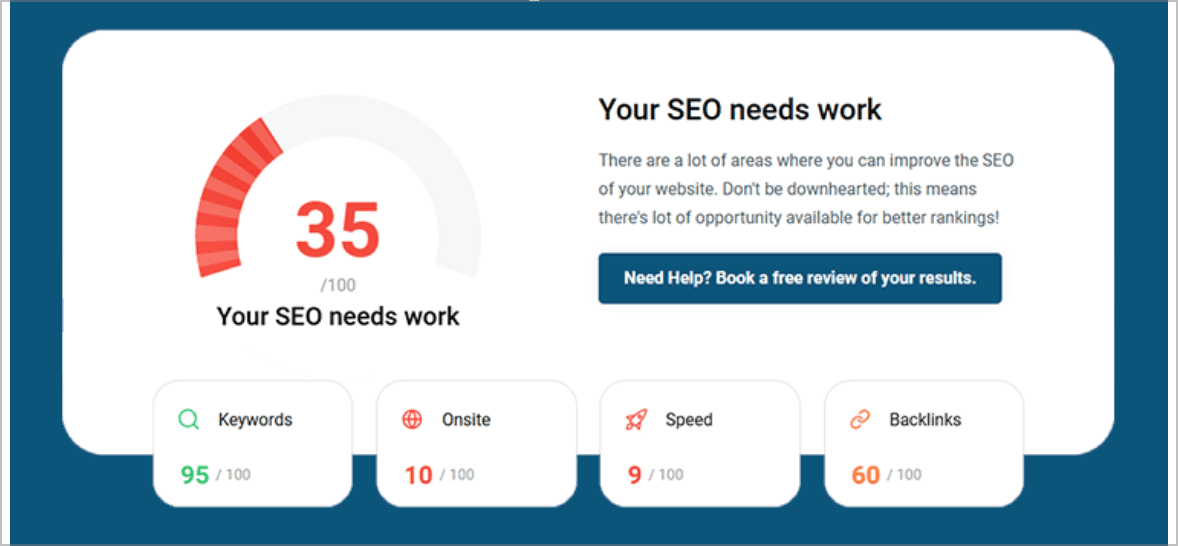
And if you are not sure whether your website is ready for where search is going, start with a Free SEO Audit.
It will show what is working, what is holding you back, and what is actually worth fixing.
No panic. No mystery PDF. No ears harmed.
Can We Help?
Many people end up on our blog because their SEO is not working the way they hoped, and they are trying to work out what to do next.
Sound familiar?
If the latest round of AI search panic has left you wondering whether your website is properly prepared, that is exactly where a clear audit helps.
We can look past the noise, check the foundations, and show you what actually needs attention before you spend time or money chasing the wrong thing.