Most business owners treat LinkedIn as a place to connect and promote. It is that, but it is also one of the strongest visibility amplifiers you already have, especially now search is shifting towards Answer Engine Optimisation.
AEO is about helping Google, Bing, and AI assistants understand who you are, what you do, and why you are credible.
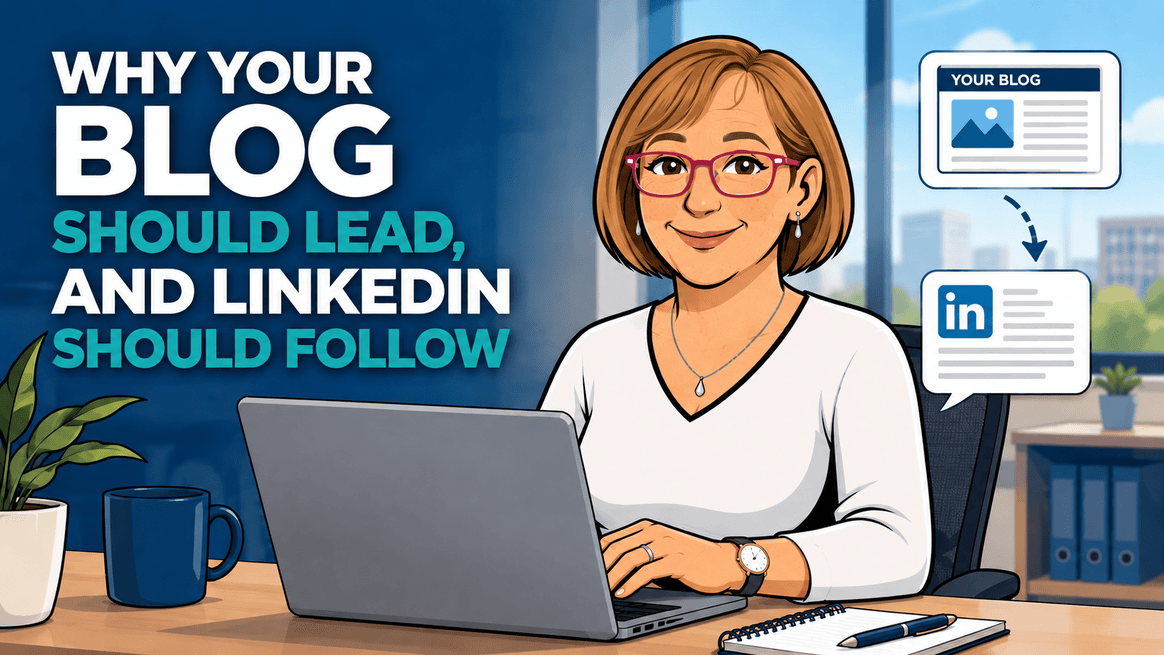
That understanding should begin on your website. LinkedIn’s job is to reinforce it, not replace it. Your blog is the source. LinkedIn is the conversation that points people, search engines, and AI systems back to it.
What's inside? (TL;DR)
Useful Sections
Estimated reading time:
4 minutes
It All Starts With The Blog
Every idea, insight, or tip should begin its life on your website. That is your home base, the one platform you fully control and the one that builds lasting authority.
When you publish a blog, it can be indexed and attributed to you. That makes it your digital proof of expertise. Everything else, including LinkedIn, Threads, YouTube, and your newsletter, should exist to point back to that origin.
Your blog builds the foundation. LinkedIn shows the conversation around it. Post to LinkedIn before the blog exists and you hand away the credit. Publish on your site first, and you build a clear trail that both humans and AI systems can follow straight back to the source.
Why LinkedIn Matters For AEO
LinkedIn gives search engines something your website alone cannot: social proof.
Every time you share, comment, or publish, your name sits beside your company and topic. Search and AI systems see that pattern and begin connecting the dots:
Michael from KickstartSEO talks about AEO, visibility, and small business SEO.
That is how entity trust is built.
We have seen this repeatedly in our own data and with clients. When a blog lives on the site and gets shared thoughtfully on LinkedIn, engagement and impressions increase. Not because of algorithm tricks, but because conversation creates context, and context drives visibility.
From Blog To Post: Turning Content Into Conversation
Once your blog is live, resist the urge to paste a link and vanish. That is not a LinkedIn strategy. That is digital littering with a URL.
Treat the post as the story behind the blog. Explain what inspired it, what problem it solves, and what you have learned from seeing it play out in real businesses.
Write conversationally. Pull one sharp idea from the article, explain it in your own words, and invite response.
For example:
“We’ve just explored how LinkedIn fits into AEO. Do you think social signals still influence visibility?”
That is not engagement for vanity’s sake. It is engagement as evidence of authority.
Timing Matters
Wait 24–72 hours after publishing before you post. That gives Google time to index your blog first, helping establish your version as the original source.
To check, type your full URL into Google using:
site:https://www.yourdomain.co.uk/your-blog-url/
If it appears, it has been indexed. If not, give it another day or use Search Console’s “Request indexing” option.
Once indexed, post confidently. Use the link in the first comment on your personal profile, or in the body of the post on your company page. The order, context, and discussion matter far more than the click count.
When To Use LinkedIn Articles
Posts fade quickly. Articles stay visible.
LinkedIn Articles act as bridges between your website and professional audiences. Turn your blog into a concise 500–600-word summary, keep the same image and topic, and link back to the full version on your site.
That link matters. It tells search engines that the original source of the content lives on your domain, not on LinkedIn.
Always use natural anchor text. For example:
“You can read the full version in our guide to using LinkedIn for AEO.”
Avoid “click here” or “read more”. Keep the link early or mid-article, not buried at the bottom.
Mention it naturally in the flow:
“When we published the full version on our website earlier this week, we explored how posting order affects visibility.”
Limit yourself to one or two links per article. You are not sending traffic away. You are confirming where your expertise lives.
A Note On Tracking Links
Clean URLs usually perform better on LinkedIn than long tracking strings.
For organic posts and articles, use the plain link and let analytics attribute traffic as linkedin.com / referral.
Reserve UTM parameters for paid campaigns. If you need campaign data for organic posts, use a branded short link that redirects to a UTM-tagged URL behind the scenes.
Stay Consistent Everywhere
AEO rewards consistency.
Your business name, tagline, and tone should match across your website, LinkedIn, and Google Business Profile.
When you update a service page, tagline, or core message, refresh your LinkedIn “About” section the same week. Small mismatches confuse both readers and search engines. Small consistencies build trust that lasts.
Do AI Crawlers See LinkedIn Posts?
Partially.
LinkedIn blocks some AI crawlers to protect member data, but public content such as posts, articles, and company pages can still be indexed by search engines.
So, while not every AI model can train on your updates, your public posts still contribute to the wider knowledge graph of who you are and what you know.
In short, they count, even if indirectly.
Context Over Content
Ten years ago, the goal was to publish more. Today, it is to connect more: your content, your voice, your authority, and your presence across the web.
Your blog provides the foundation. LinkedIn provides the conversation.
Together, they show both humans and machines that you are not just producing noise. You are part of the signal.
Before you post your next update on LinkedIn, ask yourself:
“Is the full version live on my site yet?”
If not, start there. That is how you build visibility that lasts.
Can We Help?
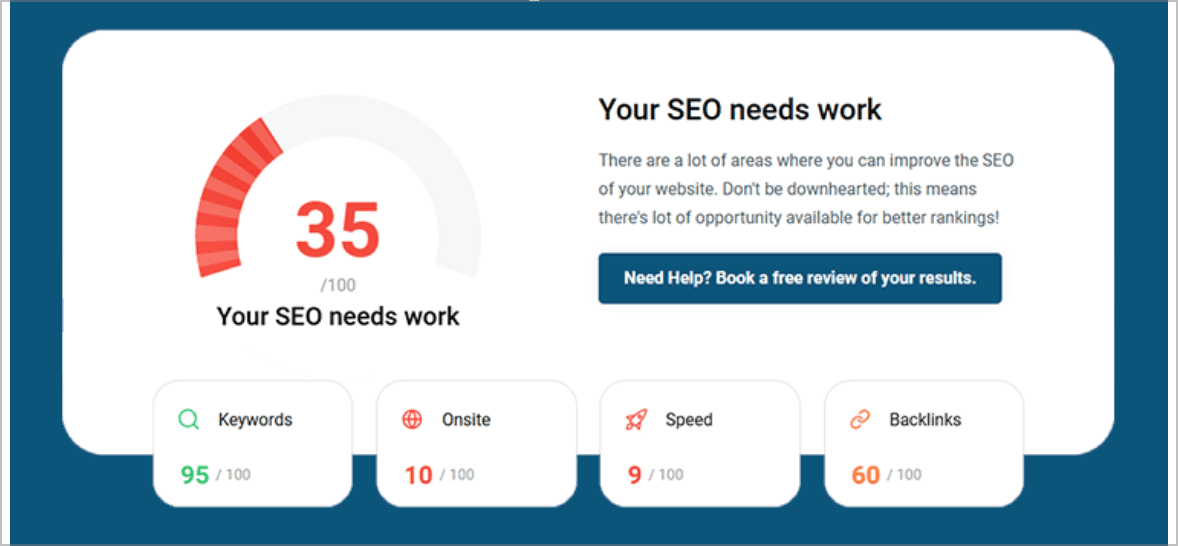
Many people end up on our blog because their SEO is not working the way they hoped, and they are trying to work out what to do next.
Sound familiar?
If your best ideas are disappearing into LinkedIn without ever strengthening your own website, the order needs fixing.
Start by making your blog the source, then use LinkedIn to amplify the message, create conversation, and send stronger authority signals back to your business.