Search Engine Optimisation is dead.
Alas, we knew ye so well.
We had a good run. Over thirty years. What a time to be alive.
What has actually happened is this: traditional SEO, the kind obsessed with Google’s blue links and ranking tricks, has quietly expired. In its place is something broader, more useful, and harder to fake.
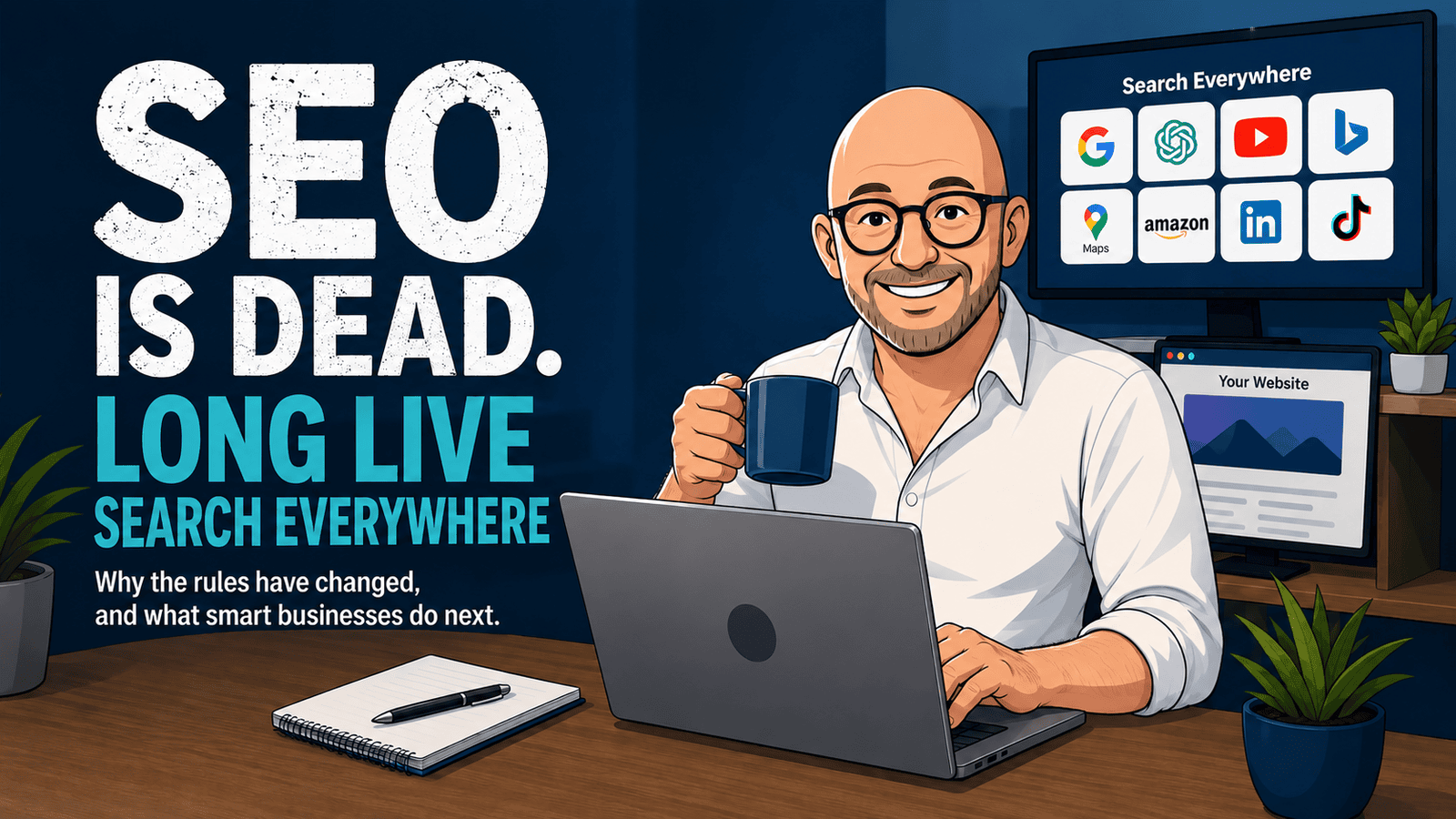
Search is no longer just a box. It is a behaviour that happens everywhere.
What's inside? (TL;DR)
SEO is not dead, but the old Google-only version is looking a bit tired.
This article explains why businesses now need to think about visibility across AI tools, answer engines, social platforms, maps, and traditional search.
Useful Sections
Estimated reading time:
5 minutes
This is Search Everywhere Optimisation. If your business is still treating Google as the only place people search, you may already be invisible in places your next customer is using.
The Search Box Has Moved
For nearly three decades, we have all been focused on one thing: getting found on Google. Title tags, backlinks, rankings, featured snippets, the works.
But here is where things shifted while most businesses were still chasing algorithms: the search box is not just on Google anymore.
It is in ChatGPT. It is in Perplexity. It is in Claude. It is in Gemini. It is on Instagram, YouTube, LinkedIn, Reddit, maps, review platforms, and voice assistants.
People do not just “Google it” anymore. They ask AI. They search by voice. They explore answers instead of clicking links.
If your visibility strategy is still Google-only, you are invisible in places your next customer may already be searching.
From Algorithm Games To Answer Engines
Search used to mean keywords. Now it means context.
Systems like ChatGPT and Perplexity do not look at one signal. They look at everything they can understand: content, structure, authority, clarity, reputation, and accessibility.
That is where Norman, our AI-powered SEO strategist, comes in.
Norman does not just watch Google. He analyses data across the wider search landscape, including AI search, local discovery, voice queries, social search, and traditional website performance.
That wider view matters because optimisation is no longer just about chasing rankings. It is about becoming a clear, trusted answer wherever people are looking.
What That Looks Like In Practice
AI Overviews: Google now summarises answers directly in search results. If your content is not clear, structured, and useful, it may be ignored even when the topic is relevant.
Generative Engine Optimisation: If you want AI tools to understand and recommend your business, their systems need access to useful, well-structured information about who you are, what you do, and who you help.
Answer Engine Optimisation: Voice assistants and answer tools respond to natural questions. “Who’s open now?” is not a neat keyword. It is a real-world question from someone who wants a useful answer.
Visual And Social Search: YouTube, Instagram, LinkedIn, TikTok, Reddit, and other platforms now shape discovery. They are not just places to post. They are places people search, compare, and make decisions.
Still Blocking AI Crawlers? You’re Not Protecting Yourself, You’re Hiding
When the AI crawler panic hit, plenty of businesses blocked GPTBot, Claude, and other crawlers from accessing their websites. The idea was to protect their content.
Let’s be blunt: for many businesses, that was not protection. It was hiding.
AI tools cannot recommend what they cannot see. If someone asks for the best accountant for freelancers in Manchester, and your website blocks the tools being used to build that answer, you have removed yourself from the conversation.
That does not mean opening the door without thinking. It means reviewing your robots.txt file properly and making a deliberate decision based on visibility, risk, and commercial sense.
Norman’s recommendation is simple: audit your robots.txt file. Check what you are blocking. Make sure your website can be read by the systems that may influence tomorrow’s search results.
Context Is The New Ranking Factor
It is no longer about content alone. It is about context.
Search engines, AI tools, and human buyers want to understand:
who you are, not just what you sell
whether others trust you, not just what you say
what problems you solve, not just what keywords you match
whether your answers are credible, not just whether your page is long
This is why structured data matters. Schema markup helps search systems understand your business, your services, your location, your content, and your authority.
In plain English, it gives machines a cleaner set of instructions.
That is not technical fluff. It is part of how modern search systems decide whether your business is clear enough, useful enough, and trustworthy enough to recommend.
Google Still Matters, But It’s No Longer Alone
Let’s be clear. Google still matters.
A lot.
This is not about abandoning traditional SEO or pretending Google has packed its bags and wandered off into the sunset.
But the future of search is plural. It is multi-platform. It is happening wherever your customers ask questions, compare options, watch videos, read reviews, check maps, and look for recommendations.
That is why visibility now needs to consider places such as:
Google Search
Bing
ChatGPT
Perplexity
Claude
Gemini
YouTube
LinkedIn
Reddit
Instagram
review platforms
maps and local search tools
We call this Search Everywhere Optimisation.
It is how small businesses start to punch above their weight without pretending the world still works like it did in 2015.
SEO Still Starts At Home
Your website still matters. In fact, it matters more.
In a noisy world of AI answers, social suggestions, local packs, review snippets, and comparison searches, your website is your one place of truth. It is the place people check before they buy. It is also the source many systems rely on to understand what your business actually does.
That means your site needs to:
load quickly
work properly on mobile
include structured data
explain your services clearly
show trust signals
support both human readers and AI systems
We still start with website optimisation at KickstartSEO, but we do not stop there.
Because the goal is not to win one platform. The goal is to be findable wherever your next customer is looking.
The Strategy That Wins Now
Be useful. Be credible. Be findable.
That is the game.
No more keyword stuffing. No more tricks. No more content for content’s sake. The newer search landscape rewards businesses that genuinely help people, explain things clearly, and build trust across more than one channel.
That does not mean chasing every shiny new platform like a caffeinated spaniel.
It means building a strong foundation, then expanding visibility sensibly.
Your content should answer real questions. Your website should be clear. Your local presence should be accurate. Your social and video activity should support trust. Your structured data should help search systems understand what you do.
Boring? Maybe.
Effective? Usually.
Don’t Panic, But Don’t Wait Either
If all this sounds overwhelming, relax.
Google is not going anywhere. Your current SEO still matters. This is about adding new visibility channels as they become important, not abandoning what already works.
Think of it as future-proofing, not emergency repair.
If you are already a KickstartSEO client, good news: Norman has already been moving you in this direction. Your content, structure, and wider visibility are part of the bigger picture.
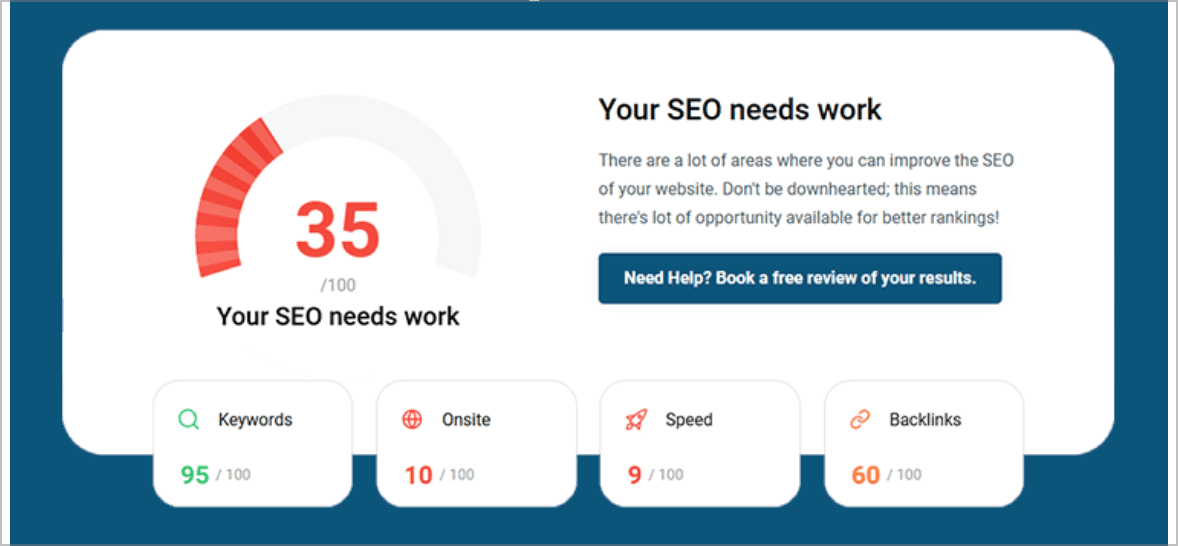
If you are not a client yet, the sensible first step is to find out where you currently stand.
What we do now affects what results we get later.
Because if your business is not optimised for everywhere your customers search, it may soon be optimised for nowhere.
Can We Help?
Many people end up on our blog because their SEO is not working the way they hoped, and they are trying to work out what to do next.
Sound familiar?
If your SEO still only focuses on Google rankings, it is probably time for a wider look.
Search has spread across AI tools, maps, social platforms, reviews, and answer engines, and the businesses that adapt early will have a much easier job than the ones trying to catch up later.