You have probably heard people talk about SEO as if it is either dark magic, technical wizardry, or something only big companies need to worry about.
It is not.
SEO simply means helping the right people find your business when they search online. That might be through Google, local search, or increasingly through AI-powered search tools.
The trick is understanding what actually matters, what is just noise, and where a small business should sensibly start.
What's inside? (TL;DR)
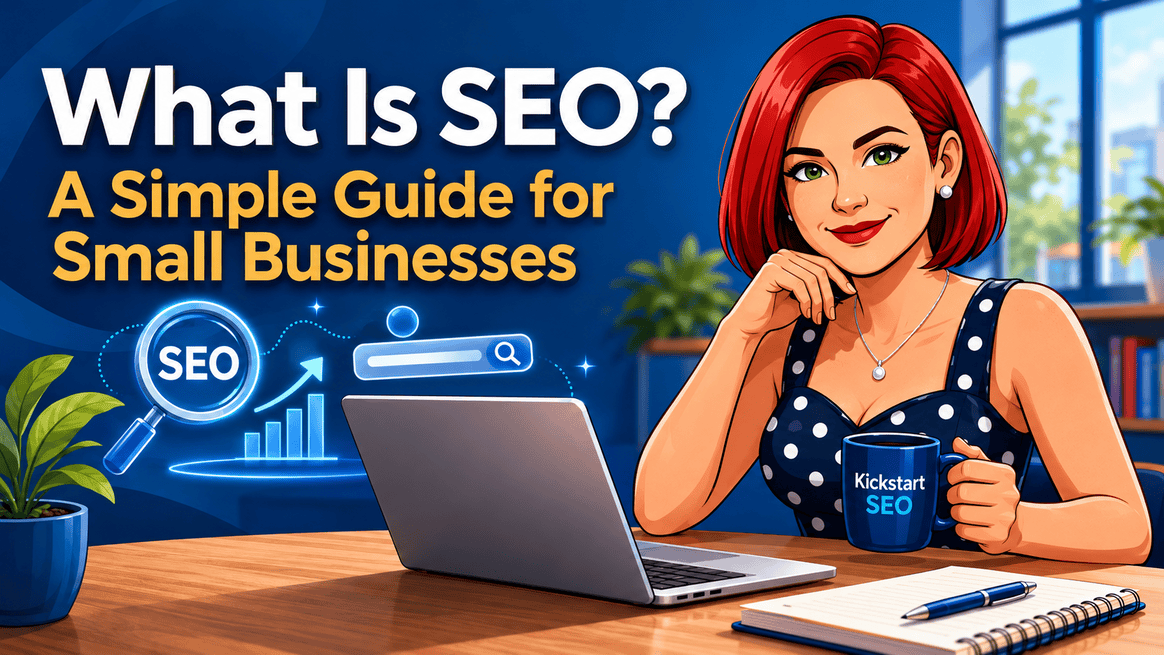
SEO is not dark magic, technical wizardry, or something only big companies need.
This article explains what SEO really means, why being findable matters, and where UK small businesses should start.
Useful Sections
Estimated reading time: 6 minutes
SEO: The Simple Answer That Makes Sense
SEO stands for Search Engine Optimisation. But that is like saying a car is a “motorised transportation vehicle”: technically correct, but utterly unhelpful.
Here is what SEO really is: it is the art and science of making your website visible when people search for what you offer.
Think about it this way. When you need a plumber at 10pm because your kitchen is flooding, what do you do? You grab your phone and search “emergency plumber near me”. The plumbers who show up at the top of those search results have done their SEO homework. The ones on page five may be excellent plumbers, but they are invisible online.
Why Your Business Needs SEO
I have been helping businesses get found online since before Google existed, and here is what I have learned: being brilliant at what you do means nothing if nobody can find you.
Your website without SEO is like having the world’s best shop in a basement with no signage. You might have amazing products, stellar service, and prices that would make your competitors weep, but if customers cannot find you, none of that matters.
Here is the reality: most online journeys begin with a search engine. That means many people looking for a business like yours start their journey on Google. If you are not showing up there, you are missing opportunities.
How Search Engines Actually Work Without The Technical Waffle
Search engines like Google have one job: to give people the most relevant, helpful results for their search. They are like the world’s most efficient librarians, but instead of books, they are organising websites.
Here is how they do it:
1. Discovery: Crawling
Google sends out little robots, called crawlers or spiders, that visit websites and read everything they can find. They follow links from page to page, site to site,
building a massive map of the internet.
2. Organisation: Indexing
Once they have read your website, they file it away in their enormous index. Think of it as Google’s library catalogue. They note what your site is about, what questions it answers, and how it might help searchers.
3. Ranking: The Algorithm
When someone searches, Google rifles through its index at lightning speed, pulling out the most relevant results. But here is where it gets interesting: it uses hundreds of factors to decide who goes first, second, third, and so on.
The Three Pillars Of SEO Success
After three decades in this business, I can tell you that all successful SEO boils down to three core elements.
1. Technical SEO: Your Website’s Fitness
This is about making sure search engines can actually read and understand your website. It is like making sure your shop has working doors and lights. Basic stuff, but essential.
Key elements include:
Site speed, because nobody waits for slow websites
Mobile responsiveness, because most people search on phones now
Clear structure, so Google knows what each page is about
Security, because that little padlock matters
2. On-Page SEO: Your Content Quality
This is what most people think of when they hear “SEO”. It is about the words on your pages and how they are organised.
It includes:
Relevant keywords, meaning the terms people actually search for
Helpful content that answers real questions
Proper headings, like the chapters in a book
Meta descriptions, the snippets that can appear in search results
3. Off-Page SEO: Your Reputation
This is about what happens away from your website. It is your online reputation and authority.
The main factors include:
Backlinks, where other websites link to yours
Local citations, which are mentions of your business online
Reviews and ratings, showing what customers say about you
Social signals, although these are less important than many people think
SEO In The Age Of AI: The Game Is Changing
Here is something not enough people are talking about: SEO is not just about Google anymore. With ChatGPT, Claude, Perplexity, and other AI tools becoming part of how people find information, the rules are evolving.
Modern SEO needs to work for both traditional search engines and these newer AI systems. That is why we focus on creating genuinely helpful content that answers real questions. It works for human readers and for AI systems trying to understand your business.
Common SEO Myths That Need To Die
Let me bust some myths that have been floating around since I started in 1995.
Myth 1: SEO Is A One-Time Thing
Reality: it is more like fitness. You need consistent effort to maintain and improve your position.
Myth 2: Just Stuff Keywords Everywhere
Reality: that worked in 1999. Today, it will get you penalised faster than you can say “keyword stuffing”.
Myth 3: SEO Is All About Tricking Google
Reality: Google is too smart for tricks. Focus on being genuinely helpful instead.
Myth 4: Only Big Companies Need SEO
Reality: local businesses often see the biggest wins from good SEO.
How To Know If Your SEO Needs Work
Not sure if your website needs SEO help? Here are the warning signs:
You Google your business and cannot find it on the first page
Your competitors show up when people search for your services
Your website gets less traffic than your social media
You are relying entirely on word of mouth for new customers
Your website looks great, but nobody visits it
If any of these sound familiar, your website’s SEO fitness needs attention.
The SEO Fitness Journey: Where To Start
Getting your SEO sorted does not have to be overwhelming. Think of it like getting physically fit. You do not go from couch to marathon overnight.
Start with these basics:
1. Claim Your Google Business Profile
If you are a local business, this is free and can get you showing up in local searches.
2. Fix The Obvious Technical Issues
Make sure your site loads quickly and works properly on mobile phones.
3. Create Content That Answers Questions
What do your customers ask you repeatedly? Answer those questions on your website.
4. Get Listed In Relevant Directories
This is especially important for local businesses. Make sure your name, address, and phone number are consistent everywhere.
5. Ask Happy Customers For Reviews
Reviews are not just for reputation. They help with local SEO too.
The Investment Question: What Does SEO Really Cost?
Here is where I will be straight with you. Good SEO is not free, whether you do it yourself or hire someone. But neither is being invisible online.
The real question is not “What does SEO cost?” It is “What is invisibility costing you?”
If you are DIY-inclined and have four to six hours a month to spare, you can learn to do basic SEO yourself with the right tools and guidance. Think of it as joining a gym. You do the work, but you get the equipment and training programme.
If you need someone else to handle it, expect to invest in proportion to your ambitions. A local café does not need the same SEO firepower as an ecommerce site selling nationally. But everyone needs something.
The Bottom Line: SEO Is Non-Negotiable
Twenty years ago, having a website was optional. Ten years ago, having a good website became essential. Today, being findable online is not just important. It is survival.
Your customers are searching for businesses like yours right now. The only question is whether they will find you or your competition.
SEO is not about gaming the system or outsmarting Google. It is about making sure that when someone needs what you offer, you are there to help them. It is about taking your website from invisible to unmissable.
That is what SEO really is, and why every business needs it.
Can We Help?
Many people end up on our blog because their SEO is not working the way they hoped, and they are trying to work out what to do next.
Sound familiar?
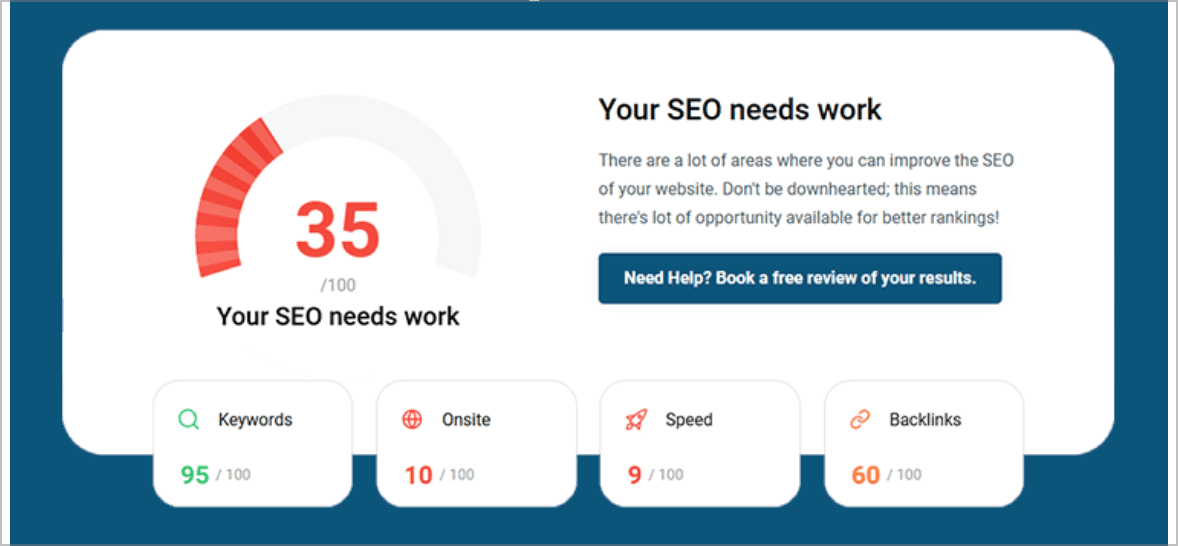
If SEO still feels a bit fuzzy, that usually means your website has not been properly reviewed yet. We can look at what Google can see, what your customers are likely searching for, and where your biggest opportunities are hiding.
No smoke, no mirrors, no pretending your website needs a six-month pilgrimage to the top of Mount Algorithm.