Are you confused about SEO? Not sure whether to do it yourself or get help?
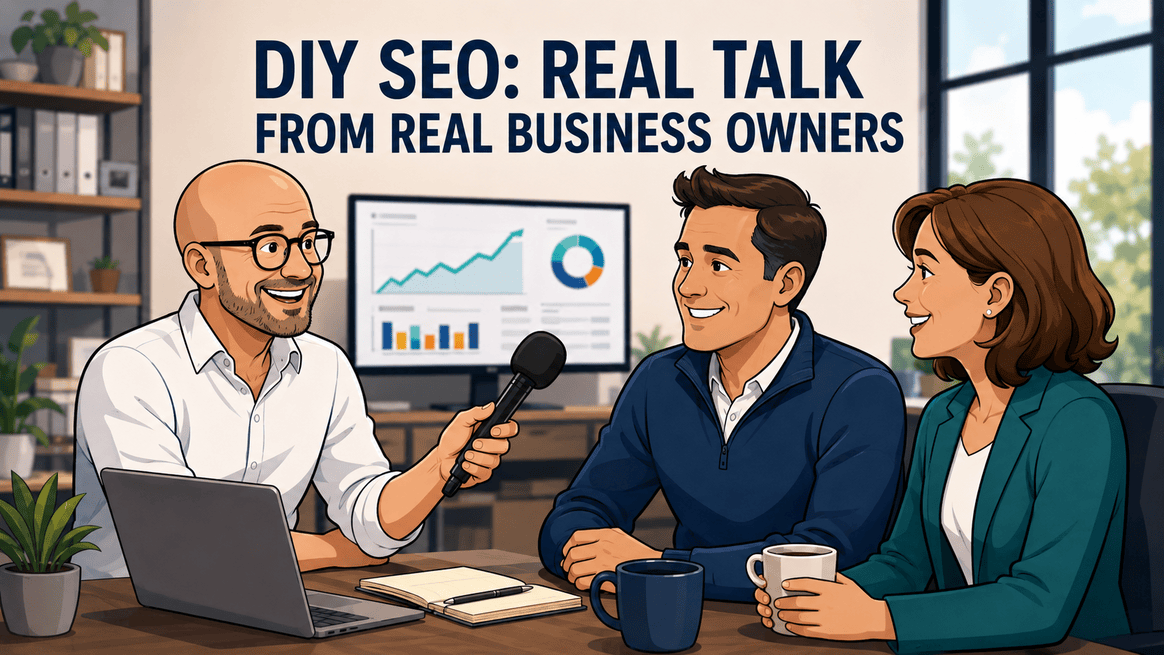
You’re not alone. When I asked local business owners and marketing professionals about their gut reactions to DIY SEO, their answers were refreshingly honest.
Some were unsure where to start. Some felt overwhelmed. Some had used basic tools but still weren’t sure whether they were doing the right things. That is the real problem with DIY SEO: it sounds simple until you actually sit down to do it.
Author's note: This interview was conducted in November 2024. In December 2024, we began developing Norman, and in May 2025 we launched Optimiser AI to fill the gap between DIY and fully managed SEO.
What's inside? (TL;DR)
This article looks at what real business owners said about DIY SEO, from “where do I start?” to “is this actually worth my time?”
It helps you decide when doing SEO yourself makes sense, and when getting help is the more sensible move.
Useful Sections
Estimated reading time: 4 Minutes
When I asked local business owners and marketing professionals about their gut reactions to DIY SEO, their responses revealed more questions than answers.
That matters, because SEO is often presented as either painfully technical or suspiciously easy. The truth sits somewhere in the middle, where most useful things tend to hide.
The Understanding Gap
“What’s SEO?” Mike, a content writer and author, asks tongue-in-cheek, pointing out the first barrier many businesses face: our industry’s love of technical terms.
He has a point. When we say SEO instead of Search Engine Optimisation, we are already making things more complicated for business owners.
Marketing expert Debbie sees this confusion regularly: “Most start-ups or small solopreneurs glaze over when I talk about this.”
She explains SEO with an analogy I love: “It’s like having a shop window with the windows blacked out. What’s inside might be great, but no one can find it to see inside.”
Kate voiced what many think: “I’ve never really understood it!”
Helen added, “It’s so complicated! How does it even work?!”
The Knowledge Gap
Debbie hit another nail on the head: “Most people believe that if they build it, the website will be found.”
They do not always realise everything that needs to happen, from external signals like LinkedIn company pages and Google Business Profile to internal elements like keyword research, page structure, and optimisation.
Even those with some SEO knowledge share these doubts. Elena explained: “Even though I understand the basics of SEO, I still find it a bit of a dark art... people need educating on what it really does and how it works. It’s not an overnight sensation, it takes time to build.”
That last line matters. SEO is not magic. It is also not instant. Annoying, I know.
Where Do You Start?
“My gut reaction is, where would I start to DIY it?” says Rav.
Lindsay shares the same feeling: “I’m overwhelmed, and I won’t understand it. I would need it broken down into the raw basics!”
This starting point paralysis is one of the biggest reasons business owners avoid SEO. It is not always laziness. More often, it is confusion.
When every blog, tool, plugin, and expert seems to be shouting something different, doing nothing can feel like the safest option.
It usually is not.
The best DIY SEO starts with a short, structured list of priorities. Not 400 things. Not a giant spreadsheet built to make you question your life choices. Just the next few sensible jobs that will actually move the website forward.
Beyond Basic Tools
“My first thought is Yoast,” shares Stefan Thomas, author of Business Networking for Dummies and professional speaker.
That is a common starting point. Basic plugins can help, especially when they encourage better page titles, descriptions, and content structure.
But plugins are not a strategy. They can tell you whether you have added a focus phrase. They cannot always tell you whether that phrase is worth chasing, whether the page answers the right question, or whether the rest of your website supports the topic properly.
Business coach Tony adds another common perspective: “I tend to bury my head in the sand and get a guilty feeling... I use Yoast and occasionally I half-heartedly add some descriptions and focus words to posts.”
Even though his clients often come through networking and speaking engagements, he notes: “Every now and then someone checks out my website after we’ve engaged.”
That touches on an important point. SEO is not always just about finding new clients cold through Google. Sometimes, it supports your reputation when prospects check you out after meeting you elsewhere.
And yes, they do check. Usually before you think they will.
The DIY Vs Professional Choice
Phil Soloman, a sales trainer and fraction Sales Manager asked a sensible question: “How far would DIY get me vs using a pro? Some guidance showing when DIY is a false economy or a sensible option would be great.”
That is the right question.
DIY SEO can work. Professional SEO can work. Both can also be a waste of time and money if the fit is wrong.
DIY SEO Makes Sense When:
You have more time than money to invest
You are building your business on a tight budget
Your market is not overly competitive
You enjoy learning new skills
You are willing to follow a structured plan
You can be consistent enough to keep going
Consider Professional Help When:
Your time is better spent running the business
Your market needs a stronger strategy
Technical issues need proper attention
You want faster progress
You have already tried DIY and stalled
You need someone to tell you what matters and what can wait
There is no badge of honour for doing everything yourself if it keeps you stuck.
There is also no shame in learning the basics and handling some of it yourself. The trick is knowing which jobs are worth your time and which ones should be handed over.
How KickstartSEO Makes SEO Manageable
DIY SEO becomes much easier when the work is broken down into plain English and sensible priorities.
That is why our approach starts with clarity. Before worrying about tools, tactics, or technical rabbit holes, you need to understand what is happening on your website and what should happen next.
For DIY-Ready Businesses: Optimiser Essentials
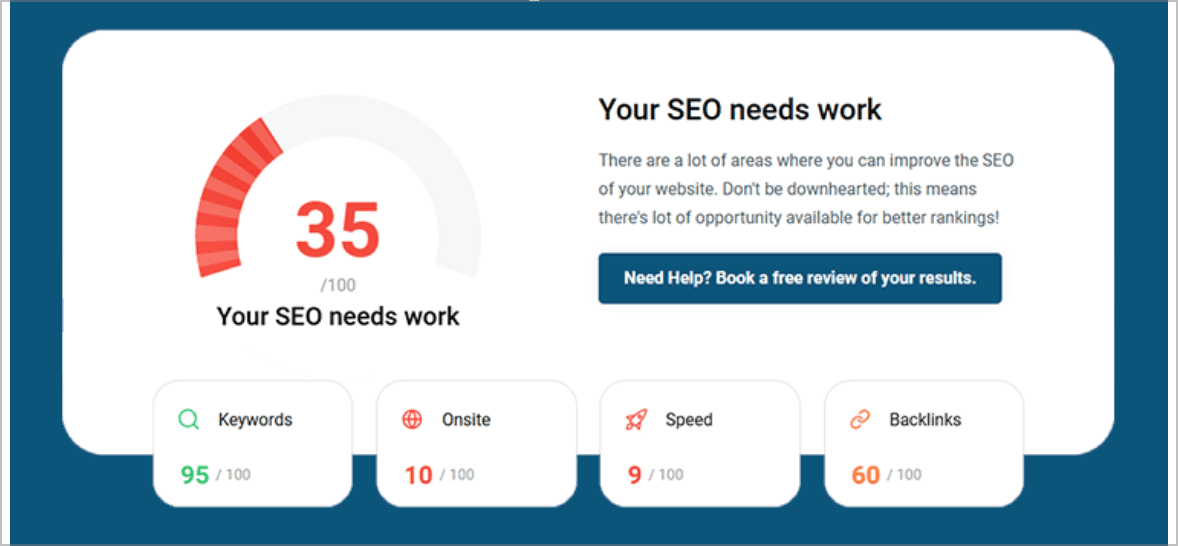
Not sure where to start? A website audit can show how your site is performing and where the biggest issues are.
From there, Optimiser Essentials gives DIY-ready businesses:
Clear, jargon-free guidance
Structured monthly tasks
Mistake-preventing checks
Professional-grade tools
Real-time progress tracking
One Optimiser Essentials client put it like this:
“I’ve had the DIY package for about a year now, and Michael goes above and beyond. Helpful and informative onboarding and help videos are provided for everything I needed to get started and beyond.”
For the right business, DIY does not need to mean guessing. It means having a clear plan and sufficient support to avoid getting lost in the weeds.
When Done-For-You Support Makes More Sense
Some business owners start with DIY and then realise they simply do not have the time, interest, or headspace to keep it moving.
That is fine.
One client explained it perfectly: “I thought I could do everything myself, so I started on the DIY package. Turns out I don’t have the time or want to do it myself. Having Michael do all the SEO for me was the best thing I have done. The Kickstart team does all the hard work and keeps me updated.”
That is the real decision.
It is not DIY good, professional bad. Or professional good, DIY bad.
It is about choosing the route you can actually follow.
Take Your Next Step
If SEO has felt confusing, you are not alone.
The business owners I spoke to raised the same concerns we hear all the time:
They are not sure where to start
They do not know which tasks matter most
They feel guilty for ignoring SEO
They have used tools but still feel unsure
They want to know when DIY becomes a false economy
The good news is that you do not need to fix everything at once.
Start by finding out what is happening, what is holding you back, and what the next sensible step should be. Then decide whether DIY support or done-for-you help is the better fit.
Can We Help?
Many people end up on our blog because their SEO is not working the way they hoped, and they are trying to work out what to do next.
Sound familiar?
If DIY SEO feels like a good idea in theory but a foggy mess in practice, that is exactly where a proper audit helps.
It gives you the plain-English version of what is happening, what matters most, and whether you should tackle it yourself or hand it over before your to-do list starts filing a formal complaint.