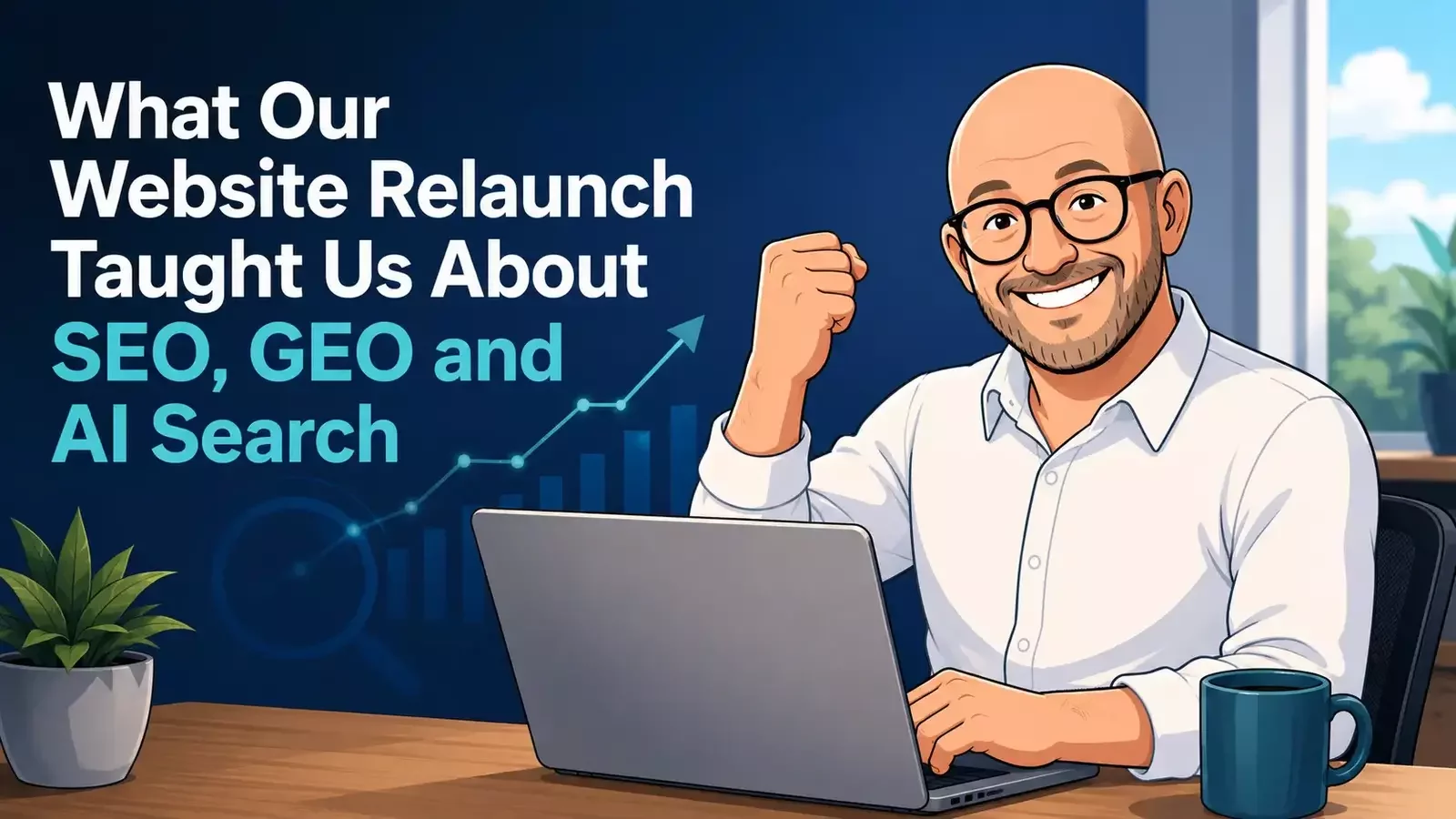
When we relaunched the KickstartSEO website in June, it was not because we fancied changing the colours and moving a few buttons around.
The old website no longer reflected the business.
KickstartSEO had changed significantly over the previous twelve months. Our services had evolved. Norman’s role had grown. Our systems had improved. We were clearer about who we help, how we work and what makes our approach different.
The website had not kept up. That affects more than the people visiting it.
Your website is also one of the main places search engines and AI systems use to work out who you are, what you do and whether the information they have about you is still current.
If the website is vague, outdated or inconsistent, the answers they produce are likely to be the same.
What's inside? (TL;DR)
We rebuilt the KickstartSEO website because the old version no longer reflected the business.
After around ten blind tests, Gemini finally understood Norman, our programmes and our current pricing, but the LinkedIn pricing issue showed that GEO depends on more than website content alone.
Useful Sections
Estimated reading time:
12 minutes
Our Website Was Describing Yesterday’s Business
This happens more often than most businesses realise.
A service changes. A process improves. Pricing moves. Team roles develop. Something that started as a useful extra becomes central to how the business works.
Inside the company, everybody knows.
The website carries on describing the old version.
That was where we had reached.
The old KickstartSEO website was not completely wrong. It was simply no longer a good enough reflection of the business.
It did not clearly explain our human-led, AI-informed approach. Norman’s role had developed well beyond what the website showed. The relationships between our programmes, systems and people were not properly joined up.
We knew what Norman did. Our clients knew. Search systems were still trying to piece it together.
What We Needed the New Website to Explain
Norman is KickstartSEO’s AI-powered SEO strategist.
He is not a generic chatbot added to the website because everybody suddenly decided they needed an AI thing.
Norman supports analysis, research, content, prioritisation and approved implementation. He helps us work through information, identify what matters and prepare the right work.
He does that as part of a human-led service.
Michael and the team provide the judgement, context, accountability and client support around him.
We also needed the website to explain that Norman’s role changes depending on the programme.
Some clients want guidance so they can do more themselves. Some want work prepared for approval. Others want the process handled for them.
That distinction is central to the service, and the old website did not make it clearly enough.
I Kept Testing Gemini
In the six weeks since launching the new website, I have run around ten blind tests.
I used Gemini in an incognito browser, without logging in and without giving it any previous context about KickstartSEO or Norman.
Some answers were incomplete. Some still leaned on older information. Others understood parts of Norman but failed to join everything together properly.
Then, today, Gemini finally nailed it.
My first question was: “what is norman seo”.
Gemini gave several possible interpretations. It identified Norman, KickstartSEO’s AI-powered SEO strategist, alongside local SEO in Norman, Oklahoma, and individual SEO professionals named Norman.
The important part was that it placed our Norman first and connected him clearly to KickstartSEO.
I then asked: “the one that is ai. tell me about that.”.
Gemini explained that Norman was a specialist AI-powered SEO strategist developed by KickstartSEO.
It understood that he was not a generic chatbot. It described the human-led model, the Approval Centre and the balance between AI-supported work and human judgement.
Then I asked: “how is it priced?”.
Gemini correctly explained the three programme levels and the current fees:
Optimiser Essentials at £69 plus VAT per month
Optimiser AI at £149 plus VAT per month
Optimiser Premium at £349 plus VAT per month
Finally, I asked: “does it work? is it effective?”.
Gemini explained that Norman’s effectiveness comes from consistency, prioritisation, prepared work and human oversight.
It also understood the difference between the programmes. Optimiser Essentials and Optimiser AI require client involvement. Optimiser Premium is fully managed.
For the first time since the relaunch, I reached the end of one of these tests without muttering at the screen.
It had understood the proposition. And that is far more useful than simply being mentioned.
Being Mentioned is Not the Same as Being Understood
There is already plenty of noise around AI search visibility.
People are selling ways to get businesses “mentioned by ChatGPT” or “ranked in Gemini”. A new search behaviour appears, and within minutes somebody has a five-step framework and a webinar.
Some traditions refuse to die. But a mention on its own tells you very little.
An AI system can mention your business and still describe it badly. It can use outdated information, misunderstand your services or place you in the wrong category.
The better test is whether it understands:
who you are
what you do
who you help
how the service works
what makes it different
In our test, Gemini did.
It described Norman in a way a genuine prospect could understand. It explained the problem he helps solve, the way the programmes work and the difference between supported and fully managed services.
That is the result we were looking for.
Pricing Was the Stubborn Part
One of the biggest challenges was getting Gemini to reflect our current fees.
When we rebuilt the website, we were careful to make sure the details were right. The programme descriptions, pricing and comparisons were reviewed before the new site went live.
But we had missed something. Old information on social media.
Our fees had changed, but older references elsewhere online still showed the previous pricing.
We already knew LinkedIn, our main social media channel, was an important part of our wider entity strategy. Our company page, personal profiles, posts and mentions all help search systems connect KickstartSEO with the people, services and ideas around it.
About ten days ago, I found outdated pricing on the KickstartSEO LinkedIn company page.
I corrected it. After that, Gemini began returning the current fees.
Can I prove that one LinkedIn change caused the update? No.
Search and AI systems do not provide a handy note saying, “We changed this answer because Michael finally fixed that old price.”
But the timing is difficult to ignore.
The correct fees were already on the website. Gemini was still returning older pricing. We fixed the outdated LinkedIn information, and the answer changed.
That is an interesting reminder that SEO, and especially visibility in AI answers, is about more than what happens on your website.
Your Business Exists Across the Web
Your website should be the clearest source of information about your business.
It is not the only source.
Search engines and AI systems may also find:
social media profiles
old social posts
business directories
review platforms
interviews
event listings
podcast appearances
third-party articles
brochures and PDFs
mentions on other websites
When those sources agree, the picture becomes clearer. When they conflict, the system has to decide which version to trust. That becomes especially messy with details that change over time:
prices
service names
team roles
contact details
locations
opening hours
offers
descriptions of how the service works
A person may spot that an old post is out of date.
An AI system may simply repeat it with complete confidence, which is always reassuring.
Why It Took Six Weeks
A website relaunch can happen in a day.
That does not mean every search engine and AI platform immediately understands the new version of the business.
Pages need to be crawled and indexed. Old information needs to be reassessed. Connections between pages, people, profiles and services need to become clearer.
Different systems update at different speeds.
There is no button that tells the whole internet “The business has changed. Please read everything again before lunch.”
So I kept testing.
The answers gradually improved. Norman became more clearly connected to KickstartSEO. The service model became easier to recognise. The pricing remained wrong until the old LinkedIn information was corrected.
Then today, Gemini joined everything together properly.
It took around six weeks and about ten blind tests.
That does not mean every AI system now has everything right. It does show that the new website and the wider information around it are beginning to line up.
Clear Information Gives AI Less Room to Guess
Vague business language has always been unhelpful.
It is even less useful now. Consider this: “We provide innovative solutions for ambitious businesses.” It sounds polished. It also says almost nothing.
What solutions? Which businesses? What problem do you solve? How does the service work? Why should anybody choose you?
A person may shrug and leave. An AI system may try to fill in the gaps using whatever else it can find. Clearer wording gives both of them something useful to work with. For example:
“KickstartSEO helps UK small businesses improve their visibility in traditional and AI-powered search through human-led SEO strategy, practical implementation and AI-supported analysis.”
Not poetry. Useful information. That is what the website needs to provide.
This Was More Than a Website Test
The successful Gemini result showed that the new website was doing a better job. It also showed that the wider information around KickstartSEO was becoming more consistent.
We did not give Gemini a complicated prompt. We did not feed it the answer we wanted and ask it to repeat it back.
The questions were simple:
“what is norman seo”
“the one that is ai. tell me about that.”
“how is it priced?”
“does it work? is it effective?”
The answer reflected several things working together:
clearer explanations of Norman’s role
stronger connections between related pages
accurate programme information
consistent language around human oversight
better descriptions of the problems we solve
corrected LinkedIn pricing
stronger agreement between our website and social presence
None of that was done purely for AI systems. It also makes the business easier for people to understand. That is normally a good test of whether the work is worthwhile.
Does This Mean KickstartSEO Will Appear in More AI Answers?
Potentially. But my opening question was fairly specific: “what is norman seo”.
Gemini still had to identify the right Norman, connect him to KickstartSEO and understand what he does. That matters, but it is not the same as appearing in response to a broader question such as: “Which SEO companies help UK small businesses improve their visibility in AI search?”.
(Don’t bother. We were nowhere in those results. Ouch.)
That is the next challenge.
The website has given us a stronger foundation. Gemini now understands Norman and his connection to KickstartSEO. As Norman becomes better known and more clearly associated with the problems he helps solve, that understanding should become more useful.
But a significant part of improving visibility in AI answers happens away from your own website.
We now need to strengthen our wider entity strategy through consistent social profiles, relevant third-party mentions, accurate directory information, useful collaborations and clear connections between KickstartSEO, Norman, our people and the work we do.
The LinkedIn pricing issue showed why this matters. Our website was correct, but outdated information elsewhere was still muddying the answer.
SEO, including GEO, is not just content.
Publishing another blog will not fix contradictory information spread across the web.
The challenge is making sure the whole online picture is clear, accurate and consistent.
We have gained some ground. Now we need to build on it.
What Other Businesses Can Learn from This
You do not need an AI strategist called Norman to run the same kind of test. Start by asking whether your website reflects the business as it is today.
Not the version from three years ago. Not the original service list. Not the wording written before your strongest offer became obvious.
Today.
Then look beyond the website. Check whether the same information appears consistently across your:
LinkedIn company page
personal profiles
Google Business Profile
directories
social posts
third-party listings
downloadable brochures
comparison pages
Pay particular attention to information that changes:
pricing
service names
team members
contact details
locations
offers
how the service is delivered
Then run a few blind searches in AI tools.
Do not ask leading questions. Start simply. See what the system finds and how it describes you.
Do not treat the answer as gospel.
Treat it as useful evidence.
If the answer is wrong, look for the source of the confusion.
If the answer is right, look at which parts of your online presence are helping.
Either result tells you something.
Search Visibility Now Includes Understanding
SEO has always involved helping search engines understand pages.
The difference now is that people are increasingly being given complete answers rather than a list of links. That raises the standard.
It is not enough for a system to know your website exists. You want it to understand the business well enough to describe it accurately.
That still depends on familiar basics:
a technically accessible website
clear page structure
useful content
consistent business information
sensible internal links
credible external mentions
regular review
AI search has not made the fundamentals disappear. It has made sloppy, outdated information harder to ignore.
Gemini Finally Got It Right
Our June website relaunch was overdue. KickstartSEO had changed, and the old website no longer reflected the business.
The new site gave search systems a much clearer picture of Norman, our programmes and the way we work. Fixing outdated pricing on LinkedIn helped bring the wider story into line.
After around ten blind tests over six weeks, Gemini finally got it right.
It found Norman. It understood his role. It recognised the human-led model around him. It explained the programmes, the current pricing and the problems they solve.
For once, I had nothing to argue with. That may be the strongest result of all.
Your website may rank for useful phrases and still leave people or AI systems unsure what your business actually does. It may also be accurate while older information elsewhere quietly contradicts it.
Our Free SEO Audit will help you see where the gaps are, what matters and what to tackle next.
Can We Help?
Many people end up on our blog because their SEO is not working the way they hoped, and they are trying to work out what to do next.
Sound familiar?
If AI tools are describing your business badly, the problem may not be one page or one missing keyword.
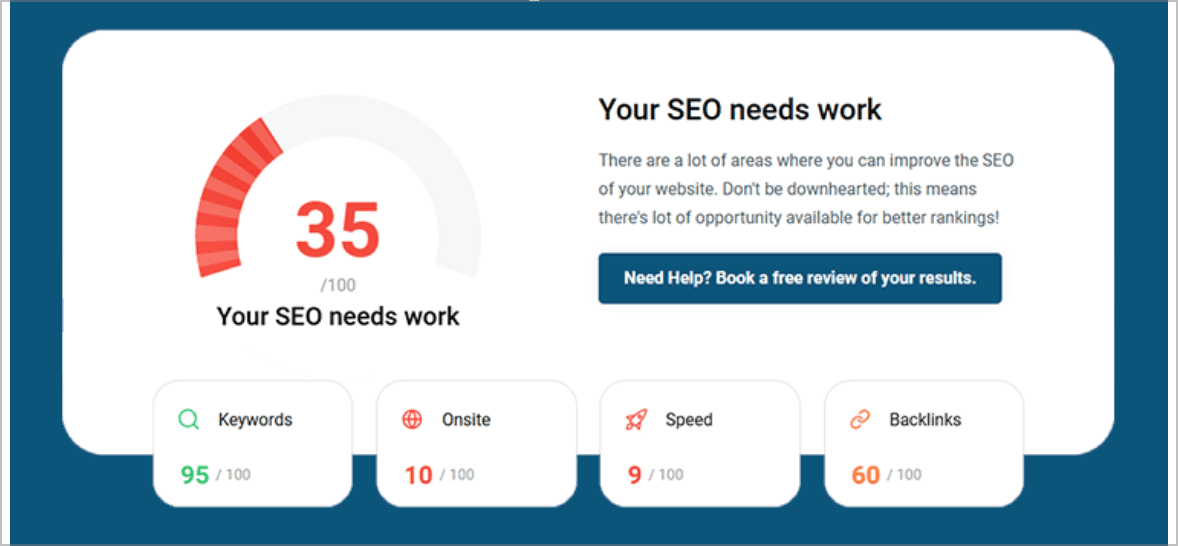
It may be outdated information, weak entity connections, or mixed signals across your wider online presence. Our Website Visibility Score helps us assess the bigger picture before deciding what needs attention first.