
In the Google age, content wore the crown.
In the age of AI search, context does.
Let’s be honest: “Content is king” helped a lot of mediocre articles get overly long. It worked for a while because volume plus keywords could carry you.
But AI search has changed the terms of engagement. Today, you do not win by publishing the most words. You win by being the most useful in context: clear, trustworthy, and easy to cite.

What's inside? (TL;DR)
Content has not disappeared, but the old “just publish more” approach has had its crown knocked off.
This article explains why context now matters more than volume, and how useful, clear, and trustworthy content is more likely to be cited by AI search engines.
Useful Sections
Estimated reading time:
4 minutes
From Content Then To Context Now
Then, in the Google era, the basic plan was fairly simple: publish regularly, target long-tail phrases, gather links, and earn positions. Word count was often treated as a shortcut for quality. Thin content lost. Long-form usually won.
Now, in the AI search era, answer engines select sources that are credible, transparent, and easy to lift into answers.
Concise does not mean thin. Thin content is shallow. Concise content is focused and complete.
EEAT has become more important too. Experience, expertise, authoritativeness, and trustworthiness help decide whether your content is safe to cite.
If you missed our earlier thinking on this shift, start with SEO Is Dead. Long Live SEO and our follow-up on What SEO Will Mean In 2026.
What Context Actually Means In Practice
Context is the set of signals that tells both humans and machines why your answer belongs in this conversation.
First-Hand Proof
Share lived experience: case studies, how-tos from real work, and examples with outcomes. If you have not done it, do not claim it.
Explicit Clarity
Write for the exact question. Use plain English. Put the answer first and the detail after. Add pricing, comparisons, and honest pros and cons when they help people decide.
Structured Signals
Use clear headings, FAQs, and schema so machines can locate and quote you precisely.
Entity Consistency
Keep your brand facts consistent across your site, your Google Business Profile, and trusted directories. That includes your business name, services, locations, and contact details. Consistency is part of credibility.
Independent Trust
Reviews and third-party mentions strengthen your authority. They provide context outside your own site.
Technical Access
If crawlers cannot fetch it, they cannot cite it. Keep your pages fast, accessible, and open to the legitimate crawlers that matter.
Blogging Is Still Valuable, Just Different
Blogging has not died. The brief has changed.
Your blog is still one of the best places to demonstrate experience and earn trust, but the success metric is not “2,000 words every Tuesday.” It is usefulness.
Write posts that answer one real question per piece. Include transparent detail, such as pricing ranges, pros and cons, or comparisons, where that helps buyers decide.
Make your content easy to quote. A crisp definition, a numbered process, or a compact comparison can be far more useful than another padded article trying to hit an imaginary word count.
Point readers to sensible next steps with relevant links. For example, the first mention of Norman should link to The Norman Advantage, and platform features should reference the SEO Portal where it genuinely helps the reader.
Here is the important shift. In Google’s age, content was often boxed into informational versus transactional. In AI’s age, that division matters less. AI cares about intent alignment.
If someone asks an informational question, a clear educational blog may be enough. If pricing is relevant, include it. That does not make the article salesy. It makes it contextually complete.
Not every blog needs to pitch. Every blog does need to serve its purpose transparently.
The New Quality Bar
The new quality bar is simple: concise, transparent, and quotable.
If a paragraph does not help a human make a decision or help an assistant quote you accurately, cut it.
Replace filler with something useful:
a definition
a short framework
a comparison
a pricing or timeline range
a practical next step
This is not about dumbing down. It is about removing friction so your answer can travel.
Transparency is not a sales tactic. It is a trust tactic. Mentioning costs, trade-offs, or processes inside an educational blog does not cheapen it. It strengthens it.
AI search is more likely to cite answers that feel complete and candid than content that dodges the detail.
What To Stop Doing Sooner Rather Than Later
Stop writing for an arbitrary word count.
Stop publishing generic listicles that add nothing new.
Stop hiding prices or dodging trade-offs. If you will not say it, AI has very little reason to cite it.
Stop blocking useful crawlers in a misguided attempt to protect content that nobody can then find, understand, or reference. That is not strategy. That is putting the crown jewels in a locked cupboard and forgetting where you put the key.
What To Start Or Double Down On This Quarter
Start with one-question blogs that answer precisely what your buyer is asking.
Add FAQs with single-paragraph answers at the bottom of core pages where they genuinely help.
Create evidence posts: short case snapshots showing the problem, the action taken, and the outcome.
Improve structure and schema so your answers are easy to find and easy to quote.
Use internal links with intent. Point readers towards relevant strategy, services, or tools as next steps. Do not treat internal links like footer confetti.
The Bottom Line
Content is not dead. It has abdicated.
Context sits on the throne now.
When your content carries clear intent, transparent detail, and verifiable signals, AI systems are far more likely to lift you into answers. More importantly, humans are far more likely to believe you when they get there.
Can We Help?
Many people end up on our blog because their SEO is not working the way they hoped, and they are trying to work out what to do next.
Sound familiar?
If your content is still built around word count, keyword stuffing, or “we should probably post something this week”, there is a good chance it is not giving Google, AI search, or your customers enough context.
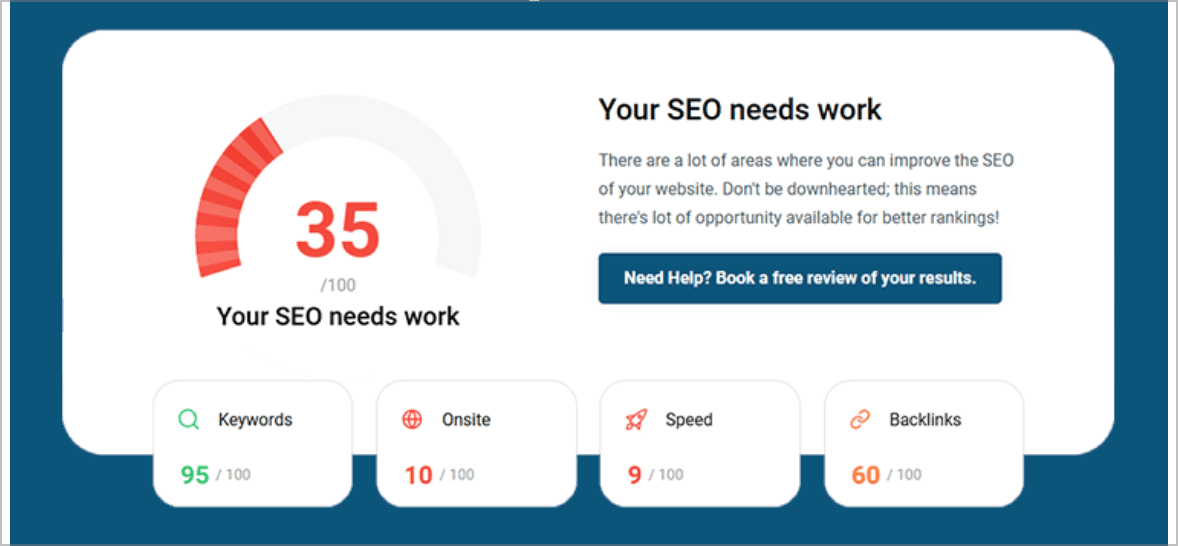
A Free SEO Audit can show where your site is clear, where it is vague, and where a bit of honest structure could make the whole thing work harder.