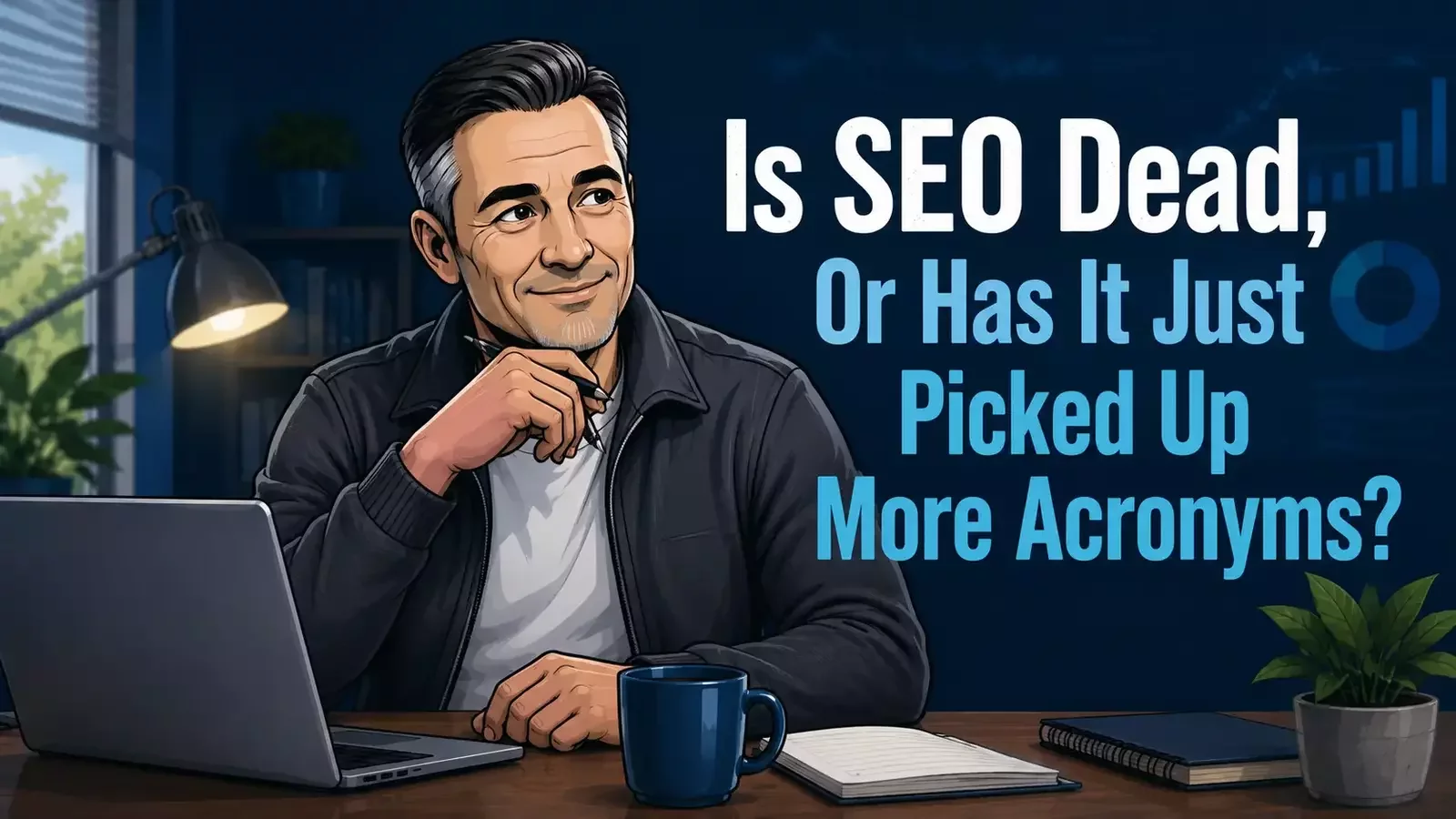
Every few years, someone announces that SEO is dead. It has been dead more times than most soap opera villains.
Now we have a new version of the same performance. SEO is dead, apparently, and small business owners now need GEO, AEO, AIO, LLMO, AI SEO, answer optimisation, generative visibility, entity optimisation, and probably three more acronyms by lunchtime.
It is becoming like Old MacDonald’s farm out there. SEO, AEO, GEO, EIEIO. There is a laugh in that, but there is also a real problem.
Small business owners are being told they need to fix things they have barely had time to understand. Some of that advice is useful. Some of it is premature. Some of it is repeated by people with good intentions but very little evidence. And some of it is pure digital snake oil, freshly bottled for the AI age.
So grab a coffee. Let’s separate the useful shift from the shouting.
What's inside? (TL;DR)
SEO has not died. It has picked up more acronyms, more noise, and more people selling panic to small business owners.
This article explains what SEO, AEO and GEO actually mean, why the basics still matter, and how clarity, technical foundations and trust help your business get found and chosen.
Useful Sections
Estimated reading time:
7 minutes
What Do SEO, AEO And GEO Actually Mean?
Let’s keep this simple.
SEO stands for search engine optimisation. It is the work of helping your website become clearer, more useful, more trusted, and more visible in search engines.
Nothing new here. Same as it ever was.
AEO usually means answer engine optimisation. It is about making your content clear enough to answer specific questions, especially where search engines, voice assistants, AI tools, or answer boxes are trying to give people a direct answer.
GEO usually means generative engine optimisation. It is about improving your chances of being understood, cited, mentioned, or recommended by generative AI systems.
There are differences between them, but they are not separate planets. For most small businesses, they overlap heavily.
A clear service page helps SEO. A clear answer to a customer question helps AEO. A well-structured, trustworthy explanation helps GEO.
This is why the whole “SEO is dead” line is so unhelpful. The newer terms do not replace SEO. They build on the parts of SEO that should have mattered all along.
Clarity. Structure. Usefulness. Trust.
Is GEO Real?
Yes.
GEO is not imaginary. Generative AI search is real. Google’s AI features, ChatGPT, Perplexity and other tools are changing how people find and compare information.
More people are asking AI systems questions they would once have typed into Google. That matters.
If your business cannot be clearly understood online, you are making life harder for search engines, AI tools, and potential customers.
But here is where we need to be careful.
GEO is real. The hype around GEO is where things start wobbling.
Nobody can honestly guarantee that your business will appear in ChatGPT, Gemini, Perplexity, or Google AI Overviews for every query you care about. These systems are complex, change often, and pull information from multiple places.
So if someone tells you they can “guarantee AI rankings”, ask them exactly how they measure that. Then keep one hand firmly on your wallet.
Is SEO Dead?
No.
SEO is not dead.
It has just picked up more surfaces, more systems, and more people talking nonsense about it on social media.
Google’s own guidance on generative AI search is not saying, “Forget SEO and chase a new acronym.” It says the fundamentals still matter. Pages still need to be crawlable. Content still needs to be useful. Technical structure still matters. Helpful, reliable, people-first content still matters.
That should not surprise anyone.
AI search still needs information to work with. If your website is vague, thin, inconsistent, slow, hidden from search engines, or written like a brochure from a committee meeting, AI tools do not magically fix that for you.
They may simply ignore you. Or worse, they may misunderstand you.
The Three Non-Negotiables For SEO In 2026
When you strip away the acronyms, there are three things small businesses need to get right.
Not because they are fashionable. Because they work.
1. Clarity: Say What You Do, Who You Help, And Where You Do It
This sounds painfully obvious, which is why so many businesses skip it.
Your website needs to make the basics clear:
who you are
what you do
who you help
where you work
what problem you solve
what someone should do next
That matters for people. It matters for Google. It matters for AI search visibility.
If a human has to work hard to understand your business, Google and AI tools probably will not do much better.
Here is a simple example.
A weak page says: “We provide bespoke solutions for growing businesses.”
That may sound polished, but it says almost nothing.
A stronger page says: “We provide bookkeeping and payroll support for small businesses in Bedfordshire.”
One sounds fancy. The other can actually rank.
It also gives AI systems something clear to understand: the business type, the audience, the location, and the service.
That is not just better copywriting. That is better search visibility.
2. Technical Foundations: Make Sure Your Site Can Be Found And Used
This is the boring bit.
Which usually means it is important.
Search engines need to access your pages, understand them, and trust that the site gives users a decent experience.
That includes things like:
pages that can be crawled and indexed
sensible headings
working internal links
mobile-friendly pages
reasonable loading speed
secure pages
clean URLs
no important content hidden from search engines
basic schema where it genuinely helps
You do not need technical perfection. You do need to avoid technical self-sabotage.
A small business website does not need enterprise-level SEO architecture. But it does need to stop tripping over its own shoelaces.
If your key service pages are hard to find, poorly structured, blocked from indexing, duplicated, or buried under vague navigation, you are making the job harder than it needs to be.
And again, this is not just about traditional search. If Google’s systems, AI tools, or answer engines are trying to understand your business, they need access to clear, usable information.
3. Trust: Prove You Are Real, Credible, And Worth Recommending
This is the part many businesses underestimate.
Search is not just about keywords anymore. It is about confidence.
Your website should help people believe you are real, experienced, and safe to contact.
That means showing things like:
clear contact details
real business information
named people where appropriate
reviews and testimonials
useful answers to real customer questions
examples of your work
clear service information
honest buying guidance
policies and FAQs where they help
consistent information across your website, Google Business Profile, directories, and social channels
SEO helps you get found. Trust helps you get chosen.
That distinction matters.
Ranking is not the finish line. The finish line is a potential customer thinking: “Yes, these people look like they know what they’re doing.”
AI search sharpens this even further. Generative systems often build answers from multiple sources. They may look at your website, third-party sites, reviews, business profiles, directories, social signals, articles, and other public information.
If those signals are thin, messy, contradictory, or vague, you are not giving the systems much to work with.
Where The Nonsense Creeps In
There is a real shift happening.
There is also a lot of irrational exuberance.
That is the polite version.
The SEO world has gone a bit fizzy-pop about AI search. Every week there seems to be a new acronym, a new framework, a new “must-do” checklist, and a new expert who discovered the future approximately three days ago.
Some of these people mean well. They are trying to understand a fast-moving topic and share what they are learning. Fair enough. We are all learning.
Some are repeating things they have not tested. That is less helpful.
And some are rogue traders using uncertainty to sell panic.
That is where small business owners need to be careful.
If someone is selling GEO as if it replaces SEO, be cautious. If they are promising guaranteed AI visibility, be very cautious. If they are using fear as the main sales tool, be extremely cautious.
The right response to change is not panic.
It is better judgement.
What Should Small Businesses Actually Do?
Start with the boring questions. They are usually the profitable ones.
Look at your website and ask:
Can a first-time visitor understand what we do within a few seconds?
Is it clear who we help?
Is our location or service area obvious?
Do our service pages answer real buying questions?
Can Google find and index our important pages?
Are our headings and website structure clear?
Do we show enough proof that we are credible?
Are our reviews, contact details, business profiles and website information consistent?
Do we explain what someone should do next?
That is where good SEO, AEO and GEO all begin.
Not with a miracle checklist. Not with someone shouting “SEO is dead” into the algorithm. Not with a shiny acronym stapled to last year’s service.
With clarity.
With foundations.
With trust.
So, Is SEO Dead?
No. SEO is not dead.
It is becoming broader, more connected, and more demanding. Search visibility now means thinking about traditional search results, AI-generated answers, local signals, business entities, third-party trust, and how clearly your expertise is represented online.
That is a real change.
But the answer is not to throw away SEO and chase every new acronym like a dog after a tennis ball.
The answer is to get the fundamentals right in a way that works for people, search engines, and AI systems.
Say what you do clearly. Make sure your website can be found and used. Prove you are credible. Answer the questions your customers are actually asking. Build trust before you ask for the sale.
If you do that well, you are not just “doing SEO”.
You are building the kind of online presence that has a better chance of being found, understood, trusted, and recommended.
Whatever acronym someone decides to shout about next week.
Can We Help?
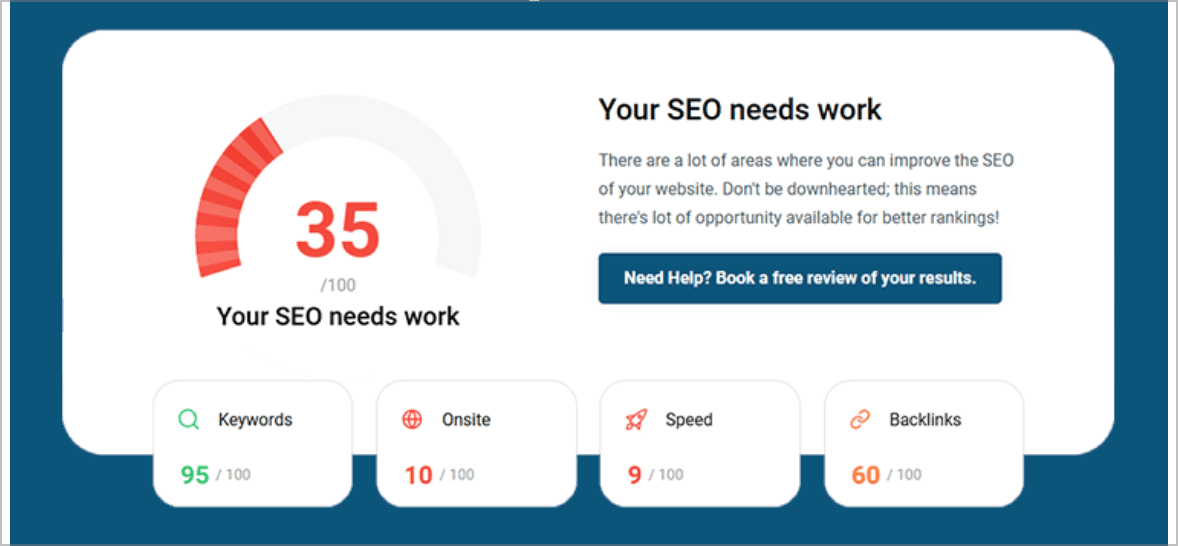
Many people end up on our blog because their SEO is not working the way they hoped, and they are trying to work out what to do next.
Sound familiar?
If your website is being pulled in ten different directions by SEO, AEO, GEO and whatever acronym appears next week, the first job is not to panic.
It is to find out whether your site is clear, crawlable, useful, and trustworthy enough to give people, Google, and AI search something solid to work with.