I have been talking for some time about the importance of tying your online presence together. Your website, Google Business Profile, social channels, videos and other trusted references should support the same clear picture of your business.
Recently, at a networking event, I mentioned that Google would soon allow businesses to add social media channels to Google Search Console. I just did not realise quite how soon.
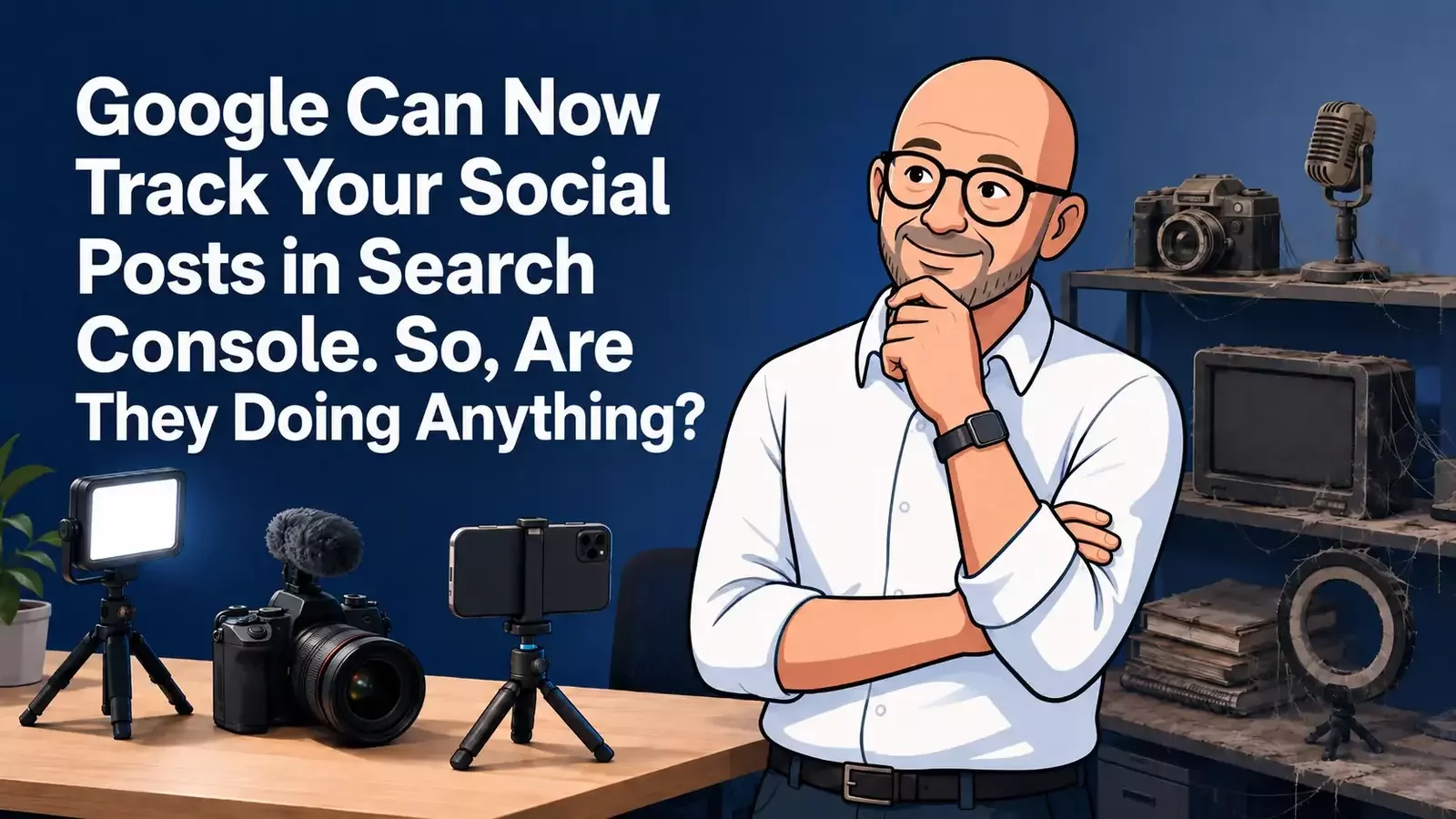
It went live in the UK yesterday. Google’s new platform properties let businesses and creators see how posts from Instagram, TikTok, X and YouTube perform across Google Search, Discover and Google News. The feature became available in the UK on 29 July 2026.
For businesses that have treated their website, SEO and social media as separate jobs, this is worth paying attention to.
What's inside? (TL;DR)
Google Search Console can now show how content from Instagram, TikTok, X and YouTube performs across Google.
The new reporting gives businesses another way to judge whether their social content is earning useful visibility, but connecting an account is not a shortcut and an abandoned profile will remain abandoned.
Useful Sections
Estimated reading time:
9 minutes
What Has Google Added to Search Console?
Google Search Console has traditionally shown how your website performs in Google Search.
It tells you which searches lead people to your pages, how often those pages appear and how many clicks they receive.
Platform properties extend some of that reporting beyond your website.
You can now add certain social media and video profiles to Search Console and see how content from those accounts is being found through Google.
Google says the reports can help you identify:
the search themes sending people to your social content
recent posts receiving sudden increases in search traffic
differences in performance between platforms
older posts or videos attracting attention again
how short videos compare with longer ones
By reviewing reports across different properties and time periods, you may also begin to see which subjects, formats, titles and captions are associated with stronger search performance.
That does not mean social media has replaced your website.
It means Google is giving you a clearer view of a search presence that may already extend beyond it.
Your Website Is Still the Centre
For most small businesses, the website should remain the main source of reliable information. It is the part you control.
It explains your services, answers questions, shows your experience and gives potential customers somewhere useful to go when they are considering working with you.
But the website does not sit alone.
Someone may first come across your business through a LinkedIn post, an Instagram image, a Facebook discussion, a YouTube video or your Google Business Profile.
Google encounters those different parts of the business too. When they consistently describe the same organisation, services, people and areas served, they create a clearer overall picture.
That is what I mean when I talk about tying your entity strategy together. In plain English, the pieces should agree.
Your website says what you do. Your social channels support it. Your business profiles confirm it. Your content shows that you know what you are talking about.
No smoke. No mirrors. No need to invent another acronym.
An Empty Social Profile Will Not Help Much
There is an obvious catch.
A social media account with no posts is unlikely to contribute very much.
Connecting an abandoned Instagram profile to Search Console does not suddenly turn three years of silence into a useful marketing asset. Google may now be able to report on the content, but there still needs to be content worth reporting on.
This is not a reason to open an account on every platform you can find.
Seven empty profiles displaying the same logo and a final Christmas message from 2022 are not a joined-up strategy.
Choose the channels that make sense for your business and that you can maintain properly.
Then make those channels work harder.
Publish useful posts. Talk about subjects your business genuinely understands. Keep the important information aligned with your website.
An active social channel has a job to do.
An empty one mostly proves that somebody once remembered the password.
Google Has Only Included Four Platforms So Far
At launch, Google has limited platform properties to:
Instagram
TikTok
X
YouTube
Facebook and LinkedIn are notably absent.
Threads is missing too, despite being an obvious competitor to X.
It would be reasonable to expect Google to add more platforms eventually.
But reasonable expectations have a habit of becoming dodgy facts once they are repeated often enough.
We do not know whether Facebook, LinkedIn or Threads will be added. Google has not said.
And we already know what assuming does in the rapidly changing search environment.
For now, we work with what Google has actually released.
That means this feature will not give businesses one neat report covering every part of their social media activity.
Useful? Yes.
Complete? No.
We Will Be Testing This Ourselves
At KickstartSEO, LinkedIn has been a core part of our strategy for years.
Earlier this year, Dee ramped up our Facebook presence and began giving that channel a more consistent role in our marketing.
This week, I even dusted off an Instagram profile that had been sitting quietly for three years and started posting again.
It may not qualify as one of history’s great comebacks, but it is a start.
Then there is YouTube.
We have a channel. It exists. Technically, that is about the kindest thing I can currently say about it.
It has been gathering dust while we focused our attention elsewhere. Google’s new reporting gives us another reason to change that.
Of the four platforms currently included, Instagram and YouTube are both available to us.
LinkedIn and Facebook still matter to the wider strategy, but we will need to continue using their own reporting alongside website and search data.
Instagram gives us something new to measure. YouTube gives us a gentle reminder that owning a channel and actually using it are not the same thing.
Time to step up our game.
Which subjects are people finding?
Which posts and videos attract search traffic?
Does older content begin earning attention?
Does anything we publish lead people towards the wider business?
No single dashboard is going to answer every question. That would be far too convenient.
I Do Not Know What I Do Not Know
At the time I am writing this, the feature has only been live in the UK for a few hours.
I have not had enough time or data to tell you which reports will prove most useful, what the limitations may be or whether Google has tucked any interesting surprises away inside it.
I do not know what I do not know.
But when I do know, you will know.
You know?
There will be no shortage of people publishing confident explanations before the evidence has had time to arrive.
I would rather test it properly.
We will connect the relevant channels, watch the data and see what it actually tells us.
What Could the Reports Help Businesses Understand?
The value is not simply that Google has added another dashboard.
Digital marketing was not suffering from a shortage of those.
The useful part is what businesses may be able to learn from the information.
Which Subjects Attract Search Interest?
Google says its Insights report can show the leading, rising and declining search themes sending traffic to social and video content.
A post may receive little attention inside Instagram or YouTube but still answer a question that people search for on Google.
That could reveal subjects worth developing further on the website, in another social post or in a video.
Which Posts Are Gaining Attention?
The reporting includes a 24-hour filter that can highlight sudden increases in Google Search traffic to recent posts.
That may give a business an opportunity to follow up while the subject is still relevant.
You might expand the idea into a blog, publish a follow-up post or cover it in more detail through another format.
Is Older Content Becoming Useful Again?
A post or video does not always perform immediately.
Sometimes interest grows later because the subject becomes more important or because Google begins showing the content for different searches.
Google says the reporting can help identify older videos regaining search attention. That could point towards content worth updating, pinning or expanding.
Which Channels Are Earning Their Keep?
Search Console will not tell you everything about the value of a social channel.
Social media can support relationships, reputation and referrals that do not fit neatly into a search report.
But this gives businesses another way to judge whether the work is contributing to visibility or merely keeping everyone busy.
There is a difference.
What Should KickstartSEO Clients Do?
The next step depends on which Optimiser programme you use.
Optimiser Premium Clients
We will handle the implementation for you.
We will contact you for information about the social media and video profiles you use. We can then connect the relevant accounts and bring the available reporting into the wider strategy we already manage.
This does not mean every client suddenly needs to start dancing on TikTok.
It means we will identify the channels you genuinely use, connect those that can be added and begin reviewing what the information tells us.
Where a channel is active, we can look for ways to make it contribute more.
Where one exists but has been neglected, we can have an honest conversation about whether to revive it or stop pretending it is part of the strategy.
Optimiser Essentials and Optimiser AI Clients
We will publish a separate step-by-step guide shortly.
It will explain how to add the relevant profiles, what information you need and what to look for once the data begins appearing.
There is no need to start pressing random buttons before then.
Search Console generally works better when approached with a plan rather than enthusiasm and hope.
This Is Not a Shortcut
Adding a social account to Search Console is not, by itself, going to improve your rankings.
Google has introduced a reporting feature. It helps you see how social and video content performs through Google.
Connecting an account does not make weak content useful.
It does not make an inactive profile active.
And it does not mean every business suddenly needs to be everywhere.
The value comes from what you learn and what you do next.
When a subject performs well, you can build on it.
When older content starts gaining attention, you can revisit it.
When a channel contributes nothing, you can ask whether the problem is the content, the platform or the way you are using it.
The report provides evidence.
The decisions still need a human.
Your Online Presence Should Tell One Clear Story
Google’s latest Search Console update reinforces something businesses should already understand.
Your search presence is larger than your website.
That does not make the website less important. It makes the rest of your online presence harder to ignore.
Your social accounts should support the same services, experience and identity that people find on your website.
They should be active enough to serve a purpose.
And where Google can measure the platform, you may now have better information about whether that content is being discovered.
We have spent years building LinkedIn into our strategy. Dee has strengthened our Facebook presence. Instagram has been brought back from its extended nap. YouTube is next in line for attention.
Only Instagram and YouTube can currently be measured through this new feature, but that still gives us two useful pieces of the picture.
Now we watch, learn and adjust.
Because activity is not the goal.
Useful visibility is.
Can We Help?
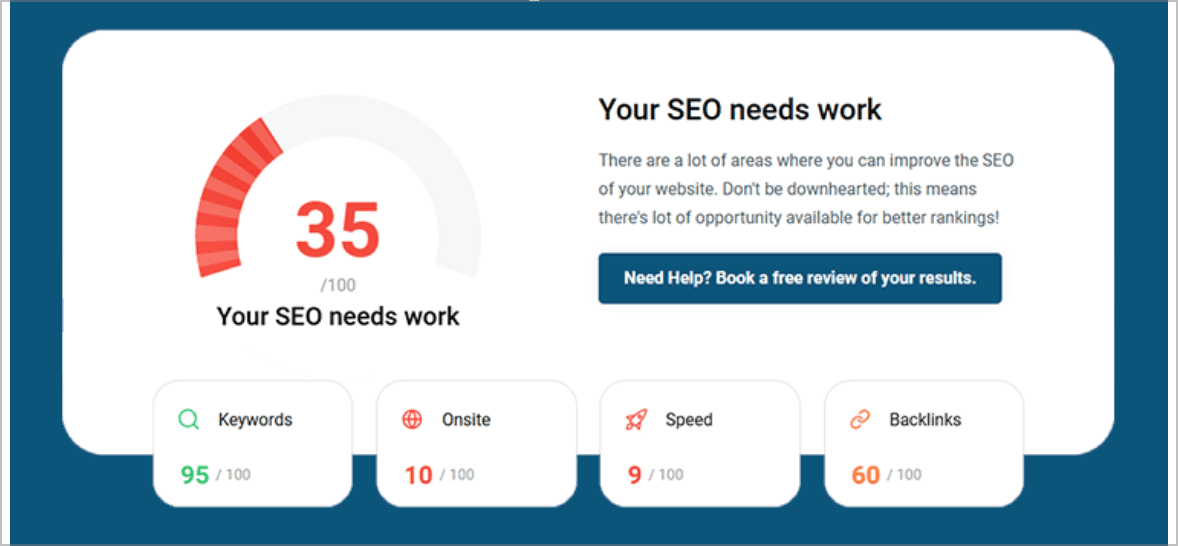
Many people end up on our blog because their SEO is not working the way they hoped, and they are trying to work out what to do next.
Sound familiar?
Are Your Website and Social Channels Telling the Same Clear Story?
Search Console may now show more of the picture, but the useful question is whether those different parts of your online presence are actually working together or simply creating more activity to manage.