

Search is shifting. Google still matters, local maps still matter, and AI-powered search is now adding another layer to how business information is found, checked, and trusted.
That makes local citations more important than they may look at first glance. They are not glamorous. Nobody is framing a directory listing and hanging it above the fireplace. But accurate business information across the web still helps search engines, maps platforms, and AI systems understand who you are, where you are, and whether your details can be trusted.
Originally published September 2025. Updated May 2026 to include practical citation management guidance for Google, maps platforms, directories and AI search.
What's inside? (TL;DR)
This article explains why local citations still matter for Google, maps platforms, directories and AI search.
It covers what citations are, why consistency matters, and how accurate business information helps search systems decide whether your business can be trusted.
Useful Sections
For years, local citations were treated as a fairly dull local SEO task. Add your business to directories, keep the name, address and phone number consistent, job done.
That still matters, but the reason has become bigger. Search engines and AI systems are trying to understand entities, not just pages. If your business details are clear, consistent and repeated in the right places, you give those systems a cleaner signal.
If your details are messy, outdated or scattered across the web like digital confetti, you make the job harder. And making search systems work harder is rarely the winning move.
Why Local Citations Still Matter
A local citation is any online mention of your business name, address, phone number, website, opening hours, or other key business details.
In old-school SEO language, this was often reduced to NAP consistency: name, address and phone number. That is still useful, but it is now a bit too narrow. Search systems are not just checking whether your phone number matches. They are trying to understand whether your business is real, active, relevant and trustworthy.
That matters across several places:
Google Search
Google Maps
Apple Maps
Bing Places
Local directories
Industry websites
AI-powered search results
The citation itself may not be exciting. Frankly, “updated directory listing” is unlikely to trouble the Oscars. But the signal behind it matters. When accurate business details appear consistently across trusted platforms, they help reinforce your business identity online.
Citations Help Search Systems Understand Your Business
Search engines and AI systems rely on patterns. They look for repeated signals that help them understand what a business does, where it operates, and whether the information they are showing users is reliable.
If your business appears consistently across Google Business Profile, Apple Maps, Bing Places, trusted directories, review sites, and relevant industry platforms, that creates a cleaner signal.
If one platform shows your current phone number, another shows an old address, and another uses a previous business name, the signal becomes messy. A human may spot the issue and work it out. Search systems may not be quite so generous.
This is why citations still matter. They are not the whole local SEO strategy, but they are part of the trust picture.
Structured And Unstructured Citations
Structured Citations
Structured citations appear in places where your business details are entered into fixed fields. These are usually directory listings, map platforms, business profiles, and review sites.
They often include:
Business name
Address
Phone number
Website URL
Opening hours
Business category
Service areas
Business description
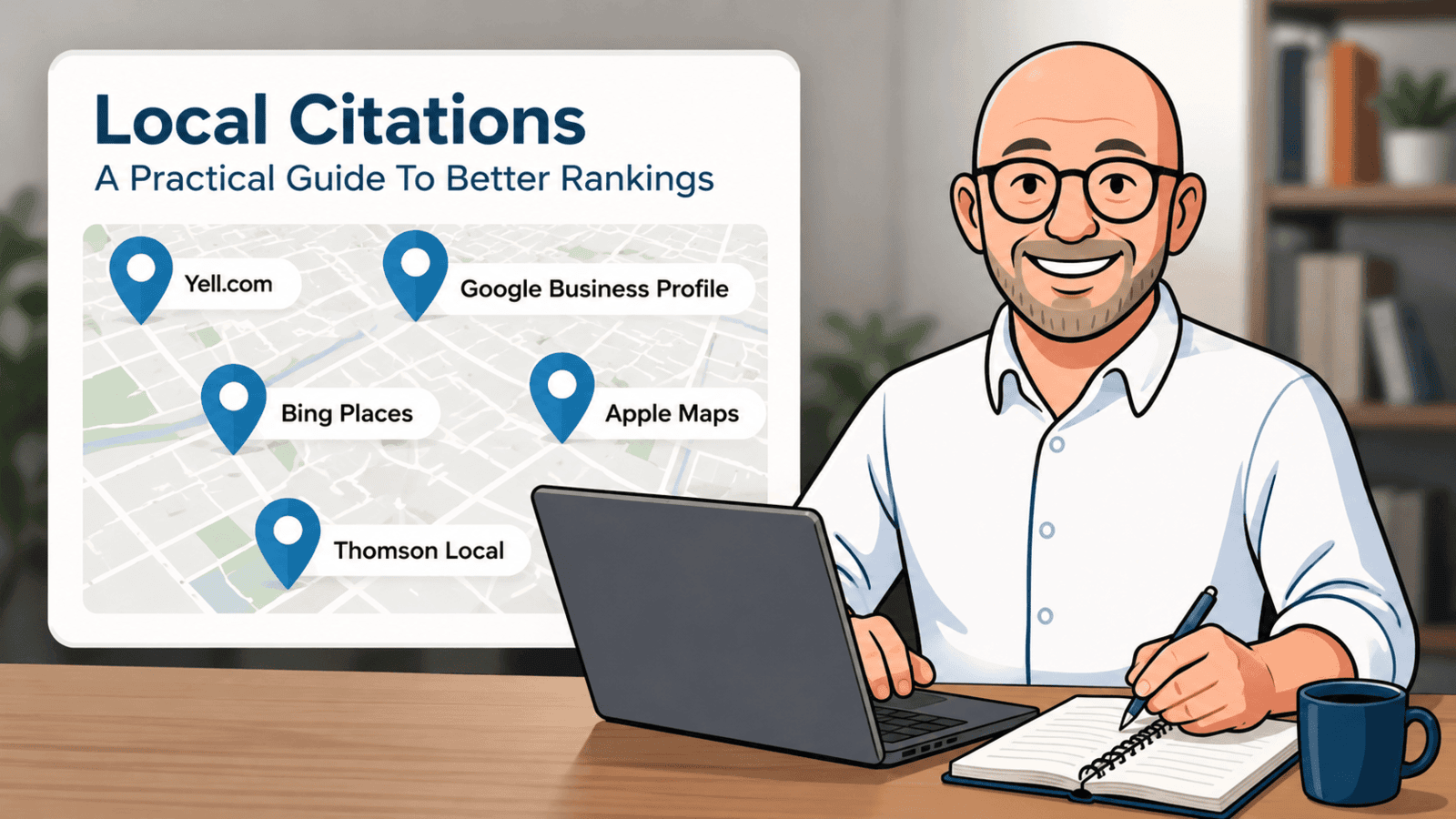
Google Business Profile, Bing Places, Apple Maps, Yell, Thomson Local and industry-specific directories are common examples.
These citations are easier to manage because the format is predictable. You know which details are being displayed, and you can usually update them through a business account or listing dashboard.
Unstructured Citations
Unstructured citations are mentions of your business within normal content. These might appear in a blog post, local news article, event listing, supplier page, sponsorship page, trade association profile, or chamber of commerce mention.
They are less tidy than structured citations, but they can still support your local visibility. They show that your business exists beyond its own website and is connected to real places, people, organisations and activity.
For AI search, these wider mentions may become more useful over time because answer systems often look beyond traditional directory data when forming a view of a business.
Why Consistency Matters
Search systems like clarity. They want to know that the business being mentioned in one place is the same business being mentioned somewhere else.
That means your core information should be consistent wherever possible:
Business name
Street address
Phone number
Website URL
Opening hours
Business category
Service area
Small differences will not usually cause disaster. This is local SEO, not defusing a bomb. But repeated inconsistencies can weaken trust.
Common problems include old phone numbers, previous addresses, outdated opening hours, duplicate listings, old trading names, broken website links, and mismatched categories.
These issues often appear after a business moves premises, changes phone number, rebrands, merges with another company, or has listings created by different agencies over several years. Citation mess rarely announces itself politely. It just sits there quietly making things harder.
Citations Are Not A Magic Ranking Lever
It is worth being clear about this. Citations alone will not carry a weak local SEO strategy.
You still need a strong Google Business Profile, relevant website content, good reviews, clear service pages, local relevance, technical basics, and a website that helps visitors understand what you do.
Citations support that wider picture. They help reinforce trust, but they do not replace the rest of the work.
The mistake is treating citations as either everything or nothing. They are neither. They are one practical part of local SEO that helps search systems verify your business information.
Quality Beats Quantity
A few accurate listings on trusted, relevant platforms are usually better than dozens of weak listings across questionable directories.
There was a time when citation building became a numbers game. More listings, more submissions, more spreadsheets, more invoices.
Marvellous, if your goal was to keep someone busy. Less marvellous if your goal was meaningful local visibility.
A sensible citation strategy focuses on quality.
Start with the platforms that matter most:
Google Business Profile
Apple Maps
Bing Places
Well-known UK directories
Relevant industry directories
Local chambers of commerce
Trusted review platforms
Local business organisations
After that, look for citations that make sense for your business. A solicitor, plumber, accountant, fitness studio and care provider will not all need the same directory mix.
The question is not “how many places can we submit this?” The better question is “which places help confirm this business is real, relevant and trusted?”
How Local Citations Connect To AI Search
AI-powered search systems are changing how people discover and compare businesses. Instead of only showing a list of links, they may summarise options, pull together business details, compare providers, or answer local questions directly.
That means your business information needs to be clear enough for machines to understand and confident enough for them to use.
If an AI system is trying to work out whether your business serves a particular area, offers a specific service, or has reliable contact information, consistent citations can help support that understanding.
They are not the only signal. Your website, reviews, Google Business Profile, schema, content, and wider brand mentions all matter too. But citations are part of the evidence trail.
Think of them as supporting witnesses. Not the whole case, but useful when they all tell the same story.
How To Manage Citations Properly
Good citation management starts with one source of truth.
Before updating any listings, decide exactly how your business details should appear. That includes your business name, address, phone number, website URL, opening hours, business category, service areas and short description.
Once that is set, use the same details everywhere. Do not slightly rewrite your business name on one platform, abbreviate the address on another, and use a different phone number somewhere else because “it’s close enough”. Close enough is where citation problems go to breed.
A practical citation process looks like this:
Audit existing listings
Identify incorrect, outdated or duplicate citations
Fix the most important platforms first
Update secondary directories and industry platforms
Remove or merge duplicate listings where possible
Review citations after any business detail changes
Recheck them regularly
This is not glamorous work, but it is useful work. Local SEO often improves through steady, sensible maintenance rather than one dramatic fix.
What Service-Area Businesses Need To Watch
Service-area businesses need to be especially careful with citations.
If you visit customers at their location rather than receiving customers at yours, your address visibility may need to be handled differently depending on the platform. Some directories allow hidden addresses or service-area settings. Others are less flexible.
The key is to be honest and consistent. Do not show a public address where customers cannot visit you. Do not create fake locations to rank in towns where you do not have a real presence. That road usually ends in trouble, and not the interesting kind.
For service-area businesses, citations should support where you genuinely operate. Your website, Google Business Profile, service-area information, and local content should all tell the same story.
What You Need Before Creating Or Updating Citations
Before submitting or correcting citations, gather your core business details in one place.
You will usually need:
Full registered business name
Trading name, if different
Complete address, where appropriate
Phone number
Website URL
Main business category
Secondary categories, where available
Opening hours
Service areas
Short business description
Social profile links
Logo or approved business image
Having this ready saves time and reduces errors. It also helps keep everyone working from the same information, especially if more than one person is involved in managing your listings.
Common Citation Problems To Fix
Most citation issues are not complicated. They are just easy to miss.
The usual suspects include old addresses, old phone numbers, duplicate listings, inconsistent business names, incorrect categories, missing website links, broken URLs, outdated opening hours, and profiles nobody has logged into for years.
Duplicate listings are particularly annoying because they can split trust between different versions of the same business. One accurate listing is better than three half-right listings quietly contradicting each other.
Outdated information can also frustrate customers. If someone finds the wrong phone number or turns up when you are closed, that is not just an SEO issue. That is a service issue. And service issues have a habit of turning into bad reviews, because apparently people notice when you waste their time.
How KickstartSEO Handles Local Citations
At KickstartSEO, local citations sit under the wider job of keeping your directory listings accurate and consistent.
The aim is not to spray your business details across the internet and hope something sticks. The aim is to make sure the right platforms show the right information, so customers, search engines, maps platforms and AI-powered search tools can trust what they find.
In Optimiser Essentials, we track your local citations and give guidance to help your business show up in more of the right places.
In Optimiser AI and Optimiser Premium, Norman manages this work more directly, helping keep your listings accurate and consistent across key directories and data sources.
That can include platforms such as Google, Google Maps, Apple Maps, Bing, Facebook, voice search sources, review sites, industry directories and relevant local business listings.
The important bit is this: citations should support strategy. They should help improve clarity across local search, maps and the places customers may discover you next. They should not become admin for admin’s sake.
Take Control Of Your Citations
Local citations still matter because trust still matters.
Google, maps platforms, directories and AI search systems all need reliable information before they can confidently understand and present your business. When your details are accurate and consistent, you make that easier.
Citations will not save a weak website, fix poor reviews, or magically make you rank across every town within a 40-mile radius. Lovely if they did, but no.
What they can do is strengthen your local SEO foundation, support clearer entity understanding, and reduce confusion across the web.
That makes them worth getting right.
Can We Help?
Many people end up on our blog because their SEO is not working the way they hoped, and they are trying to work out what to do next. Sound familiar?
If your business details are inconsistent across Google, maps platforms, directories and AI search sources, you are making it harder for search systems to trust you.
We can help you spot the messy bits, clean up what matters, and build a more reliable local visibility foundation without turning it into another admin swamp.