
Google core updates have a habit of making website owners stare at their rankings like they’re watching the weather during a barbecue.
This week, Google rolled out its November core update, prompting plenty of businesses to check their search positions and wonder whether something has gone wrong.
Before rushing into edits, rewrites, plugin tinkering, or any other form of digital flapping, it is worth remembering something important: core updates often reward websites that already have solid SEO foundations.
Let’s look at what is happening, what to monitor, and why staying calm is usually the better move.
What's inside? (TL;DR)
Google’s November core update may cause rankings to move around, but that does not mean your website is broken.
This article explains what to monitor, why panic edits are usually a bad idea, and how steady SEO work can help you come through updates in better shape.
Useful Sections
Estimated reading time: 5 Minutes
Learning From Past Updates
Google releases several core updates each year. The last one finished rolling out in October 2024.
Our analysis of previous updates shows a consistent pattern: websites typically see ranking fluctuations for two to three weeks, with positions stabilising by week four.
During the March 2024 update, for example, 68% of tracked business websites saw temporary ranking changes, but only 23% experienced permanent shifts.
Google’s official guidance remains consistent: core updates are designed to improve the overall relevance of search results. They also emphasise that drops in rankings do not necessarily mean anything is wrong with your pages.
Instead, these updates often reward previously under-recognised pages that offer high-quality content and a strong user experience.
Current Status
This core update affects search rankings worldwide and takes about two weeks to roll out fully.
While some websites worry about potential drops, others see improvements. Sites with consistent SEO management often gain better positions during these updates.
During the March 2024 update, one Milton Keynes client moved from page three to page one for several keyword phrases after months of steady content improvements and customer review management.
Initial Impact Patterns
Early signs of the update appear across different types of search results.
We are seeing local business listings shift positions. For example, searches for “plumber near me” now seem to place more emphasis on recent customer reviews.
Service businesses are seeing wider geographic reach in their local results, while retail searches show more variety in shopping carousel results.
These changes suggest Google is refining its understanding of local search intent and business relevance.
Some websites are appearing for a broader range of searches related to their services, indicating potential opportunities for well-optimised content.
Remember: changes during the rollout period do not always reflect final positions.
Don’t Panic: This Is Normal
Core updates typically cause temporary fluctuations in rankings.
Your daily traffic numbers might vary, and you will likely see search positions move up and down. Some days, different pages on your site might
swap positions in search results.
This is all part of Google’s process.
Many well-managed websites emerge stronger after updates settle. Good SEO practices tend to pay off during these algorithm changes.
Priority Actions
Keep an eye on these critical measurements during the update.
Essential Checks
Your enquiry and sales numbers
Where you appear in local searches
Rankings for terms that bring in business
Worth Watching
How people use your website
Any differences between mobile and desktop results
Whether you are keeping featured snippets
Do not rush into making website changes while the update settles.
Tracking Changes
A clear tracking plan helps spot actual trends.
Monitor your daily visitor numbers and how long people stay on your site. Watch your enquiry levels and note any significant changes.
Most importantly, write down what you see. Patterns often emerge after a few weeks.
Next Steps
During this update period, maintain a steady course.
Check your key performance metrics regularly and document any significant changes. Keep a close eye on your most important pages and local
search performance.
Most importantly, continue monitoring how customers engage with your website.
Long-Term Strategy
Success during updates comes from consistent, good practice.
Keep your business information accurate and current. Create content that genuinely helps your customers. Maintain your website’s technical health and respond promptly to customer feedback.
Regular service updates and fresh content help show Google that your site remains active and valuable.
Well-maintained websites often benefit from Google’s updates. Rather than fearing these changes, view them as opportunities for websites that follow good SEO practices.
Using The KickstartSEO Portal
Optimiser Essentials subscribers can see these algorithm changes directly in the KickstartSEO Portal.
Our tracking system shows precise data about the update’s effects.
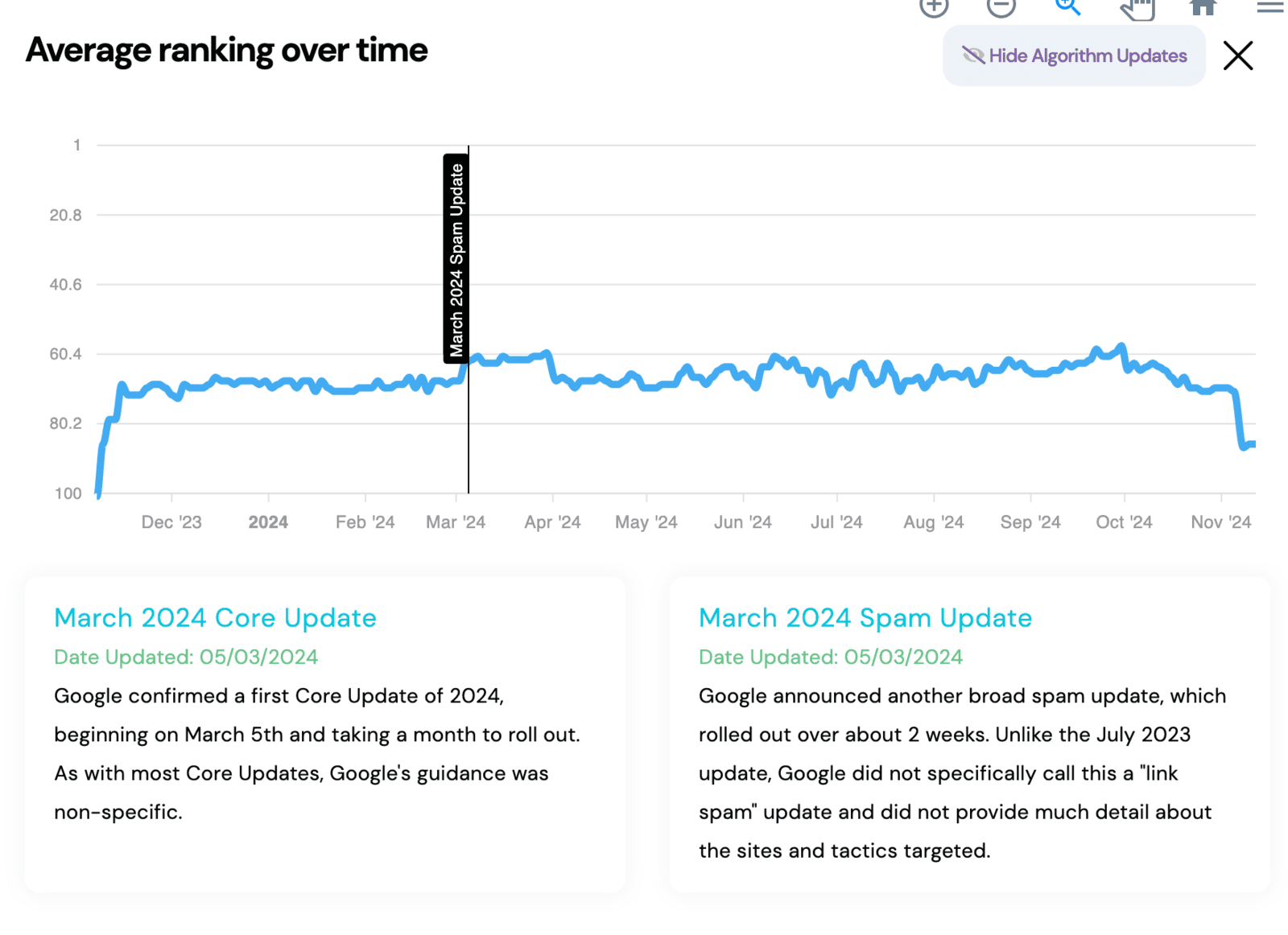
This visualisation shows when updates affect your rankings and how positions shift over time. It helps pinpoint which keywords see the most impact and where to focus your improvements once things stabilise.
How To Handle Core Updates Without Losing Your Head
The right response to a core update depends on how closely you are already watching your website.
If you are managing your SEO yourself, the first job is to track what actually changes. Look at traffic, enquiries, rankings for important searches, and local visibility. Do not rebuild pages just because one keyword has wobbled for a few days.
If you already have SEO support, this is where regular monitoring earns its keep. A good process should separate normal update movement from issues that need action.
And if your business relies heavily on search visibility, this is not the time for guesswork. Whether you need guidance, approved implementation, or fully managed support, the priority is the same: understand the data before changing the website.
Core updates rarely reward panic. They reward websites that are maintained properly over time. Annoying, but true.
Can We Help?
Many people end up on our blog because their SEO is not working the way they hoped, and they are trying to work out what to do next. Sound familiar?
Core updates are much easier to handle when you know what is actually happening on your website.
If your rankings have moved, your traffic feels odd, or you are wondering whether to act or sit tight, the first job is to separate real problems from normal Google wobble. Panic is not a strategy, despite its impressive popularity.