Is your SEO still moving in the right direction?
What's inside? (TL;DR)
This article explains which free and nearly free SEO tools are worth using, what they can and cannot tell you, and why the basics still matter as search changes.
It also gives small-business owners a simple 30-day routine for making practical SEO progress without buying expensive software.
Useful Sections
Estimated reading time:
10 minutes
And yes, SEO is still alive.
Despite what the fly-by-night snake oil salesmen over on LinkedIn are currently shouting into the algorithm, SEO has not died. It has changed. Again.
Same as it ever was.
The game is moving quickly. Google results are changing. AI search is changing how people discover information. Answer Engine Optimisation, often called AEO, and Generative Engine Optimisation, often called GEO, are now part of how people find businesses online.
But the foundations still matter.
Clear pages. Useful content. A website Google can access and understand. Local relevance. Trust signals. Good structure. Human experience. Search intent.
Those things have not stopped mattering because someone put “AI” in a carousel post and called themselves a futurist.
Can You Still Do SEO For Free?
Yes, up to a point.
The better question is not “can I do SEO for free?” It is “can I make meaningful progress without paying for expensive software?”
For many small businesses, the answer is yes.
Free SEO tools can help you understand:
whether Google can find and index your website
which search queries already trigger impressions
which pages attract organic traffic
whether your pages are slow
whether your content matches what people are actually searching for
whether your site is answering real customer questions
where obvious problems are getting in the way
That is plenty to get started.
It also matters for AEO and GEO.
If your website is confusing, thin, slow, vague or technically messy, it is not just traditional SEO that suffers. You are also making it harder for answer engines and AI search tools to understand who you help, what you do, where you operate, and why your content should be trusted.
That does not mean you need to chase every new acronym like a labrador after a tennis ball.
It means the basics need to be done properly.
What free tools usually do not give you is priority.
They show you information. They do not always tell you what matters most, what can wait, and what is just noise wearing a hi-vis jacket.
That is where many small-business owners get stuck. They collect data, read a few blogs, open twelve tabs, feel briefly motivated, then close the laptop and go back to running the business.
SEO progress rarely comes from knowing everything.
It comes from knowing the next sensible thing to fix.
SEO, AEO And GEO: What Small Businesses Need To Know
Let’s strip out the drama.
SEO is Search Engine Optimisation. It helps your website become more visible in search engines such as Google and Bing.
AEO is Answer Engine Optimisation. It focuses on making your content clear enough to answer specific questions directly, especially when search engines or AI tools summarise information for users.
GEO is Generative Engine Optimisation. It is about helping generative AI tools understand, trust and potentially reference your business, content or expertise when producing answers.
Different names. Different environments. Same underlying problem.
Can your business be found, understood and trusted when someone is looking for what you do?
That is the point.
For small businesses, this does not mean abandoning SEO and starting again. It means improving your website so it works harder across more places where people now search.
That usually means:
clearer service pages
better answers to customer questions
stronger local signals
more consistent business information
useful blog content
trustworthy author and business information
pages that are easy for search engines and AI tools to find and understand
The tools in this article help with the foundation.
Not the hype.
The foundation.
The Free SEO Tools Worth Setting Up First
Start with the basics. Not because they are glamorous, but because they work.
Google Search Console
Google Search Console should be one of the first tools you set up.
It helps you see how your website appears in Google Search. You can check whether pages are indexed, which search queries generate impressions, and which pages are getting clicks.
For a beginner, focus on a few simple areas:
whether your sitemap has been submitted
whether important pages are indexed
which queries already bring impressions
which pages get views but not many clicks
whether Google is reporting obvious problems
This matters for SEO in the traditional sense, but it also matters because AI search features still depend on content Google can find, read and make sense of.
If Google cannot properly access or understand your page, you have a visibility problem before we even get to the clever stuff.
Do not try to understand every report on day one. That way lies tea, biscuits and despair.
Start with the simple question: what can Google already see, and where is there a gap?
Google Analytics
Google Analytics helps you understand what happens after someone lands on your site.
For SEO, you do not need to live inside every report. You mainly want to know whether organic traffic is rising, falling or flat.
Look at organic search traffic over the last 28 days. Then compare it with the previous period.
That will not tell you everything, but it gives you a starting point.
If traffic is flat and enquiries are quiet, you need action.
If traffic is growing but enquiries are poor, the problem may be the page content, offer or user journey rather than visibility alone.
Traffic patterns may also change because more searches are being answered directly in search results or AI summaries. That makes it even more important to look beyond traffic alone.
Visibility matters. Clicks matter. Enquiries matter. Trust matters.
One graph will not tell the whole story.
PageSpeed Insights
A slow website makes everything harder.
PageSpeed Insights gives you a free check on how your pages perform, especially on mobile. The score is useful, but do not become obsessed with chasing perfection.
Focus on practical improvements:
compress large images
remove unnecessary scripts
avoid huge sliders and heavy visual clutter
check your main pages on a normal phone connection
make sure the page feels quick enough for a real visitor
A perfect score is not the aim.
A fast, usable website is.
Search engines care about usability. People definitely care about usability. And if AI search tools are trying to understand the quality and usefulness of pages, a clunky site is not helping your case.
Manual Google Checks
Sometimes the best free SEO tool is still your own eyes.
Search for your main service and town. Look at what appears.
Notice:
who appears in the local pack
what page titles competitors use
whether service pages, blog posts, directories or review sites dominate
whether Google shows maps, FAQs, images, videos or AI-generated summaries
what kind of language successful pages use
This is not about copying competitors.
It is about understanding the search result you are trying to compete in.
If every strong result is a practical service page and you are trying to rank a vague homepage, that is a clue.
Possibly a fairly loud one.
Also pay attention to the questions Google surfaces. Those questions often reveal what real people need explained before they trust a business.
That is useful for SEO. It is also useful for AEO.
Funny how often helping people understand things properly turns out to be good marketing.
Broken Link And Sitemap Checks
Broken links, missing pages and messy sitemap issues can quietly weaken a website.
You do not need an enterprise crawler to start. A basic broken-link checker and a sitemap review can uncover quick fixes.
Look for:
pages returning 404 errors
old URLs still being linked internally
important pages missing from the sitemap
duplicated or thin pages
pages that exist but serve no clear purpose
Small fixes add up.
SEO is often less dramatic than people think.
Which is annoying for conference speakers, but useful for business owners.
What Free SEO Tools Will Not Do For You
Free tools are excellent for visibility.
They are less good at judgement.
They will not always tell you:
which problem is costing you money
which page deserves attention first
whether a keyword is worth chasing
whether a question deserves its own article
whether your content is clear enough for AI-generated answers
how to turn data into a realistic plan
what to ignore
when a technical issue matters
when a technical issue is just digital confetti
This is where business owners lose momentum.
They do the sensible thing and set up the tools. Then the tools give them graphs, warnings, impressions, pages, queries, URLs, scores and errors.
Lovely.
Now what?
That “now what?” moment is where SEO advice needs to become practical.
You do not need a hundred tasks.
You need the next three that matter.
Our Blog Is A Good Free Starting Point
A good SEO blog should help you make better decisions without making you feel stupid for asking beginner questions.
That is what we aim to do with the KickstartSEO blog.
It is free SEO advice written for real business owners, not people who enjoy arguing about canonical tags in dark corners of the internet.
You will find guidance on search visibility, Google Search Console, AI search, content, backlinks, local SEO, website structure and the practical bits that usually confuse small businesses.
That matters because the search world is moving quickly. Google is changing. AI search is changing. User behaviour is changing.
But the job is still the same at heart.
Help the right people find you. Help them understand you. Help them trust you. Help them take the next sensible step.
Use the blog as a learning resource.
Read one article. Apply one useful idea. Then move on to the next.
That is far better than reading twenty articles, making a spreadsheet of good intentions, and then doing absolutely nothing.
We have all met that spreadsheet.
It looks busy.
It is not helping.
The Free Website Audit Is A Great First Tool
If you are not sure where to start, a free website audit is usually the most useful first step.
Not because it magically fixes everything.
It does not.
A good audit gives you a clearer view of what is happening now.
It should help you understand:
whether your site has technical issues
whether key pages are visible
whether your content is targeting the right searches
whether your pages answer the questions customers are asking
whether your business information is clear and consistent
where competitors may be stronger
which opportunities are worth looking at first
That matters because guessing wastes time.
You may think your blog is the problem when your service pages are weak.
You may think rankings are the problem when your titles are dull.
You may think you need more traffic when you really need clearer pages that convert the visitors you already have.
You may think AI search has made SEO pointless when the real issue is that your website still does not clearly explain what you do.
The audit helps you stop poking around randomly and start with evidence.
Low-Cost SEO Help: When Free Is Not Quite Enough
There comes a point where free tools are still useful, but not enough on their own.
That point usually arrives when:
you keep finding issues but do not know which to fix first
you understand the advice but do not have time to implement it
your website has more pages than you can comfortably manage
you need regular prompts to stay consistent
you want SEO to move forward without becoming your second job
you need to think about SEO, AEO and GEO together rather than treating them as separate little monsters
This is where low-cost SEO support can make sense.
Not as a replacement for understanding the basics, but as a way to turn scattered information into focused action.
For web designers and copywriters who already know how to implement SEO work, a professional DIY toolkit can help organise analysis, priorities and reporting.
For small-business owners who want progress without doing every technical task themselves, a supported service makes more sense. That is where Optimiser AI fits. Norman analyses the site, identifies priorities, and supports approved implementation so the work keeps moving without leaving the business owner buried in SEO admin.
The point is not to buy software for the sake of it.
The point is to get the right level of help for the way you actually work.
A Simple 30-Day SEO Routine For Beginners
If you want to make progress this month, keep it simple.
Ten to twenty minutes a day is enough to start.
You do not need a grand strategy document.
You need a short routine and the discipline to follow it.
Week 1: Understand Where You Are
Day 1: Set up or check Google Search Console. Confirm your site is verified and your sitemap is submitted.
Day 2: Look at your top queries. Note which searches bring impressions but few clicks.
Day 3: Check organic traffic in Google Analytics. Record the last 28 days as your baseline.
Day 4: Run PageSpeed Insights on your homepage and one important service page.
Day 5: Search your main service and town. Note which competitors appear, what content formats show, and whether AI summaries or answer-style results are present.
By the end of week one, you should have a clearer picture of your current visibility.
That alone puts you ahead of many businesses still operating on vibes and hope.
Week 2: Improve One Important Page
Choose one core service page.
Do not try to fix the whole website at once.
That way lies faff.
Day 6: Check the page title. Does it clearly say what the page is about and who it helps?
Day 7: Check the H1. Is it clear, useful and aligned with the page topic?
Day 8: Improve the opening paragraph. Say what you do, who it helps and why it matters.
Day 9: Add one or two internal links from related pages or blog posts.
Day 10: Check images. Compress large files and add useful alt text where needed.
One improved page is better than ten half-reviewed pages abandoned in a fog of enthusiasm.
Also ask this: could a search engine or AI search tool quickly understand the purpose of this page?
If the answer is no, make it clearer.
Week 3: Add Helpful Content
This is where many business owners overthink it.
You do not need to publish the definitive history of your industry.
You need to answer real customer questions clearly.
Day 11: Write down five questions customers regularly ask before buying.
Day 12: Choose one question and turn it into a short blog outline.
Day 13: Write a practical article answering the question in plain English.
Day 14: Add a natural internal link from the article to the relevant service page.
Day 15: Review the article title and snippet. Would a real person click it?
Helpful content works because it removes confusion.
That is good for readers.
It is also good for search.
It is also the basis of AEO and GEO.
If your content answers real questions clearly, uses plain language, shows experience, and connects to the right service page, it has a better chance of being understood by both traditional search engines and AI search tools.
Funny how often those two things line up when we stop trying to trick the internet.
Week 4: Review And Decide What Comes Next
The final week is not about heroic effort.
It is about review and next steps.
Day 16: Re-check Search Console. Has anything changed?
Day 17: Re-check your key page speed results after any fixes.
Day 18: Review your organic traffic baseline. Look for direction, not miracles.
Day 19: Search your main service and town again. Has the search result changed? Have competitors changed anything? Are new AI or answer-style results appearing?
Day 20: Plan next month. Choose three pages to improve, one blog to write, and one technical issue to fix.
That is a proper beginner routine.
Small, consistent, useful.
Not glamorous. Not magical. Not likely to get you invited onto a podcast with a neon microphone.
But it works.
What Are The Basic SEO Tools Small Businesses Need?
At beginner level, you need five things:
Google Search Console
Google Analytics
PageSpeed Insights
a broken-link or crawling tool
a simple task list
That last one matters more than people think.
The best tool in the world is useless if it does not lead to action.
A plain document, spreadsheet or task board is enough.
Write down what you found, what you will fix, who owns it, and when it will be checked.
SEO becomes less mysterious when it becomes a list of sensible jobs.
The language around search may be changing. SEO. AEO. GEO. AI Overviews. AI Mode. Generative answers.
Fine.
The labels change.
The need for clarity does not.
Can You Do SEO Without Tools?
Technically, yes.
On a very small website, you could improve headings, rewrite weak pages, compress images, add internal links and answer customer questions without opening a single analytics tool.
But you would be working partly blind.
The free tools give you feedback. They help you see whether Google can understand your site, whether people are finding you, and where the obvious gaps are.
Use the tools.
Just do not let them become a hobby.
When To Move Beyond Free SEO
Free SEO advice and free tools are a good starting point.
They are not always a complete long-term system.
It may be time to step up when:
you have done the basics but progress has stalled
you are not sure what to prioritise
you keep meaning to work on SEO but never quite get to it
your competitors are becoming more visible
AI search has made the visibility picture feel more complicated
you want help turning audit findings into action
you need clearer reporting and accountability
There is no shame in starting free.
There is also no prize for doing everything the hard way forever.
The sensible route is to start with free advice, use a free website audit to understand where you stand, then decide whether you can handle the next steps yourself or need support.
That is not a sales trick.
It is just honest triage.
Final Word: SEO Is Changing, Not Dead
SEO is not dead.
It has just changed again.
Search has always changed. Algorithms changed. Local results changed. Mobile changed. Featured snippets changed. Reviews changed. Core updates changed. AI is changing things now.
Same as it ever was.
The businesses that do best are usually not the ones chasing every shiny tactic.
They are the ones that keep improving the foundations while paying attention to what is changing around them.
You do not need expensive SEO software to begin.
You need to know where your website stands, what matters most, and what to do next.
Start with Google Search Console. Check your traffic. Review your page speed. Look honestly at the search results. Read useful SEO advice. Run a free website audit. Then choose one action and do it.
Not twelve actions.
One.
Then another.
That is how SEO progress usually happens.
Not through drama, panic or buying a shiny tool you open twice and then quietly avoid.
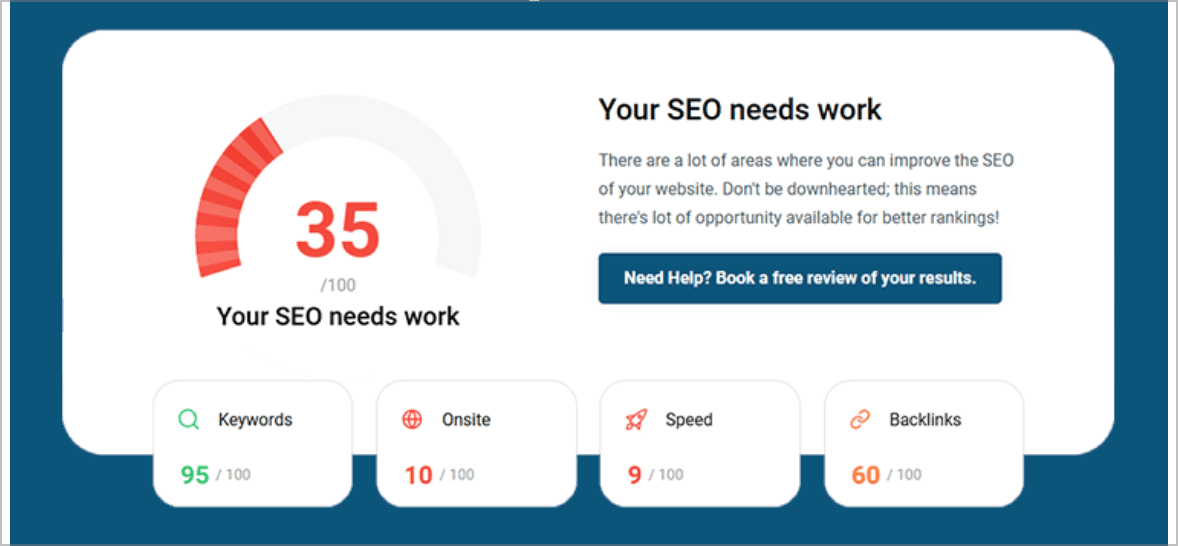
If you want a clearer starting point, use our free website audit. It will help you see what is holding your site back, where the opportunities are, and what your next sensible move should be.
Half the year has not gone.
Half the year is still available.
Best not waste it admiring dashboards.
Can We Help?
Many people end up on our blog because their SEO is not working the way they hoped, and they are trying to work out what to do next.
Sound familiar?
If this article has helped you realise you have plenty of SEO information but not much clarity, that is usually the sign to stop guessing.
Free tools are useful, but the real value comes from knowing which issue matters first, which can wait, and what action will move the needle without turning SEO into your second job.