

Your competitors may still be doing SEO like it is 2015. That is useful, in the same way a paper map is useful when the sat nav works properly.
AI-powered SEO is not a magic button, and it definitely is not a replacement for human judgement. But used properly, it can help businesses spot opportunities faster, fix problems sooner, and make better decisions with less guesswork.
The real advantage is not AI doing everything for you. It is AI doing the heavy lifting while experienced humans decide what actually matters.
What's inside? (TL;DR)
AI-powered SEO can speed up research, technical checks, content improvement, and performance tracking, but it is not a magic button.
This article explains where AI helps, where human judgement still matters, and how to use both without turning your SEO into a button-pressing circus.
Useful Sections
Estimated reading time: 6 minutes
What AI-Powered SEO Actually Means
Let me break this down without the technobabble.
AI-powered SEO uses artificial intelligence, including machine learning and natural language processing, to make your SEO strategy smarter, faster, and more effective.
Think of it as upgrading from a pushbike to something with a bit more horsepower. You are still heading towards the same finish line, which is better visibility in search, but you are no longer relying on guesswork and crossed fingers.
Here at KickstartSEO, we use Norman, our AI-powered SEO strategist, to help analyse websites, spot opportunities, prioritise fixes, and support approved implementation work.
Norman is not a magic button. He is not here to replace human judgement. He helps us work through the data faster so the humans can make better decisions. Which, frankly, is how it should be.
The Five Pillars Of AI-Powered SEO
1. Content Optimisation That Actually Works
Remember spending hours tweaking your content, wondering whether you have used your keyword enough times? Or too many times?
AI makes that old keyword-density dance look a bit tired.
Modern AI tools can analyse content against a wide range of useful signals, including readability, keyword placement, semantic relevance, search intent, and how well the page answers the reader’s likely question.
Norman does not just say, “use your keyword more.” He helps identify practical improvements, such as whether a heading needs tightening, whether a section is missing, whether the opening is too long, or whether the page is answering the wrong question.
It is like having an SEO strategist looking over your shoulder, except this one can review a lot more data before the kettle has boiled.
2. Keyword Research That Looks Forward
Traditional keyword research often tells you what people searched for last month.
AI-supported keyword research can help spot trends, emerging topics, seasonal patterns, and shifts in how people are searching. That does not mean it predicts the future with a crystal ball. It means it helps you see patterns earlier.
The clever part is not just finding keywords. It is understanding intent.
Someone searching for “best running shoes” is probably in a different mindset from someone searching for “how to clean running shoes”. One is closer to buying. The other wants advice.
That difference matters. Create the wrong content for the wrong intent and you can rank without getting useful traffic. Lovely for the ego. Not much use for the bank account.
3. Technical SEO Without The Treasure Hunt
Technical SEO used to involve a lot of digging, checking, exporting, filtering, muttering, and occasionally wondering why a page that should be working clearly was not.
AI-supported tools help by continuously scanning for issues such as:
broken links
slow-loading pages
mobile usability problems
crawl errors
missing or weak structured data opportunities
pages that need attention before they become bigger problems
The useful part is not just spotting issues. It is prioritising them.
A tiny issue on a forgotten page does not deserve the same attention as a technical problem affecting your key service page. AI helps sort the “fix this now” jobs from the “stick it on the list” jobs.
That alone saves a lot of time and, more importantly, stops people fiddling with the wrong things.
4. Content Creation That Still Needs A Human
Here is where people get nervous.
Can AI help create content? Yes.
Should AI be left alone to write your entire website while everyone goes for a long lunch? Absolutely not.
AI is useful for:
generating content ideas based on search demand
creating rough first drafts
improving existing content
spotting missing sections
scaling content production sensibly
turning research into a usable starting point
But it still needs human oversight.
At KickstartSEO, we use AI to do the heavy lifting. Then human judgement shapes the message, checks the facts, removes the nonsense, and makes sure the content sounds like it came from a real business rather than a vending machine with a thesaurus.
AI can prepare the ingredients. A human still needs to cook the meal.
AI Works best when it's powered by a human.
5. Performance Tracking That Actually Makes Sense
Analytics can be useful. They can also be a swamp.
AI helps turn piles of numbers into clearer insight. Instead of only reporting that a metric has changed, it can help identify what may be driving that change and where attention is needed next.
Useful AI-supported performance tracking can:
connect related metrics
identify patterns humans may miss
highlight pages losing visibility
flag content that is improving
suggest practical next steps
separate useful signals from noise
That last one matters.
Not every dip is a disaster. Not every spike is a win. Sometimes the graph is just doing graph things.
How AI Transforms Your SEO Strategy
Automation Without Losing Control
The biggest misconception about AI in SEO is that it is a “set and forget” button.
It is not.
It is more like cruise control. It can handle routine work, but you still need someone watching the road.
AI can help automate:
ranking checks
keyword tracking
competitor monitoring
technical issue scanning
content performance checks
backlink quality reviews
That frees up time for the work that actually needs thought.
Instead of spending hours checking whether something moved from position 12 to position 9, you can focus on what to improve, what to publish, what to fix, and what to ignore.
Ignoring the right things is an underrated SEO skill.
Data Analysis That Humans Cannot Do Manually
Most websites create more data than a human can sensibly review by hand.
AI can process large amounts of information and surface the bits that matter. It can help answer questions such as:
why some pages rank and others do not
which behaviours suggest visitors are likely to convert
how search changes may affect specific pages
what competitors are doing well
which content needs updating first
The value is not having more data. Most businesses already have more data than they know what to do with.
The value is knowing what the data is trying to tell you.
Personalisation That Helps The Visitor
AI can also help businesses understand how different visitors behave.
That can support better content recommendations, clearer calls to action, and more useful page layouts. Done properly, this is not about being creepy. It is about helping visitors find what they came for.
A first-time visitor may need reassurance and explanation.
A returning visitor may need a clearer next step.
A service page visitor may need pricing, proof, or a reason to trust you.
The more closely your site matches the visitor’s intent, the better chance you have of turning visibility into enquiries.
Adapting Faster When Search Changes
Search changes constantly. Google updates. AI search develops. User behaviour shifts. Competitors improve. What worked last year may still matter, but it may not be enough on its own.
AI helps by spotting change faster.
That does not mean panicking every time a graph wobbles. It means keeping an eye on the right signals and adjusting before small problems become expensive ones.
The businesses that do well are rarely the ones chasing every shiny object. They are usually the ones with solid foundations, sensible monitoring, and a willingness to adapt when the evidence says it is time.
Real-World AI SEO Use
Mad concept, right? An SEO company that uses its own methods.
We use Norman and our AI-supported processes for our own work as well as client work. That includes research, technical checks, content planning, optimisation, and performance monitoring.
The benefits are practical:
finding opportunities we may not have spotted manually
creating better content outlines faster
identifying technical issues before they become bigger problems
keeping a closer eye on search changes
improving pages based on evidence, not hunches
The important bit is not that AI is involved.
The important bit is that AI helps us work more clearly, more consistently, and with better information.
That is the part many businesses miss. AI does not remove the need for strategy. It makes weak strategy more obvious.
Why The Human Element Still Matters
Here is something the AI sceptics get right.
Machines cannot replace human insight entirely.
AI is brilliant at processing, analysing, sorting, comparing, and suggesting. But it still takes human creativity, empathy, commercial judgement, and experience to turn that into something useful.
That is why AI-powered SEO should be human-led.
A tool can flag that a page is weak. A human works out whether the page matters, what the business is trying to achieve, what the customer needs to understand, and how to improve it without making it sound like a committee wrote it during a power cut.
At KickstartSEO, Norman supports the work. Humans stay accountable for the decisions.
That balance matters.
Getting Started With AI-Powered SEO
1. Start With A Proper Check
Do not dive into AI-powered SEO blind.
You need to know where the site stands first. What is working? What is not? Which pages matter? Which technical issues are holding things back? Where are the easy wins?
Start with a clear audit or SEO review before throwing tools at the problem.
Tools without direction are just expensive distractions with dashboards.
2. Choose Tools Based On Need
Not all AI SEO tools are created equal.
Some are broad but shallow. Some are powerful but too complicated for the average small business. Some look impressive until you realise they mostly produce reports nobody acts on.
Choose based on what you actually need:
technical checks
content optimisation
keyword research
competitor monitoring
reporting
implementation support
The right tool is the one that helps you make progress, not the one with the flashiest demo.
3. Build On What Already Works
Your current SEO work is not automatically worthless because AI exists.
Keep what is working. Fix what is not. Use AI to improve speed, consistency, and decision-making.
Good SEO foundations still matter:
useful content
sound technical structure
clear service pages
local visibility
strong internal linking
trustworthy signals
regular improvement
AI does not replace those foundations. It helps you manage them better.
4. Keep Learning
AI changes quickly. Search changes quickly. Customer behaviour changes too.
The trick is not to chase every new feature like a dog after a tennis ball.
The trick is to keep learning, test carefully, review the evidence, and adapt when there is a good reason to do so.
The Bottom Line
AI-powered SEO is not coming. It is already here.
The businesses that use it well will have an advantage over those still relying on old habits, guesswork, and reports nobody reads.
But the advantage is not automation on its own.
The advantage is combining AI’s processing power with human judgement, creativity, and accountability.
SEO is not about tricking search engines. It is about helping the right people find the right businesses at the right time.
AI can make that faster and smarter.
Humans still make it useful.
Can We Help?
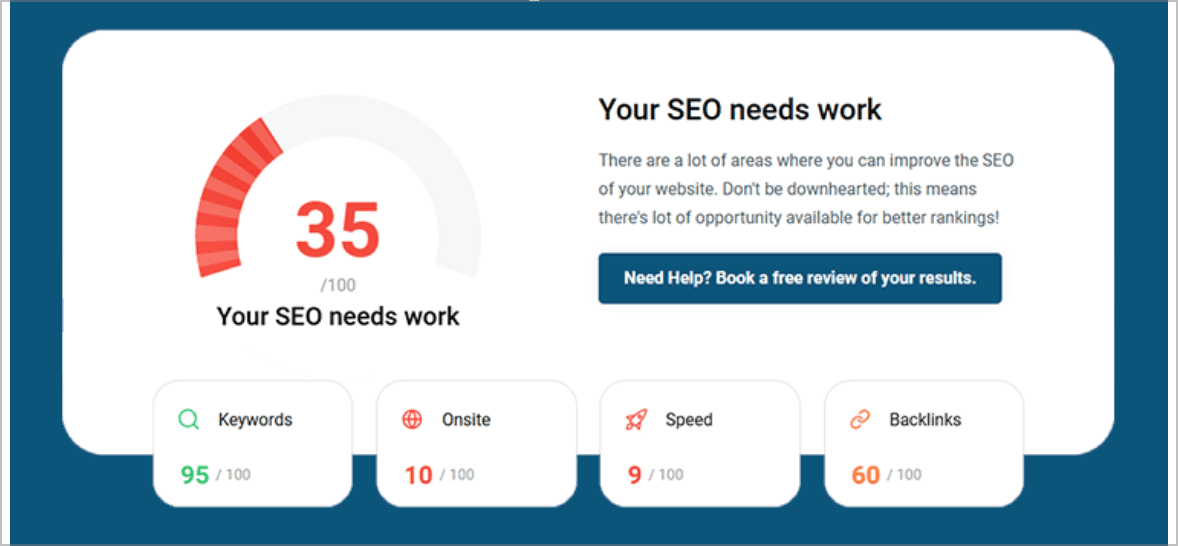
Many people end up on our blog because their SEO is not working the way they hoped, and they are trying to work out what to do next.
Sound familiar?
AI-powered SEO is useful when it gives you clarity, not just more dashboards to stare at.
If your current SEO feels slow, confusing, or suspiciously busy without much progress, we can help you work out what is actually worth fixing and what can safely be ignored.