
A couple of weeks ago, someone at a networking event in Bedford asked me whether SEO had got harder or easier now that we “don’t have to worry about those dreaded Google algorithm changes anymore”.
I gently explained that the algorithm changes never went away. We just stopped seeing them as a neat little list of ranking factors and started living inside a much bigger world of AI summaries, feeds, maps, and assistants.
I even gave him a fresh example: Google had recently released the February 2026 Discover Core Update. It did not target traditional Search results, but it was still a significant core update. It changed what content gets surfaced, how it gets prioritised, and what “good” looks like inside the Discover feed.
His eyes glazed over, so I went back to my coffee and pastry.
What's inside? (TL;DR)
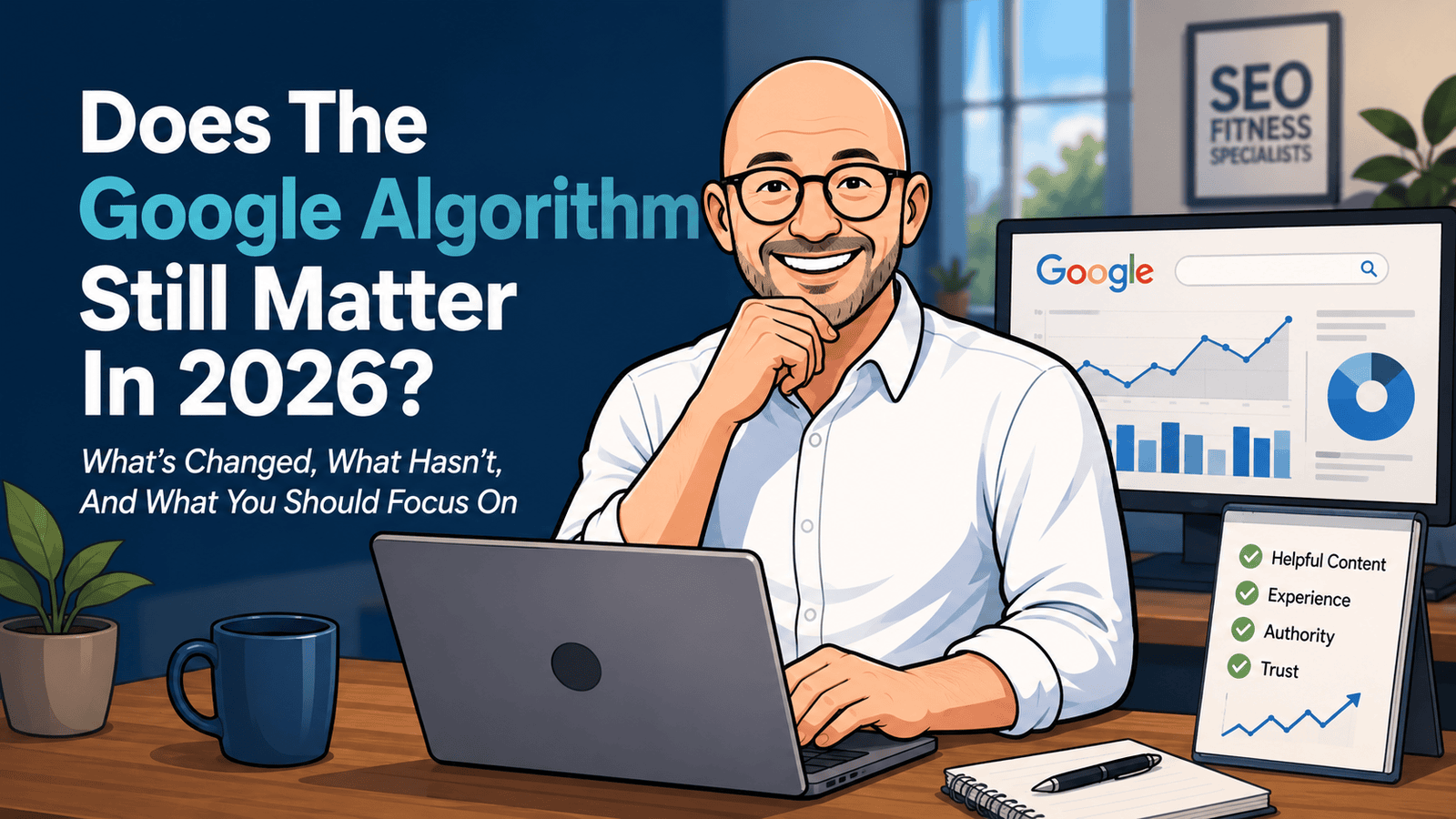
Google’s algorithm still matters, but it no longer lives neatly inside traditional search results.
This article explains how algorithms now affect Search, Maps, Discover, Bing, and AI answers, and what small businesses should focus on instead of chasing every update.
Useful Sections
Estimated reading time:
8 minutes
But then Teri brought up algorithms again.
And, fair point. If you are new to SEO, or have been hanging out on the periphery, “algorithm” sounds like a villain in a Marvel film.
So let’s answer the real question properly.
What Is An Algorithm, And What Does It Do?
An algorithm is simply a set of rules a system uses to make decisions.
In search, those decisions usually come down to three things:
What pages should I consider for this question?
Which ones look most helpful and trustworthy?
What should I show first, or use to form the answer?
That’s it.
The algorithm does not have feelings. It does not reward you for effort. It does not punish you for having a bad week. It is trying to predict what will satisfy the person asking the question, without sending them to a page full of nonsense.
A Quick Confession, From Someone Who Talks About This Too Much
I’ve been defending Google’s algorithm for years. Not because I’m a fanboy, but because most of the time it isn’t out to get you.
Its job is to improve what searchers see. When a site is clear about what it offers, backs up its claims, and makes life easy for visitors, the algorithm usually becomes an ally, not an enemy.
The problems start when the content is vague, copied, or trying to look clever instead of being useful.
In practice, we see this every time we replace a fluffy service page with clear pricing guidance, proof of work, and straight answers to common questions.
What An Algorithm Does In 2026
In 2026, it has two main jobs:
Visibility: deciding what gets shown in Search, Maps, and Discover
Selection: deciding what gets pulled into AI summaries and assistant answers
Even when someone reads an AI answer and never clicks a link, the algorithm still mattered because it decided which sources were strong enough to use.
So, Does The Google Algorithm Still Matter?
Yes. Absolutely.
It matters because Google is still the gatekeeper for who gets discovered and who gets trusted.
Google still crawls and indexes the web, then it decides what deserves attention. The only difference is what happens next.
Instead of showing a neat list of links first, Google often shows an AI summary, a map pack, a featured panel, or a Discover card.
So the win is not just “rank number one”.
The win is “be one of the sources Google trusts enough to surface or summarise”.
What Changed In The February 2026 Discover Core Update?
This update is a perfect example of why “algorithm updates are over” is a comforting fairy tale.
It was not aimed at classic Search results, but it still changed what gets seen. For some industries, Discover is the difference between a quiet week and a sudden spike in enquiries.
Here were the most noticeable shifts:
1) Local Relevance Got Stronger
Discover started prioritising content from publishers in the user’s same country more heavily.
What that means: if you are a UK business writing for UK customers, locally grounded content has an advantage. If your content is generic and could have been written anywhere, it is easier to ignore.
2) Clickbait Took A Hit
Sensational headlines got filtered down. Clear titles that match what the page actually delivers performed better.
What that means: you do not get rewarded for being dramatic. You get rewarded for being accurate.
3) Real Topic Depth Mattered More
In-depth, original, timely content from sites with established expertise got more visibility.
What that means: if your site covers everything from tax advice to dog grooming tips, Google has no clue what you are actually good at. Pick your lanes and go deeper.
4) More “Right Now” Content Showed Up
We are seeing increased integration of timely social content, including more X posts appearing in Discover feeds.
What that means: for some topics, being part of the wider conversation can help. Not because social likes are magic, but because freshness and relevance matter in a live feed.
Does Bing Have An Algorithm?
Yes, and it matters more than most people give it credit for.
Bing still does the basics: crawl, index, rank.
The difference is that Bing now feeds a lot of AI-driven discovery, especially in the Microsoft world. If your customers use Microsoft tools at work, Bing is closer to their day-to-day than you think.
Also, Bing tends to reward:
clear structure
direct answers
practical pages that help someone do something, not just read about it
Ignoring Bing in 2026 is a bit like ignoring a second shopfront because it is not on the high street you personally use.
What About AI Assistants Like ChatGPT And Claude?
This is where the confusion really kicks in.
AI assistants are not classic search engines, but they still have to decide what to use and what to ignore.
Sometimes they answer from their built-in knowledge. Sometimes they pull in live sources. Either way, there is still a system making decisions like:
what to retrieve
what looks reliable
what to summarise
what to cite
what to leave out
Here is the important bit for business owners:
Even when someone asks ChatGPT or Claude, those tools often rely on the same online paper trail that search engines trust. That includes:
strong, clear pages on your site
consistent business details across the web
credible mentions and reviews
content that is written by someone who clearly knows the subject
So if you want to be found in AI answers, you still need to be visible and credible on the open web.
AI does not remove SEO. It makes sloppy SEO more expensive.
Do Algorithms Still Affect SEO In 2026?
Yes. More than ever. They are just spread out now.
You are dealing with:
Google Search
Google Maps and local results
Google Discover
Bing
AI assistants that summarise and recommend
So the question is not “how do I beat the algorithm?”
The question is “how do I make it easy for these systems to trust me?”
The 2026 Playbook
This is what we recommend to clients because it works across Google, Bing, and AI assistants.
1) Add Something New, Not Just Another Version Of The Same Page
If your page is a reworded blend of what already exists, it is competing with a thousand lookalikes.
Better pages include things like:
a real example from your work
clear pricing logic or options
a step-by-step process
before and after results
photos of the work
answers to the awkward questions everyone avoids
2) Write Like A Human Who Has Done The Job
The web is full of tidy summaries. Most of them are useless.
If your content reads like it was written by someone who has never done the work, it will struggle. Real experience stands out.
3) Make Pages Easy To Skim And Easy To Trust
Strong headings. Straight answers early. Supporting detail after.
If someone has to hunt for the point, Google and Bing will often find someone who made it clearer.
4) Stop Trying To Cover Everything
Pick a few core topics you want to be known for, then go deeper than your competitors.
That is how you build trust over time.
5) Build A Clean Online Paper Trail
This is the unsexy bit that drives real results.
Make sure your business details are consistent across maps, directories, and key platforms. If the web cannot agree on your name, address, phone number, or services, the machines get cautious.
A Quick Example, So This Stays Real
If you are a local service business, do not rely on a single “Services” page that lists everything.
Build one solid page per main service, and on each page:
explain who it is for
explain the process
show proof you have done it
answer the common questions
link to the next logical step, such as a call, quote, or booking
That works on Google. It works on Bing. It also gives AI assistants something clear to pull from.
The Bottom Line
Yes, the Google algorithm still matters in 2026.
So does Bing’s.
And AI assistants do not remove algorithms. They add another layer of decision-making.
In 2026, you are not optimising just to “get the click”.
You are optimising to become the source that gets trusted, surfaced, and used.
Now, can we all agree to let my pastry cool in peace.
Can We Help?
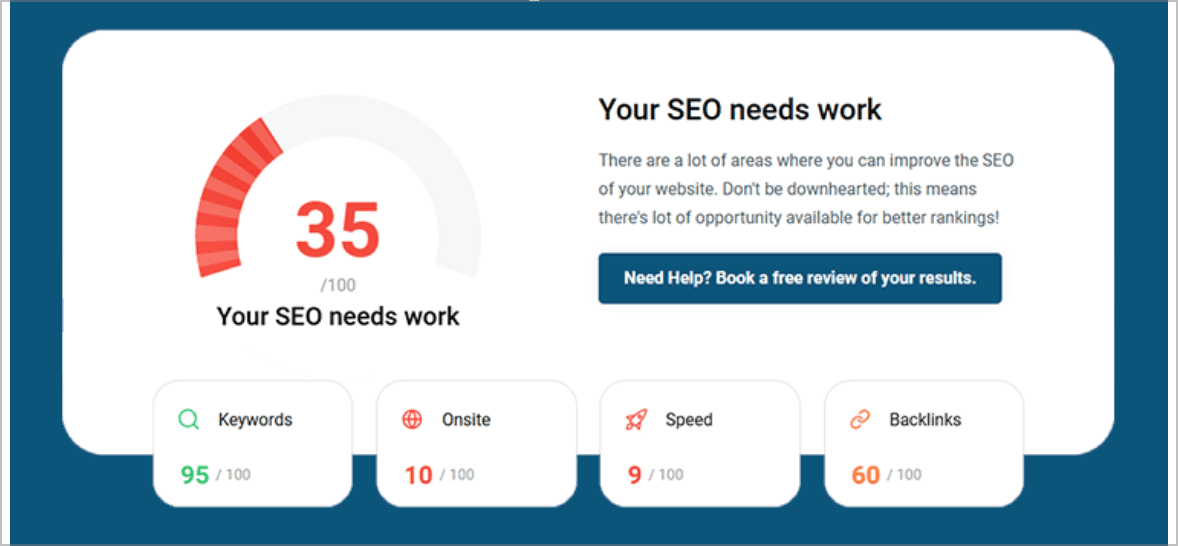
Many people end up on our blog because their SEO is not working the way they hoped, and they are trying to work out what to do next.
Sound familiar?
If algorithm updates, AI answers, Discover, Maps, and Bing all feel like too many moving parts, that is exactly why guessing is a bad plan.
We can help you see whether your website is clear, trusted, and structured enough to be used by the search systems that now shape visibility.