

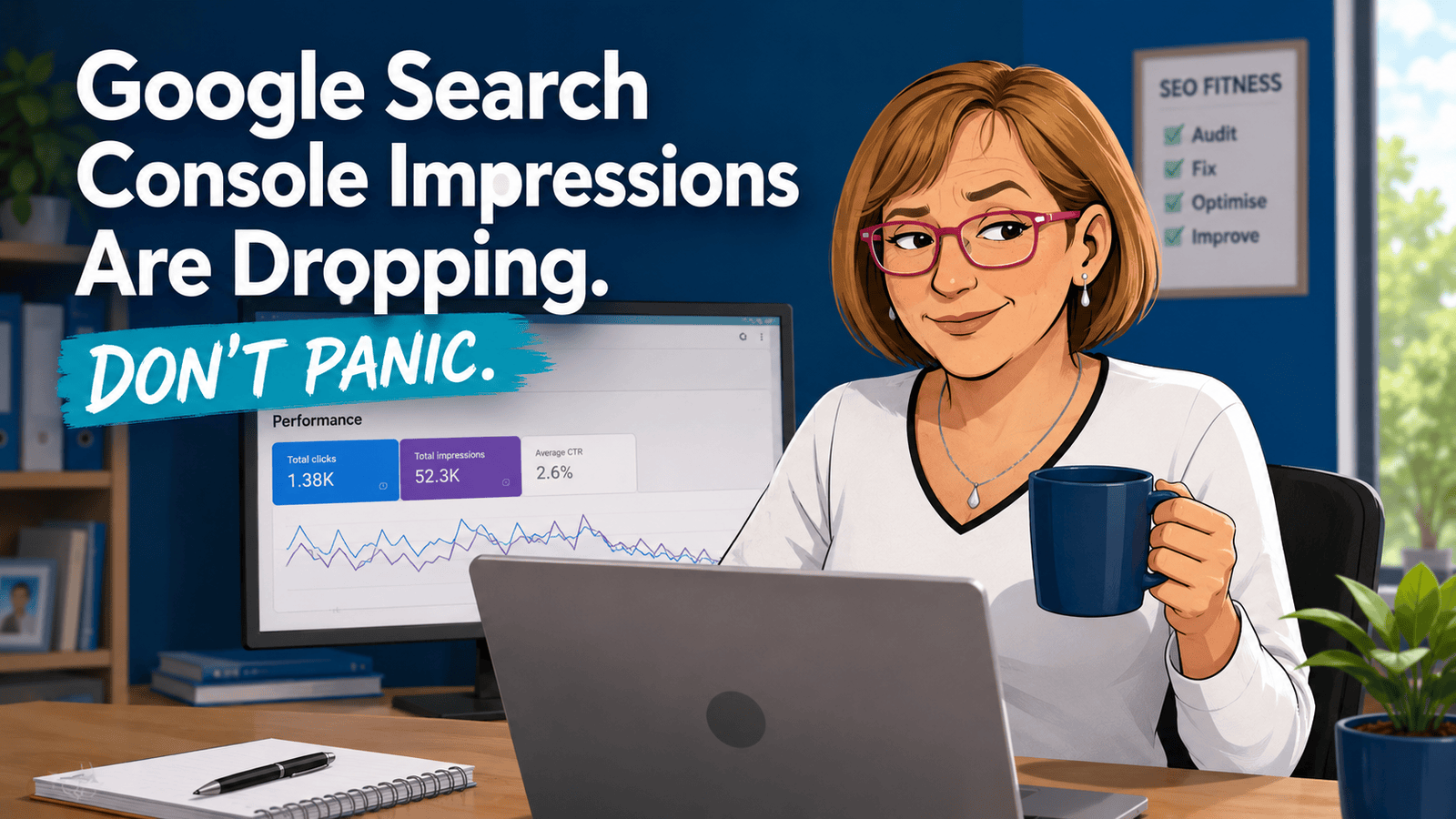
If your Google Search Console impressions have started sliding, do not assume your SEO has gone wrong.
Google has publicly confirmed that a logging error has affected Search Console impression reporting from 13 May 2025 onward. The company says the fix began rolling out on 3 April 2026, and that as the correction is applied, many site owners may notice lower impression numbers in the Performance report.
Google also says clicks and other metrics were not affected. That matters, because it means a drop in impressions right now may reflect a reporting fix, not a real loss in visibility.
That is the problem in plain English: businesses may see impression drops and think rankings have fallen, when the more likely explanation is that Google is correcting faulty data.
What's inside? (TL;DR)
Google Search Console impression drops can look alarming, but this article explains why some recent changes may be caused by Google correcting a reporting issue rather than your SEO falling apart.
It shows what to check before making decisions, which numbers deserve more attention, and why one graph should never be treated as gospel.
Useful Sections
Estimated reading time:
6 minutes
Independent reporting has suggested the issue may have led to inflated impression counts during the affected period, which would make historical comparisons less reliable until the dust settles.
So before anyone starts blaming the SEO, the agency, or the nearest passing algorithm, it is worth looking at what has actually happened.
What Google Has Said
Google’s own anomaly notice says a logging error prevented Search Console from accurately reporting impressions from 13 May 2025 onward. It also says the issue affected data logging only, and that clicks and other metrics were not affected.
Google warns that as the fix rolls out, you may notice a decrease in impressions in the Performance report.
That is an important distinction.
If clicks were unaffected, then an impression drop on its own is not enough to conclude that performance has worsened. It may simply mean the numbers are being corrected.
Google has not said, at least publicly, whether the affected historical data will be fully restated. So yes, some numbers may change as the rollout continues, but no, we should not assume Google is rebuilding the entire historical dataset into something perfectly clean and final.
Why This Matters
A lot of people use Search Console as a quick health check. Fair enough. It is one of the best tools available for understanding how your site appears in Google search.
But when the reporting is wrong, the conclusions can be wrong too.
A falling impression chart would normally make people worry about things like:
weaker rankings
lower visibility
falling demand
technical SEO issues
recent content changes backfiring
This time, that may not be the story at all.
The risk is not just bad data. It is bad decisions based on bad data.
That is also why it helps to understand what Search Console is actually for and how to use it properly. A tool is only useful if you know when to trust it, and when to read it with a raised eyebrow.
Are Impressions Still Useful?
Yes. They still matter.
Impressions help you understand how often your pages appear in search results, which queries are triggering visibility, and whether your content is getting in front of the right audience. None of that has changed.
What has changed is this: impression data covering the affected period needs more caution than usual. It is still useful, but right now it should not be read in isolation. Google’s own notice is clear that impression logging was the issue.
So no, impressions are not meaningless. They are just not the number to panic over this week.
What Should You Look At Instead?
For now, the smarter move is to give more weight to the signals Google says were not affected.
clicks in Search Console
enquiries and conversions
landing page performance
meaningful ranking changes for your priority pages
That is not glamorous, but it is sensible. And sensible usually beats dramatic when Google has admitted the plumbing is off.
What Should You Do Now?
Here is the practical version.
1. Do Not Treat An Impression Drop As Proof Of An SEO Problem
Google has already warned that impressions may decrease as the correction rolls out. That means a downward line on its own is not enough evidence to call this a visibility loss.
2. Check Clicks, Traffic, And Leads Before Drawing Conclusions
Google says clicks and other metrics were not affected. If clicks, GA4 traffic, and enquiries remain steady, your site may be performing much the same as before, even if impressions fall.
3. Be Careful With Historical Comparisons
If impression data was misreported from 13 May 2025 onward, then month-on-month and year-on-year comparisons using impressions alone deserve a second look.
Independent reporting suggests the counts may have been inflated, which makes clean trend analysis harder until the correction settles.
And because Google has not said whether it will fully restate all affected historical data, it is safest to treat that whole period with caution rather than assume the archive will be neatly repaired.
4. Add A Note To Your Reports
If you produce internal reports or client reports, annotate them. A simple note explaining that Google is correcting a known Search Console logging issue can prevent a lot of confusion later.
5. Wait For The Rollout To Finish Before Making Big Judgement Calls
Google has said the issue will be resolved over the next few weeks, not overnight. That means this is not the moment for heroic overreactions. It is the moment for calm observation.
Does This Connect To The Wider AI Search Picture?
In a roundabout way, yes.
We have already looked at the bigger issue of how Google is evolving its reporting and search behaviour signals in our earlier post on Google and AI search. The broader lesson is that search data still matters, but it needs interpretation. You cannot run a serious SEO strategy by worshipping one graph and ignoring the rest of the evidence.
That was true before this reporting issue, and it is definitely true now.
What Should KickstartSEO Clients Do?
Fully Managed Optimiser Premium Clients
We will monitor this closely for you.
That means we will keep an eye on unusual impression movement, compare it against clicks and traffic, and adjust our interpretation where needed. If Google’s correction changes how the data looks in your reporting, we will account for that and respond sensibly.
DIY Clients
Keep an eye on your KickstartSEO Dashboard and watch for further updates from us.
Do not assume an impression drop means your site has suddenly lost visibility. Check the wider picture first. If clicks, traffic, and leads are steady, the issue may be reporting noise rather than a genuine SEO problem.
The Sensible Takeaway
Google has confirmed the issue. Independent reporting has added helpful context. The most likely problem for many businesses is not falling SEO performance, but misunderstanding a reporting correction.
So the right response is simple:
Do not panic.
Do not rewrite your strategy based on one graph.
Do not ignore the other signals that still matter.
Watch the data that Google says is reliable. Keep an eye on your broader performance. And if you are unsure whether a drop is real or just reporting noise, that is exactly the sort of thing we help clients interpret every day.
One final point worth keeping in mind: Google has confirmed the fix is rolling out, but it has not said whether every affected historical impression figure will be fully restated. So until that becomes clearer, treat the affected period as useful but imperfect data, not gospel.
For more detail, see Google’s official Search Console anomaly notice and Search Engine Land’s reporting on the issue.
Can We Help?
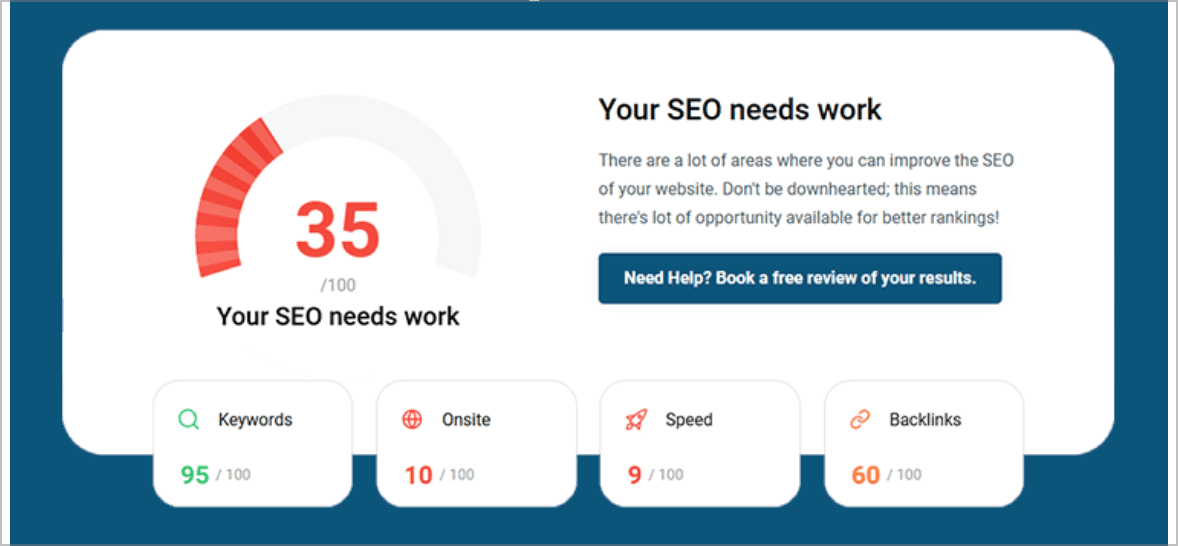
Many people end up on our blog because their SEO is not working the way they hoped, and they are trying to work out what to do next.
Sound familiar?
Search Console drops can look worrying, but the first job is to work out whether the problem is real performance loss or just noisy reporting.
We can help you read the data properly, compare it against the signals that still matter, and avoid making expensive changes just because one graph had a funny turn.