Originally posted in March 2025, this article was reviewed and updated on 2 April 2026. Its core guidance was still accurate, but we have updated it to reflect the state of SEO in 2026 and the growing importance of trust across search and AI-driven discovery.
There was a time when SEO advice often came down to keywords, links, and a bit of technical tinkering. That is still part of the job, but it is no longer enough on its own.
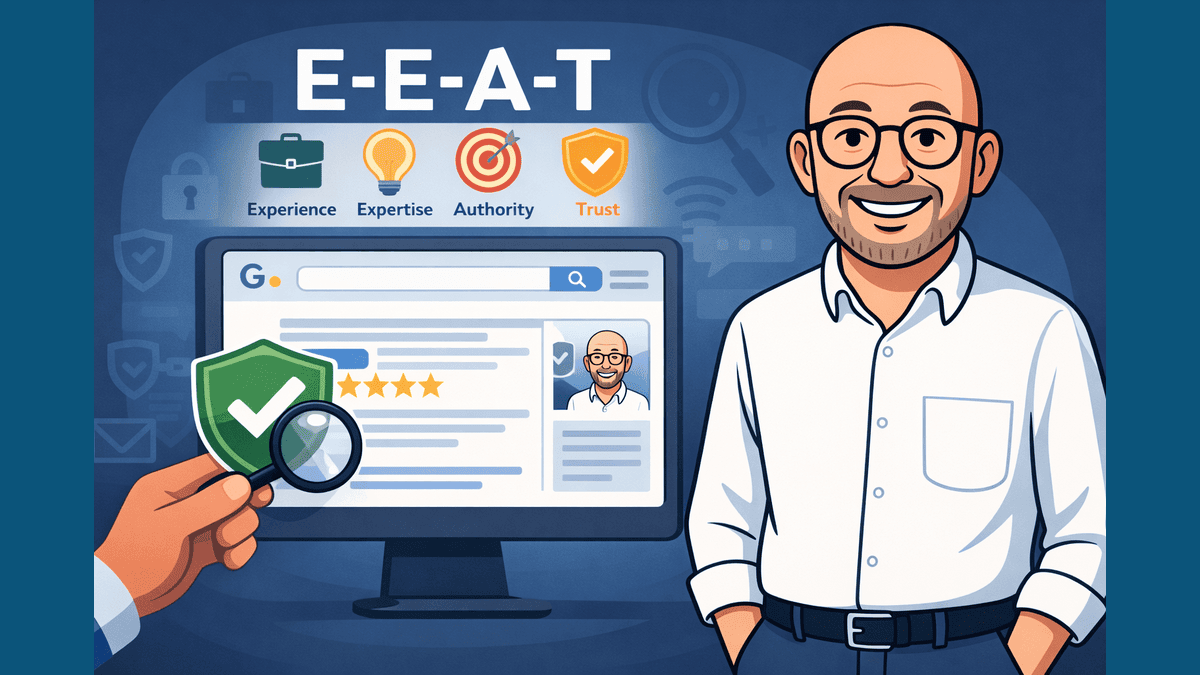
In 2026, Google is still trying to show content that is helpful, reliable, and clearly made for people rather than search engines. That is where E-E-A-T comes in: Experience, Expertise, Authoritativeness, and Trust.
That matters because a website does not earn visibility just by existing. It earns it by looking credible, sounding useful, and giving visitors confidence that the information is accurate and the business behind it is real.
What's inside? (TL;DR)
This article explains what E-E-A-T means in 2026 and why trust is still one of the strongest signals your website can send.
It also looks at how small businesses can show real experience, useful expertise, and believable authority without stuffing pages with waffle.
Useful Sections
Estimated reading time: 6 Minutes
What E-E-A-T Actually Means
E-E-A-T is often explained as a checklist, but that is a bit too neat for the real world.
Experience means first-hand knowledge. It is the difference between someone who has actually done the work and someone who has simply read about it. Expertise is subject knowledge. Authoritativeness is the reputation you build when others recognise your credibility. And Trust is the thing that holds it all together.
If your content feels vague, anonymous, exaggerated, or out of date, that trust starts to wobble.
That is why E-E-A-T matters. It is not a trick or a ranking hack. It is a framework Google uses to help identify content that deserves to be taken seriously.
Why It Still Matters In 2026
Some SEO ideas come and go. E-E-A-T has stuck around because it lines up with something simple: people want trustworthy information.
That is especially important now because visibility is no longer only about blue links in Google. Businesses are also competing for attention in AI search, summaries, and answer-style results. If your website looks shallow or uncertain, it is less likely to be shown, quoted, or trusted. If it looks clear, grounded, and useful, it stands a better chance.
So while E-E-A-T is not a single ranking factor you can switch on, it is absolutely part of what strong SEO looks like in 2026. Trust carries weight, and websites that show it are in a far better position than those that simply chase keywords.
Trust Comes First
This is the part many businesses miss.
They hear the term E-E-A-T and assume they need to sprinkle in a few badges, add some buzzwords about being experts, and call it a day. That is not how trust works. Trust is not something you claim. It is something people feel when your website gives them enough evidence to believe you.
A trustworthy website usually feels clear and grounded. It has real names, real contact details, sensible explanations, and claims that do not sound inflated. It is obvious what the business does, who it serves, and how someone can get help.
The content feels current. The tone feels human. The advice sounds like it came from someone who knows the work, not from a content mill with a caffeine problem.
This also lines up with Google’s guidance on helpful, reliable, people-first content, which is still a sensible benchmark for judging whether a page is genuinely useful.
That is the standard worth aiming for.
How Businesses Show Experience
Experience is one of the more useful additions to the old E-A-T model because it rewards practical knowledge.
If you are a service business, this is where you can shine. Talk about what you have actually seen. Explain common problems your clients run into. Share examples of work you have done, lessons you have learned, and the real thinking behind your recommendations.
A bland page full of generic claims does very little. A page that clearly reflects hands-on knowledge is far more convincing.
That does not mean every page needs to be stuffed with case studies. It just means the content should feel as though it came from someone who has done the job in the real world.
Expertise Without The Waffle
Expertise does not mean sounding clever for the sake of it.
In fact, some of the most expert content on the web is written in plain English. It answers real questions clearly, avoids jargon where possible, and gets to the point. That is far more useful than padded explanations designed to sound impressive.
For small businesses, showing expertise usually comes down to whether your website actually helps people understand something. Are you answering the questions customers really ask? Are you explaining your process honestly? Are you giving enough detail for someone to feel informed rather than sold to?
If the answer is yes, you are moving in the right direction.
Authority Is Earned, Not Declared
Authority is a funny one because businesses often try to manufacture it.
They call themselves leading experts, trusted specialists, award-winning pioneers, and every other grand title under the sun. Most of it lands with all the charm of a man introducing himself as a legend.
Real authority is quieter than that. It comes from consistency, reputation, and evidence. It might show up through reviews, recommendations, industry mentions, qualifications, citations, links from relevant websites, or simply the quality of the information you write over time.
The key thing is that authority works best when it is supported by substance. If a website sounds confident but gives no reason to trust it, the whole act falls apart.
What Google Means By People-First Content
Google’s guidance has become increasingly clear on this point. Content should be created primarily to help people, not primarily to rank in search.
That may sound obvious, but a lot of websites still get it wrong. They write pages because a keyword tool suggested them, not because the page genuinely helps a visitor.
A useful question to ask is this: if someone landed on this page directly, with no help from Google, would they still find it useful?
If the page exists only to pull in traffic, it will usually feel thin. If it exists to answer a real question or solve a real problem, that tends to show.
Google also encourages site owners to think about the Who, How, and Why behind content. Who created it? How was it produced? Why was it made in the first place? Those questions are simple, but they expose a lot.
Where Many Websites Go Wrong
A surprising number of business websites undermine trust without realising it.
Sometimes it is because the copy is too vague. Sometimes it is because the site feels anonymous. Sometimes it is because the content has clearly not been touched in years. And sometimes it is because every page sounds like it is trying just a bit too hard.
Thin service pages, weak About pages, overblown claims, stock images, missing policies, poor contact information, and stale blog content all chip away at trust. None of these things on their own is usually fatal, but together they send the wrong signal.
If your website leaves visitors with unanswered questions, that is a problem for conversions and a problem for SEO.
E-E-A-T Matters More On High-Stakes Topics
Not every topic carries the same level of risk.
Google holds websites to a higher standard when the content could affect someone’s health, finances, safety, or well-being. These are often referred to as YMYL topics, short for Your Money or Your Life.
If you operate in those areas, trust and accuracy are not optional extras. They are the whole game.
That does not mean local businesses outside those industries can ignore E-E-A-T. It just means the margin for error is smaller when the consequences of bad information are higher.
What This Means For Small Businesses
For most small businesses, improving E-E-A-T is less about chasing some mystical SEO score and more about tightening up the basics.
Make it obvious who you are. Make it easy to contact you. Explain what you do in a way that normal people can understand. Back up your claims.
Keep important pages current. Show that there are real humans behind the business. Write content that answers genuine customer questions rather than trying to impress an algorithm.
That is not glamorous, but it works.
A good website should reduce doubt. It should help a visitor think, “Right, these people know what they are doing.” When your content does that well, it supports trust, conversions, and long-term visibility all at once.
Keeping Content Strong In 2026
Updating content in 2026 is not about changing a date and pretending the page is fresh. It is about improving the page because you genuinely have something better to say.
That could mean adding clearer explanations, refining examples, improving internal links, expanding thin sections, or bringing the article in line with current search behaviour.
In many cases, the smartest update is not a full rewrite. It is a thoughtful refresh that keeps the original value while making the page more useful now.
That is exactly the sort of maintenance many websites need. Not endless churn. Just honest improvement.
Final Thought
If your website feels a bit thin, dated, or anonymous, E-E-A-T is a useful lens to look through.
Ask yourself whether your pages show real experience. Ask whether they show expertise in a way that helps normal people. Ask whether your authority is supported by evidence. Most of all, ask whether a visitor would trust what they are reading.
That is the real standard in 2026.
Can We Help?
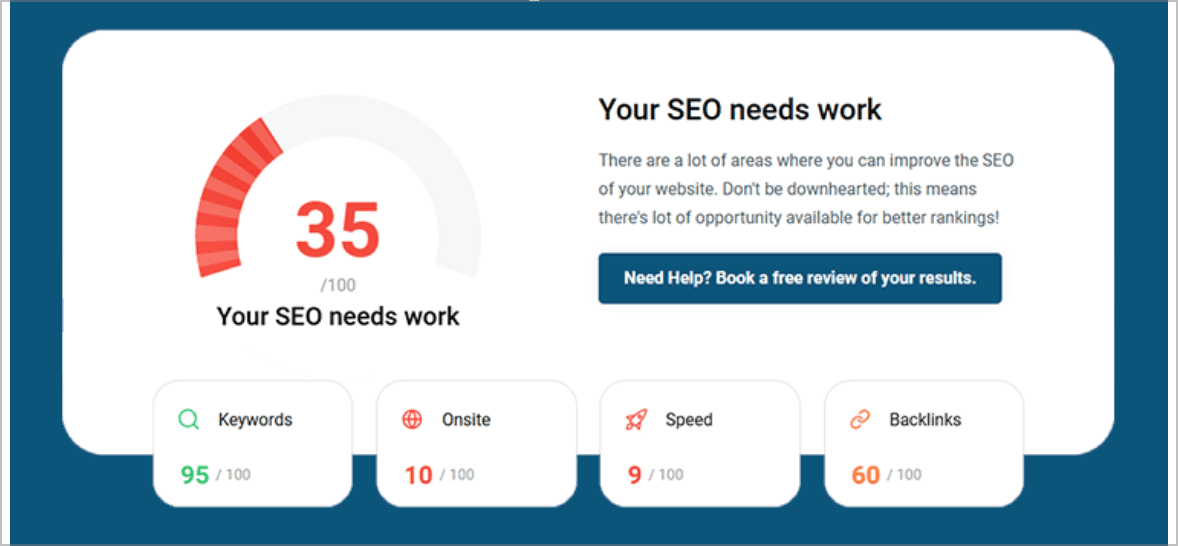
Many people end up on our blog because their SEO is not working the way they hoped, and they are trying to work out what to do next.
Sound familiar?
If your website does not clearly show why people should trust you, it is probably making visitors work too hard.
We can help you spot the gaps, tidy up the weak signals, and make sure your content gives both Google and real humans better reasons to take you seriously.